- Solved Files Newsletter
- Posts
- When Your Videos Convict You: The Florida Suitcase Murder
When Your Videos Convict You: The Florida Suitcase Murder
She recorded him begging for his life, then those videos sent her to prison.

David Yupa
January 09, 2026

Welcome Back Case Crackers!
Another week, another case that will make you question everything you think you know about self-defense claims and digital evidence. This isn’t just a domestic violence story: it’s a case where the killer’s own cell phone videos became the most damning evidence against her, where “we were just playing” became a life sentence, and where every frame of footage revealed a truth that changed everything.
From the haunting videos Sarah Boone recorded on February 23, 2020, showing her boyfriend Jorge Torres Jr. begging for his life from inside a suitcase: “I can’t breathe, Sarah!” to the eight different defense attorneys who couldn’t craft a winning strategy, we’re diving deep into a case that made headlines worldwide. Pay close attention; you might spot the critical moment when a claim of self-defense completely falls apart. Whether you’re a veteran detective in our community or just beginning to hone your investigative skills, this edition offers twists, insights, and lessons about how your own digital devices can become your worst enemy in court.
So grab your notebook, focus your attention, and get ready. This week, justice came in the form of 1,440 by 1,080 pixels.

🔎 Full Case Story — The Videos That Convicted a Killer: When “We Were Just Playing” Becomes Second-Degree Murder
On October 25, 2024, Sarah Boone, 47, was convicted of second-degree murder for killing her boyfriend, Jorge Torres Jr., 42, by zipping him inside a suitcase and leaving him to suffocate overnight in their Winter Park, Florida apartment. The conviction came after a trial where prosecutors presented the most damning evidence possible: videos Sarah herself recorded on her phone showing Jorge begging for his life while she taunted him.
This case began on the night of February 23, 2020, when Sarah and Jorge were drinking wine and doing puzzles at their apartment. According to Sarah’s initial story to police, the couple decided to play a game of hide-and-seek. Jorge allegedly thought it would be funny to get inside a blue suitcase, and Sarah zipped him up as part of the “game.” Then, she claimed, she went upstairs and fell asleep, forgetting he was in the suitcase.
The Morning After
The next morning, February 24, 2020, Sarah called 911 around 1:00 PM, telling dispatchers she had found Jorge dead inside the suitcase. When deputies from the Orange County Sheriff’s Office arrived at the apartment, they found Jorge’s body curled in the fetal position inside a blue suitcase in the living room area.
Deputy Courtney Pinson, one of the first responders, testified that she noticed bruising and abrasions on Jorge’s body, a cut on his lip, and marks on his shoulder and forehead. The medical examiner would later determine Jorge died from asphyxiation.
In her initial interview with detectives, Sarah maintained it was an accident, a drunken game gone wrong. She said she “didn’t mean to” leave him in there overnight. She claimed she passed out upstairs and simply forgot about him. But investigators had a question: if this was truly an accident, why hadn’t Sarah tried to get Jorge out when she woke up? The answer was on her phone.
The Videos That Changed Everything
When detectives examined Sarah’s cell phone, they found two videos she had recorded during the incident. These videos, shot by Sarah herself, completely contradicted her claims of an innocent game.
In the first video, which lasted 48 seconds and was shot at 11:12 PM on February 23, Jorge can be heard desperately calling out Sarah’s name from inside the suitcase. His voice is muffled but audible: “Sarah… Sarah…” Sarah responds mockingly: “Yeah, that’s what I felt like when you cheated on me.” The suitcase rocks back and forth as Jorge tries to escape. Sarah can be heard laughing. Jorge pleads: “I can’t breathe, babe.” Sarah’s response, caught on her own recording: “That’s on you. Oh, that’s what I feel like when you cheat on me.”
The second video, recorded shortly after the first and lasting one minute and thirteen seconds, shows the suitcase had been moved and was now lying on its side. Jorge’s finger can be seen desperately protruding through a small gap in the zipper, trying to get out. Jorge begs: “Sarah, I can’t breathe, Sarah.” Sarah responds: “For everything you’ve done to me, fuck you.” Jorge, increasingly frantic: “I can’t fucking breathe, Sarah! Seriously!” Sarah’s chilling reply: “Seriously? You should probably shut the fuck up then.”
The video ends. Jorge Torres Jr. would never be seen alive again
The Investigation: When “Accident” Doesn’t Match the Evidence
Detective Mike Young testified that when he first interviewed Sarah at her apartment, she was cooperative and seemed genuinely distraught. She told him they had been drinking wine, playing around, and that Jorge had voluntarily gotten into the suitcase as part of their “game.” “She said she thought it would be funny,” Detective Young recalled. “She zipped him up, went upstairs, passed out, and forgot he was in there.”
But when detectives discovered the videos on her phone, the narrative completely shifted. The videos revealed Sarah was awake and aware Jorge was in distress. She mocked and taunted him rather than helping him. She referenced their relationship problems, saying “that’s what I felt like when you cheated on me.” She told him to “shut the fuck up” when he said he couldn’t breathe. And perhaps most damning, she recorded these moments rather than immediately releasing him.
Medical Examiner Dr. Sajid Qaiser testified that Jorge died from asphyxiation, his body starved of oxygen while trapped in the confined space. Dr. Qaiser noted the injuries on Jorge’s body were consistent with him trying to escape, including abrasions on his hands, bruising on his shoulder, and a cut on his lip. Toxicology reports showed Jorge’s blood alcohol content was .19%, more than twice the legal limit for driving. Sarah’s BAC was .22%. Both were heavily intoxicated, but prosecutors argued this didn’t excuse Sarah’s actions, it explained her willingness to record them.
The Defense Strategy: Battered Spouse Syndrome
Sarah Boone’s defense team argued she was a victim of long-term domestic abuse and that her actions were the result of Battered Spouse Syndrome, a psychological condition affecting people who have suffered chronic abuse. During the trial, defense attorney James Owens presented evidence of Jorge’s history. There were prior domestic violence incidents where Jorge was the aggressor. Photos showed Sarah with injuries allegedly inflicted by Jorge. Testimony described Jorge’s alcohol abuse and controlling behavior. Sarah claimed she feared Jorge and acted in self-defense.
The defense argued that Sarah’s decision to leave Jorge in the suitcase wasn’t murder, it was a desperate act by a woman who had been terrorized for years and finally snapped. They claimed Sarah’s taunting comments in the videos were her way of “fighting back” against years of abuse. However, prosecutors countered with a critical question: if Sarah was so afraid of Jorge, why did she record him begging for help and mock him, rather than simply leaving the apartment to safety?
Assistant DA William Jay argued: “This wasn’t self-defense. This was revenge. She recorded him suffering because she wanted him to suffer.”
The Trial: Eight Attorneys and a Damning Verdict

Sarah Boone smiles ahead of opening statements in her murder trial.
Sarah Boone’s case became infamous not just for the videos, but for the extraordinary number of defense attorneys she went through. Between her arrest in 2020 and her trial in 2024, Sarah fired or lost eight different lawyers, causing multiple delays. Some attorneys withdrew citing irreconcilable differences with Sarah, while others claimed she was impossible to work with. Court records showed Sarah frequently wrote lengthy letters to the judge complaining about her representation and demanding new counsel.
Finally, in October 2024, with her ninth attorney James Owens representing her, the case went to trial. The prosecution’s case was devastating. The videos were played multiple times for the jury, with jurors visibly shocked. Medical examiner testimony confirmed asphyxiation. Crime scene photos showed the suitcase and Jorge’s body. Detective testimony revealed Sarah’s changing stories. Forensic evidence showed Jorge had been in the suitcase for hours.
The defense’s case struggled. Sarah chose not to testify in her own defense, meaning jurors never heard her explain the videos directly. The defense called witnesses to describe Jorge’s history of abuse, but they couldn’t overcome the central problem: the videos showed Sarah actively preventing Jorge from escaping and mocking him as he begged for air.
On October 25, 2024, after deliberating for just 90 minutes, the jury returned a verdict: guilty of second-degree murder. Sarah Boone showed no visible emotion when the verdict was read.
The Sentencing

Sarah Boone listens as the guilty verdict is read in her second-degree murder trial.
On December 2, 2024, Sarah Boone was sentenced to life in prison for the second-degree murder of Jorge Torres Jr. During the sentencing hearing, Jorge’s family gave emotional victim impact statements. His brother described Jorge as a loving father and friend who struggled with alcoholism but was trying to turn his life around. “Sarah took away any chance he had to be better,” his brother said through tears. “She recorded him dying and did nothing.”
Judge Michael Kraynick, in imposing the life sentence, noted the particularly cruel nature of the crime. “The evidence showed this was not a momentary lapse in judgment,” Judge Kraynick said. “This was a sustained period where Mr. Torres was trapped, suffering, begging for help, and the defendant chose to mock him rather than release him.” Sarah’s defense attorney indicated they plan to appeal the conviction.

Myth: “If you delete videos from your phone, police can’t recover them.” | Fact: The fact is that even if Sarah had deleted the videos from her phone, digital forensic experts can often recover deleted files from device storage, cloud backups, or phone company records. In modern investigations, deletion is rarely permanent, especially when devices are seized quickly after a crime. |
“Claiming self-defense or battered spouse syndrome automatically protects you from murder charges.” | The fact is that self-defense claims require you to show you were in imminent danger and used reasonable force to protect yourself. Battered Spouse Syndrome can explain why someone might perceive danger differently, but it doesn’t justify actions that go beyond self-defense. In Sarah’s case, the videos showed Jorge was trapped and helpless, not attacking her, which destroyed the self-defense argument. |
“High levels of intoxication can be used as a complete defense for murder.” | While intoxication can sometimes reduce the degree of a crime, from first to second-degree murder for example, it’s rarely a complete defense. Voluntary intoxication doesn’t excuse criminal behavior, especially when the defendant’s own recordings show awareness and intent, as Sarah’s videos did. |
🕵 Detective’s Insight
The Sarah Boone case is a chilling example of how your own devices can become the prosecution’s most powerful evidence. Sarah didn’t just fail to destroy evidence, she actively created it by recording the crime as it unfolded. This case is a landmark in digital evidence for several reasons.
First, consider the psychology of recording. Why would someone record themselves committing a crime? Experts suggest several possibilities: a desire for control and domination where Sarah wanted Jorge to know she had power over him, intoxication impairing judgment since her BAC of .22% severely affected decision-making, narcissism or a need for documentation where she wanted proof of her “revenge,” and a disconnect from consequences where she didn’t believe she’d be held accountable.
Second, the permanence of digital evidence cannot be overstated. Sarah’s videos became irrefutable proof because they captured real-time audio and video of Jorge’s suffering. They included timestamps showing exactly when events occurred. They contradicted her “accident” story completely. They showed Sarah’s awareness and intent through her comments. And they were recoverable even if deleted through forensic analysis.
Third, the case illustrates the self-defense paradox. The defense’s battered spouse syndrome argument faced a fatal flaw: the videos showed Sarah in complete control, not in danger. For self-defense to apply, there must be an imminent threat, the force used must be proportional to the threat, and there must be no reasonable means of escape. In the videos, Jorge was trapped in a suitcase, begging for air. Sarah was free to leave the apartment, call police, or release him. Instead, she mocked him and recorded his suffering.
By examining this case, we see how digital evidence has transformed criminal prosecutions. Video and audio recordings are self-authenticating evidence. Unlike witness testimony, which can be challenged for bias or memory errors, video footage is considered highly reliable in court because it captures events as they happened in real time. It includes audio that reveals tone, intent, and exact words. It has metadata like timestamps, location data, and device information that proves when and where it was recorded. And it can be played for jurors, who can see and hear exactly what occurred. Sarah’s videos were played multiple times during trial. Jurors could hear Jorge’s increasingly desperate pleas, Sarah’s mocking responses, and the seconds ticking by as he suffered.

💡 Tip of the Week — Your Phone Records Everything: Understanding the Digital Evidence You Create
Sarah Boone thought she was just capturing a moment on her phone, maybe as proof of Jorge’s suffering, maybe as a twisted keepsake of revenge. What she actually did was create a permanent, time-stamped, audio-video confession that would send her to prison for life. Here’s what the Boone case teaches us about digital evidence.
First, video and audio recordings are self-authenticating evidence. Unlike witness testimony which can be challenged for bias or memory errors, video footage is considered highly reliable in court because it captures events as they happened in real time, includes audio that reveals tone, intent, and exact words, has metadata with timestamps, location data, and device information that proves when and where it was recorded, and can be played for jurors who can see and hear exactly what occurred. Sarah’s videos were played multiple times during trial. Jurors could hear Jorge’s increasingly desperate pleas, Sarah’s mocking responses, and the seconds ticking by as he suffered.
Second, your words on recordings reveal consciousness of guilt. Sarah’s comments in the videos were devastating. When she said “That’s what I felt like when you cheated on me,” it showed motive, specifically revenge. When she said “For everything you’ve done to me, fuck you,” it showed intent to harm. When she said “You should probably shut the fuck up then,” it showed awareness he was suffering and deliberate indifference. These statements proved Sarah knew Jorge was in distress, understood he was trapped, and chose to leave him there, demolishing her “accident” defense.
Third, the absence of rescue efforts is evidence. What Sarah didn’t do was as important as what she did. She didn’t call 911 when Jorge said he couldn’t breathe. She didn’t unzip the suitcase immediately. She didn’t attempt CPR or first aid the next morning. She waited hours before calling for help. The timeline from the videos, recorded around 11 PM, to the 911 call around 1 PM the next day, showed Jorge was trapped for approximately 14 hours. Medical testimony confirmed he died during the night, likely within hours of being zipped in.
Fourth, digital forensics can reconstruct deleted evidence. Even if Sarah had deleted the videos, investigators likely could have recovered them through phone forensic imaging, which creates a complete copy of all data on the device. Cloud backup recovery is another method since many phones automatically upload to iCloud, Google Photos, and other services. Phone company records maintain metadata showing when videos were created. And unallocated space recovery can retrieve deleted files that often remain on storage until overwritten. Modern phones are essentially evidence vaults. Every photo, video, text, search, and location ping is recorded and often backed up automatically.
Fifth, the “I was drunk” defense has limits. Both Sarah and Jorge had BAC levels over .20%, nearly three times the legal driving limit. But intoxication didn’t save Sarah because she was coherent enough to operate her phone, record videos, and speak in complete sentences. Her statements showed awareness of Jorge’s suffering. Voluntary intoxication is not a complete defense to murder in Florida. And the videos proved she had the mental state required for second-degree murder, which is depraved mind or indifference to human life.
When examining any case involving digital evidence, ask yourself several questions. What devices did the suspect have access to, such as phones, tablets, cameras, smart home devices, or social media accounts? What did they record, search, or communicate in terms of videos, texts, browsing history, or app activity? What does the metadata reveal about timestamps, locations, or editing history? What was deleted, and can it be recovered through cloud backups, forensic recovery, or carrier records? And what does the digital evidence prove about intent and awareness through statements, reactions, or timing of actions?
In Sarah Boone’s case, her own phone answered all these questions and sent her to prison for life. Remember, in the digital age, everything you record can and will be used against you in a court of law. Sarah Boone created her own star witness for the prosecution.
⚖ Case Q&A — Breaking Down the Boone Trial
Q1: Why was Sarah Boone charged with second-degree murder instead of first-degree murder?
A1: First-degree murder in Florida requires premeditation, which means proof that the killing was planned in advance. While the videos showed Sarah was aware Jorge was suffering and chose not to help him, prosecutors couldn’t prove she planned to kill him beforehand. Second-degree murder requires proof of a “depraved mind” showing indifference to human life, which the videos clearly demonstrated. The jury convicted on second-degree murder, which still carries a life sentence in Florida.
Q2: Could Sarah Boone have successfully claimed self-defense or battered spouse syndrome?
A2: While Sarah did present evidence of prior abuse by Jorge, the self-defense claim failed for several reasons. Jorge was trapped and helpless in the suitcase, not actively attacking Sarah. Sarah was free to leave the apartment or call for help. The videos showed Sarah mocking Jorge, not expressing fear. And she waited hours before calling 911, showing no urgency. Battered Spouse Syndrome can explain why someone perceives danger differently, but it doesn’t excuse killing someone who poses no imminent threat. The jury deliberated only 90 minutes before rejecting this defense.
Q3: Why did Sarah Boone go through eight different defense attorneys?
A3: Court records show Sarah frequently clashed with her attorneys, writing lengthy letters to the judge complaining about their representation. Some attorneys withdrew citing “irreconcilable differences,” while others said Sarah refused to follow legal advice. Several attorneys noted the videos made the case nearly impossible to defend. The constant attorney changes delayed her trial by over four years, from her 2020 arrest to her 2024 trial.
Q4: Can deleted videos be recovered from phones?
A4: Yes, they can. Digital forensic experts use specialized tools to recover deleted files from device storage where deleted files often remain until overwritten, from cloud backups like iCloud and Google Photos, from phone carrier records that maintain metadata showing when files were created, and from app caches which are temporary storage that may retain copies. In Sarah’s case, she never deleted the videos since they were found on her phone immediately. But even if she had, forensic recovery would likely have retrieved them.
Case Crackers: The Protein Shake Poison Cipher
Sarah Boone’s cell phone videos and the 911 call created a deadly timeline. Can you decode the hidden message that reveals what convicted her?
How to Play: Solve these three clues to find numbers. Convert each number to a letter using the standard alphabet where 1 equals A, 2 equals B, and so on through 26 equals Z. Arrange the letters in clue order to reveal the secret word.
Clue 1: The First Video Time. Sarah recorded her first video at 11:12 PM on February 23, 2020. Add the hour and minutes together, which means 11 plus 12, then divide by the number of videos she recorded, which is 2. Use this final number as your first clue number.
Clue 2: The Fatal Delay. Sarah called 911 around 1:00 PM on February 24, approximately 14 hours after recording the videos. Take the number of hours, which is 14, and subtract the number of videos she recorded, which is 2. Use this as your second clue number.
Clue 3: The Jury Deliberation. The jury deliberated for approximately 90 minutes before returning a guilty verdict. Divide 90 by 5. Use this number as your third clue number.
Final Step: Convert the three numbers to letters using the standard alphabet where 1 equals A, 2 equals B, and so on through 26 equals Z, then arrange them in clue order to spell the secret word.
📊 Statistics of the Week: How Cell Phone Evidence Convicts Killers
Did you know that criminal cases involving defendant-created video or audio evidence have conviction rates exceeding 85%? This statistic reveals how dramatically the digital age has transformed criminal prosecution.
Self-recorded evidence is devastating. When defendants record their own crimes, whether intentionally or accidentally, conviction rates skyrocket because the evidence is irrefutable. Unlike witness testimony, recordings can’t be impeached or challenged for bias. The “digital confession” phenomenon shows that suspects who create digital evidence of their crimes through videos, texts, or social media posts are convicted at rates 40% higher than cases relying solely on circumstantial evidence. Studies also reveal that in cases where defendants were intoxicated and recorded evidence, prosecutors have a 90% or higher conviction rate. Why? Because the recordings prove the defendant was conscious, aware, and capable of operating devices, undermining “I was too drunk to know what I was doing” defenses.
Sarah Boone’s own videos were the prosecution’s star witnesses. The jury deliberated only 90 minutes, one of the fastest deliberations in a murder trial, because the videos left no room for doubt. Her own words, specifically “You should probably shut the fuck up,” and her actions of continuing to record rather than helping proved second-degree murder beyond any reasonable doubt. This statistic serves as a stark reminder that your phone records everything, and those recordings can become the most damning evidence against you in court.

💬 Community Q&A — We Want Your Voice!
We love hearing from our Case Crackers community, and your insights shape how we build each edition. This week, we’re asking about what aspects of digital evidence cases intrigue you most. Do you want to know more about how cell phone forensics recover deleted data? Are you interested in deep-dives into how investigators extract evidence from devices? Should we cover more cases where defendants’ own social media posts convicted them? Would you like expert Q&As with digital forensic analysts?
Your opinion matters, don’t hesitate to share your thoughts! Drop us a reply or fill out this quick feedback form HERE. Together, we’ll make Solved Files your go-to hub for true crime insights and interactive casework. Got another burning question or case request? Send it in, you might see it featured in next week’s Q&A spotlight! Together, we’ll make Solved Files your go-to hub for true crime insights and interactive casework.
Got another burning question or case request? Send it in, you might see it featured in next week’s Q&A spotlight!
🔦 This Week’s Must-Watch Moment
High Speed, High Stakes — When a Championship Celebration Turns Deadly
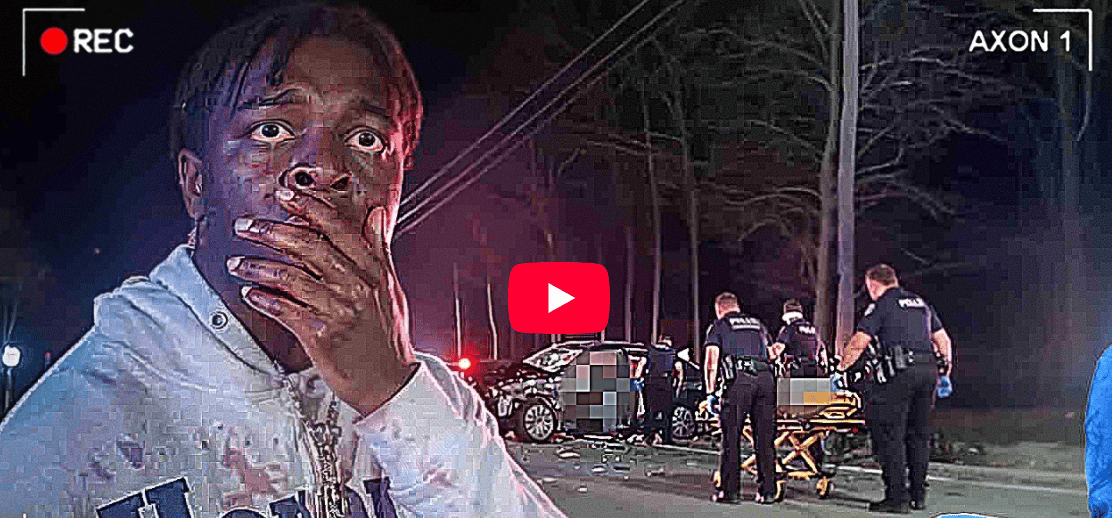
What happens when college football’s brightest stars, fresh off a national championship victory, make a split-second decision that ends in tragedy?
On the Solved Files channel, we investigate the cases that shake communities to their core. Our latest deep dive, “Teens Realize They Accidentally Killed Their Best Friends,” takes you inside the devastating January 15, 2023 crash in Athens, Georgia that claimed the lives of two University of Georgia football team members and forever changed the lives of those who survived.
What you’ll witness:
The night started as a celebration. The UGA Bulldogs had just won the national championship, and the team was riding high. But when recruiting staffer Chandler LeCroy got behind the wheel with UGA player Devon Willock, offensive lineman Warren McClendon Jr., and staffer Victoria Bowles as passengers, what began as a joyride turned into a nightmare at 109 mph in a 45 mph zone.
The Fatal Race: Watch as investigators reconstruct the moments leading up to the crash, using vehicle data and witness testimony to reveal that LeCroy wasn’t alone in her high-speed drive. UGA star Jalen Carter was driving his black Jeep Trackhawk alongside her, the two vehicles weaving through lanes in what police would later describe as “street racing.”
The Crash Scene: See the devastating aftermath as first responders arrive to find Devon Willock ejected from the vehicle and Chandler LeCroy trapped inside. Warren McClendon Jr. walks away with minor injuries, while Victoria Bowles is so disoriented from trauma that she initially forgets she was even in the wreck.
The Cover-Up Attempt: Follow along as detectives interview Jalen Carter on the night of the crash. He claims he was simply driving behind them toward a Waffle House and denies racing. But as investigators dig deeper, interviewing witnesses who were in Carter’s car and analyzing crash data, a very different story emerges.
The Legal Reckoning: From the moment arrest warrants are issued for the NFL-bound star to his eventual plea of no contest to misdemeanor reckless driving and racing, watch as the justice system grapples with a case that divided a championship-winning community.
This isn’t just another car crash story. This is an investigation into how a moment of recklessness, peer pressure, and bad judgment cost two young people their lives and how those left behind must live with the consequences forever.
👁 Watch the full investigation now: Teens Realize They Accidentally Killed Their Best Friends
Subscribe to Solved Files and join us as we examine the evidence, the witness statements, and the heartbreaking decisions that turned a championship celebration into a tragedy that shocked college football.
Thanks for being part of this week’s case review. Every read, every thought, every question you bring keeps this community sharp and searching for truth. Until next time, stay curious and stay safe.