- Solved Files Newsletter
- Posts
- When the Familiar Face Becomes the Monster
When the Familiar Face Becomes the Monster
A pharmacy tech, a helpful neighbor, and the killer hiding in plain sight.

David Yupa
December 05, 2025

👋 Welcome Back, Case Crackers!
Every week, we dig into investigations where ordinary lives fracture in sudden, shocking ways. This week’s case begins with a grainy video on a teenager’s phone; a chilling final recording that would haunt a small Indiana town for over five years.
On February 13, 2017, in Delphi, Indiana, two young girls vanished during an afternoon hike. What followed was one of the most watched, most agonizing cold cases in recent American history. The killer walked among them, serving prescriptions, printing funeral photos, expressing sympathy — until a misfiled tip changed everything. We’ll walk you through the timeline, the breakthrough, the confessions, and the trial that finally brought justice. Pay close attention: this is more than a murder mystery, it’s a story about how evil can hide in plain sight, and how a brave girl’s quick thinking helped catch her own killer.
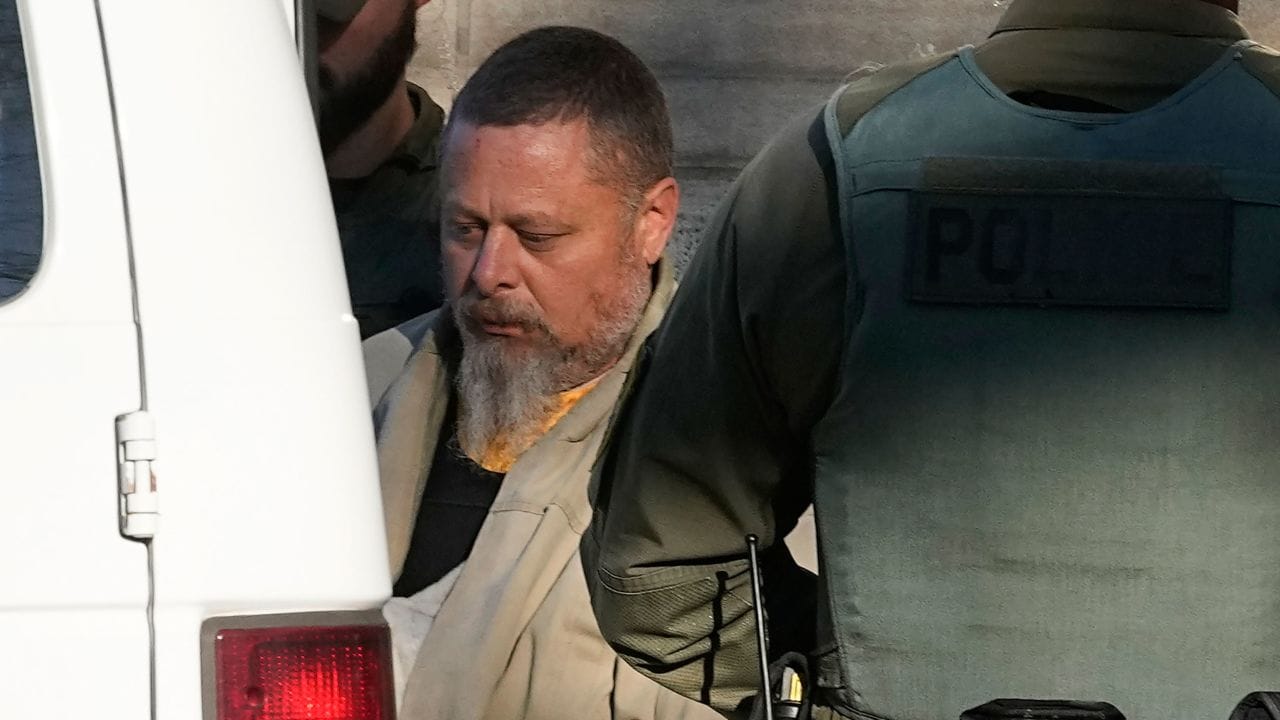
Richard Allen found guilty on November 11, 2024, of the murders of Liberty “Libby” German and Abigail “Abby” Williams.
On February 13, 2017, thirteen year old Abigail Williams and fourteen year old Liberty German were dropped off by German’s older sister on County Road 300 North, east of the Hoosier Heartland Highway in Delphi, Indiana. The girls planned to spend the afternoon hiking the scenic Monon High Bridge Trail, part of the Delphi Historic Trails. They were supposed to be picked up later that day.
They never came home.
When the girls failed to appear at the designated pickup time, their families reported them missing. The next day, searchers found their bodies near the Monon High Bridge Trail , less than a quarter mile from the abandoned railroad trestle where they were last seen. Both were found with their throats slashed . The killer had left behind minimal physical evidence, but what he didn’t know was that one of his victims had recorded him.
Before she died, fourteen-year-old Libby German had the presence of mind to pull out her smartphone and capture video footage of a man approaching them on the bridge. The video shows a man walking on the bridge with his hands in his pockets, and the audio includes a man’s muffled voice saying, “Guys, down the hill.” According to prosecutors, video footage recovered from German’s phone showed one of the victims mentioning “gun” as a man wearing a dark jacket and jeans approached them and ordered them to go “down the hill.”
Police immediately released the grainy image of the so-called “Bridge Guy” to the public, along with the haunting audio clip. The case drew national attention. Thousands of tips poured in. Investigators followed leads across the country. But despite the video evidence, the case went cold. For over five years, the killer remained unidentified.
And all that time, he was hiding in plain sight.
Richard Allen, a 50-year-old married father and CVS pharmacy technician in Delphi, had worked at the local CVS since 2013. When best friends Libby German and Abby Williams were slain while on a hike in February 2017, Richard Allen processed photos for their funerals, free of charge . He was a regular at the local pub with his wife, known as a friendly, quiet man who blended seamlessly into small-town life. According to Bob Matlock, the bar’s former owner and Rick’s longtime friend, Allen “expressed sympathy for the families” and never raised suspicion .
But in September 2022, everything changed. A volunteer file clerk discovered an error: Richard Allen’s last name was recorded incorrectly on the tip when submitted, and the file was therefore wrongly marked as “cleared” . When the clerk reviewed the misfiled tip, she discovered something stunning: Just days after the bodies were discovered, Allen told police he had been on the trail during the timeframe the girls were thought to have been killed . He admitted he was there. He placed himself at the scene. Yet somehow, for over five years, this critical tip had been ignored.
On October 26, 2022, Richard Allen was arrested and charged with two counts of murder. Allen had seemingly evaded police notice, staying in the small town of Delphi and working at a local CVS pharmacy , until that overlooked tip resurfaced.
During his initial interview in October 2022, Allen told authorities he had worn “jeans and a black or blue jacket” that day and had gone to the bridge to “watch fish.” He claimed he saw three females near the bridge but hadn’t spoken to them. The timeline and clothing description matched witness accounts of “Bridge Guy.”

Courtroom sketch of Richard Allen (left) with defense attorney Andrew Baldwin during trial proceedings in Delphi, Indiana.
The prosecution’s case relied heavily on three key pieces of evidence:
1. The Unspent Bullet: A .40-caliber unspent round discovered by the girls’ bodies — police analysis determined that unspent round was cycled through Allen’s Sig Sauer Model P226 , according to prosecutors. While the defense questioned the science of matching an unfired round to a specific weapon, the prosecution argued it was compelling physical evidence linking Allen to the crime scene.
2. The Confessions: Prosecutors presented testimony that Allen confessed over 60 times to the killings while in prison, to his wife, his mother, family members, the prison warden, the psychologist who treated him in prison, other prison employees and other inmates . In one chilling phone call to his wife on April 3, 2023, he said, “Honey, I did it. I killed Abby and Libby.” When his wife told him not to say that, he kept repeating the claim.
Prison psychologist Monica Wala testified that on April 5, 2023, Allen confessed to the crime by saying, “I killed Abby and Libby. I am sorry.” According to testimony, Allen allegedly told another inmate he wanted to rape the girls, but he panicked and ended up killing them with a box cutter and threw it into a dumpster behind CVS.
3. Witness Testimony & Timeline: Multiple witnesses placed a man matching Allen’s description at the trail that day. Allen himself admitted he was there. He had no alibi; Allen was off from work the day the girls disappeared and did not have an alibi.
The defense argued that Allen’s confessions came during a severe mental health crisis after 13 months in solitary confinement at Westville Correctional Facility. Allen had been held in solitary confinement for a total of 13 months, and the defense has sought to place the confessions within the context of Allen’s mental health crisis while incarcerated . Correctional staff testified to disturbing behavior: Allen hitting his head on walls, eating paper, smearing feces in his cell, and washing his face in the toilet.
The defense also noted that a DNA expert testifying for the state found none of Allen’s DNA at the crime scene, and none of Libby or Abby’s DNA was found on items recovered from his home . They questioned the bullet evidence and pointed to alternate theories that were excluded from trial.
But the jury wasn’t convinced. On November 11, 2024, after approximately 19 hours of deliberation over three days, the jury found Allen guilty of all four counts of murder. On December 20, 2024, Allen was sentenced to 130 years in prison for the 2017 murders of two teenage girls — 65 years for each murder, to run consecutively.
At sentencing, Libby’s grandmother, Becky Patty, addressed the man who had developed her granddaughter’s funeral photos with a smile: “He developed photos with no remorse and he didn’t blink”. She added, “I hope he lives with the same fear he caused Abby and Libby in the last hour of their lives.”
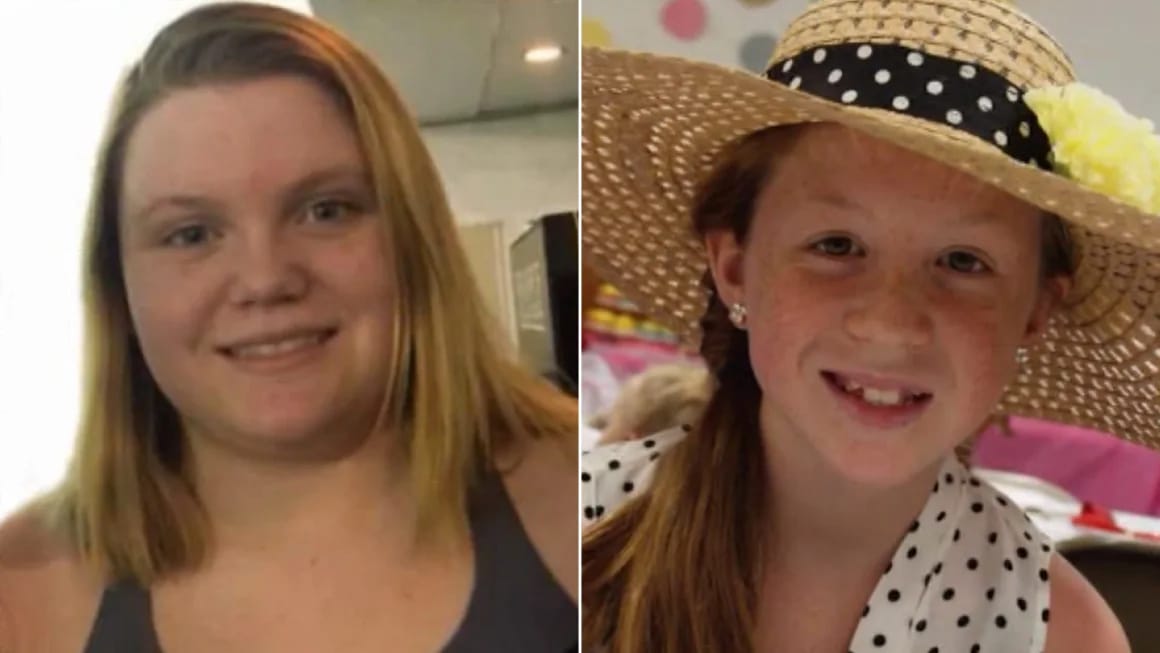
Liberty “Libby” German, 14 (left), and Abigail “Abby” Williams, 13 (right), were murdered on February 13, 2017.
The families can now rest knowing that the man who took their daughters is behind bars — caught, in part, because a brave fourteen-year-old girl had the courage to record her own killer.
Fast Facts
Date of murders: February 13, 2017
Victims: Liberty “Libby” German (14) & Abigail “Abby” Williams (13)
Accused/Convicted: Richard Allen (52 at sentencing)
Years case was cold: 5 years, 8 months
Key evidence: Bridge Guy video/audio, unspent .40-caliber bullet, 60+ confessions, witness testimony
Trial verdict: Guilty of all four murder counts (November 11, 2024)
Sentence: 130 years (December 20, 2024)

💡 Tip of the Week: When “Cleared” Doesn’t Mean Innocent: The Fatal Flaw in Tip Management
The Delphi case teaches us one of the most critical lessons in criminal investigation: administrative errors can hide killers for years. Richard Allen didn’t evade capture through cunning or careful planning - he hid inside the very system designed to catch him.
Here’s what happened: Just three days after the murders, Allen voluntarily contacted police and placed himself at the crime scene on the day and time of the killings. He admitted walking the trail, wearing clothes matching witness descriptions, and seeing three females near the bridge. This should have made him a prime suspect. Instead, due to a clerical error when his name was recorded, the tip was misfiled and marked “cleared.” For over five years, while thousands of tips were chased across the country, the answer sat in a wrongly labeled file.
The breakthrough came in September 2022 when a volunteer clerk - not a detective, not advanced technology, but someone doing systematic file organization - noticed the discrepancy and brought it to investigators’ attention. Within weeks, Allen was arrested.
What this means for case analysis:
“Cleared” is not the same as “innocent.” Always ask: What does “cleared” mean in this context? Was the person actually ruled out with evidence, or just interviewed once and filed away?
Tip volume can become tip chaos. Major cases generate thousands of leads. Without robust digital systems and regular audits, critical information gets lost in the noise. The Delphi case had over 50,000 tips - managing that manually is nearly impossible.
Fresh eyes matter more than experience sometimes. The volunteer clerk had no investigative background, but she had systematic organization skills. She saw the misfiled name that seasoned detectives had missed for years.
Local suspects get overlooked. Allen worked in town, printed funeral photos, expressed sympathy at the pub. Investigators often focus on strangers or transients, but statistically, many killers are embedded in the community. They know the terrain, the victim routines, and how to blend in.
Time doesn’t erase digital trails. Allen’s original 2017 tip stayed in the system. His phone records, work schedules, and purchase history were all still accessible in 2022. In cold cases, don’t assume evidence has degraded - administrative records often outlast physical evidence.
Practical application: If you’re analyzing a cold case or unsolved mystery, ask these questions:
How many tips were received, and how were they managed?
What system was used to track and cross-reference leads?
Were there any personnel changes, system migrations, or organizational restructuring that could have caused information loss?
Has anyone conducted a systematic audit of “cleared” suspects?
Are there volunteers, retired investigators, or outside experts who could review files with fresh perspective?
Because sometimes, solving the case isn’t about finding new evidence - it’s about finding the evidence that was there all along, buried under a typo and a checkmark that should never have been made.

Myth If someone is interviewed early in an investigation and “cleared,” they’re no longer a suspect. | Facts “Cleared” doesn’t always mean innocent - sometimes it just means overlooked. Allen’s tip was marked “cleared” due to a clerical error, allowing him to hide in plain sight for over five years. Always question what “cleared” actually means: ruled out with evidence, or simply filed away? |
Killers try to distance themselves from their crimes and avoid any connection to victims or their families. | Many killers insert themselves into the investigation or victim’s circle. Allen processed the girls’ funeral photos free of charge, expressed sympathy at the local pub, and stayed in Delphi working at CVS. This “helpful neighbor” behavior can be a way to monitor the investigation, appear innocent, or satisfy psychological needs. |
Multiple confessions, especially detailed ones, are always reliable evidence of guilt. | Context matters critically. Allen confessed 60+ times, but his defense argued these came during severe mental health crisis after 13 months in solitary confinement. However, the jury weighed the specificity of his confessions (box cutter, CVS dumpster, details only the killer would know) against his mental state and still convicted. Confession reliability requires examining both content and circumstances. |
🧩 CASE CRACKERS: This Week’s Cipher & Last Week’s Answer
🧩 The Misfiled Tip: For over five years, the critical tip placing Allen at the scene sat incorrectly filed and marked “cleared.”
Question: Which investigative practice would have most likely prevented this oversight?
a) Requiring detectives to personally review every tip before marking it “cleared”
b) Implementing a digital database with automated cross-referencing and periodic audits
c) Limiting the number of tips accepted to reduce volume
(Hint: consider scalability and human error reduction.)
Detective Insights - Trust, Behaviour & the Calm Before the Blackout
When we step into this investigation, the key moment isn’t the murder itself. It’s the funeral photos, the sympathetic conversations at the pub, the helpful pharmacy technician smile. Detectives speak of the “helpful perpetrator” phenomenon, a phase in which a killer, often embedded in the victim’s community, maintains normalcy while actively participating in the aftermath of their own crime. In Allen’s case:
• He processed funeral photos for the girls he murdered: free of charge, with apparent sympathy.
• He discussed the case at the local pub, expressing concern for the families.
• He continued working at CVS in Delphi for over five years, filling prescriptions for the same community searching for the killer.
From an investigative standpoint, the takeaway is this: don’t ignore helpful behavior as innocence. Sometimes helpfulness is the final performance. In practical terms:
Scrutinize community insiders: Someone trusted, embedded in daily life, with knowledge of local trails and victim routines often has advantages outsiders don’t. Allen knew exactly where to take the girls, how to access the area, and how to disappear into normalcy afterward.
Focus on timeline integrity: Allen placed himself at the scene, matching the timeframe and clothing description. The administrative error wasn’t in the evidence — it was in the filing. When tips place someone at the scene with matching details, that’s not “cleared,” that’s a lead.
Track post-crime insertion behavior: Offering to help, attending vigils, processing photos, discussing the case publicly — these aren’t always signs of community grief. Sometimes they’re signs of control, monitoring, or psychological satisfaction.
This case reminds us: trust is not an investigation stop-sign. It may be the beginning of a case.
💬 Ethical Debate — Confessions Under Duress: When Does Mental Illness Invalidate Guilt?
Richard Allen’s defense team argued that his 60+ confessions were the product of a severe mental health crisis brought on by 13 months of solitary confinement. They presented evidence of psychotic behavior: eating paper, smearing feces, talking to himself.
Question: When someone confesses to a crime while experiencing a documented mental health breakdown, should those confessions be admissible in court? How do we balance the reliability of confession evidence with the ethical concerns of interrogating or housing mentally ill suspects in conditions that may worsen their state?
Some argue that solitary confinement itself is a form of psychological torture that can produce false confessions. Others insist that the specificity of Allen’s confessions: including details only the killer would know — proves their validity regardless of his mental state at the time.
Where do you stand?

🗣 Have Your Say – Help Shape What Solved Files Covers Next
We love hearing from our Case Crackers community, and your feedback helps us make each edition better than the last! This week, we want to ask you:
What content would you like to see more of in the newsletter?
Are there specific cases, topics, or mysteries you’d love us to explore?
Do you enjoy the mix of features we currently include, or is there something you think is missing?
Would you like more behind-the-scenes content, expert interviews, or interactive challenges?
Your input is invaluable, so don’t hesitate to share your thoughts! Drop us a reply or fill out this quick feedback form HERE. Together, we can make Solved Files your ultimate true crime resource.
Got another question or suggestion? Send it our way, and we might feature it in a future Q&A!

🔦 Step Inside the Interrogation Room — Where Delusion Meets Reality
What happens when a detective sits across from someone who murdered their entire family, and believes it was “necessary”?

On our Interrogation Channel, we bring you real, unfiltered interrogations that reveal the darkest corners of the human mind. Our latest upload, “Delusional Teen Kills His Family Because It Was ‘Necessary’”, takes you inside the chilling confession of 24-year-old Adlay Mestre, a man who shot his parents, 16-year-old sister, and family dog, claiming they were “no longer human” and “eating bodies.”
What you’ll witness:
An immediate confession with zero remorse — “I had to do it”
Severe delusions about seismic waves, cell towers, demons, and Satan
A suspect’s mental breakdown in real-time: yelling at invisible people, then kicking through the drywall to escape the interview room
The moment deputies tackle him in the hallway after his dramatic escape attempt This isn’t Hollywood. This is raw footage of a mind unraveling, a family destroyed, and the moment law enforcement realized they weren’t just dealing with a killer, they were dealing with someone living in a completely different reality.
Adlay Mestre was charged with three counts of first-degree murder, tampering with evidence, and extreme cruelty to animals. His family revealed he had been diagnosed with schizophrenia but refused his medication, a decision that ended in unspeakable tragedy. 👁 Watch the full interrogation now: Delusional Teen Kills His Family Because It Was ‘Necessary’. Subscribe to the Interrogation Channel and witness the moments where truth, lies, and delusion collide: unfiltered, unscripted, unforgettable.
🕵 Stay Sharp, Stay Connected
While you wait for the next newsletter, keep your detective instincts sharp with our daily updates. On TikTok & Instagram, you’ll find crime polls that test your gut instincts, behind-the-scenes clues from our investigations, and bite-sized true crime drops you can watch anywhere.
And if you want to dig deeper, join us on Patreon for full trial timelines, extended case files, and uncut interviews you won’t see anywhere else.
Thanks for joining us on this week’s investigation. Every time you read, watch, or share, you help uncover what really happens when justice finally catches up to those who think they’ve gotten away. Until next time — stay observant, stay curious, and never stop asking questions.