- Solved Files Newsletter
- Posts
- When The Detective Was The Killer: The 23-Year Cover-Up
When The Detective Was The Killer: The 23-Year Cover-Up
A bite mark, buried evidence, and the LAPD cop who got away with murder for decades.

David Yupa
January 23, 2026

Welcome Back Case Crackers!
Another week, another case that will shake your faith in the justice system and show you how DNA evidence can crack even the most carefully hidden crimes. This isn’t just a murder story: it’s a tale of obsession, a brutal killing staged to look like a burglary, and a police department that may have protected one of its own for over two decades.
From the moment Sherri Rasmussen was found beaten and shot to death in her Los Angeles condo in 1986, to the stunning 2009 revelation that an LAPD detective had been the killer all along, we’re diving deep into a case that exposed corruption, tested the limits of forensic science, and proved that no matter how long it takes, DNA never lies. Pay close attention; you might spot the critical piece of evidence that was sitting in a freezer for 23 years waiting to solve a murder. Whether you’re a veteran detective in our community or just beginning to hone your investigative skills, this edition offers insights into how cold cases are solved, how DNA databases work, and how even police officers can’t escape justice forever.
So grab your notebook, focus your attention, and get ready. This week, we’re uncovering how a bite mark on a victim’s arm brought down a detective who thought she had committed the perfect crime.

🔎 Full Case Story — The Detective Who Killed: When a Bite Mark Solved a 23-Year-Old Mystery
On June 5, 2012, former LAPD Detective Stephanie Lazarus, 52, was convicted of first-degree murder in the 1986 killing of Sherri Rasmussen, a 29-year-old nursing director who had been brutally beaten and shot three times in her Los Angeles condominium. The conviction came 23 years after the murder, following one of the most controversial cold case investigations in LAPD history.
Sherri Rasmussen was found dead on February 24, 1986, in the condo she shared with her husband of three months, John Ruetten. The crime scene appeared to be a burglary gone wrong. Sherri’s car was missing, her home had been ransacked, and she had been shot execution-style. LAPD detectives initially investigated the case as a robbery-murder, focusing their attention on possible gang members or burglars in the area.
But the real killer was much closer than anyone imagined. She was a fellow LAPD officer who had been obsessively in love with Sherri’s husband for years and couldn’t accept that he had chosen someone else.
The Murder
On the morning of February 24, 1986, John Ruetten left for work around 7:00 AM, leaving his wife Sherri at home. She was scheduled to work a later shift at Glendale Adventist Medical Center where she served as the director of critical care nursing. When John returned home that evening around 6:00 PM, he made a horrifying discovery. Sherri was dead on the living room floor, her body surrounded by evidence of a violent struggle.
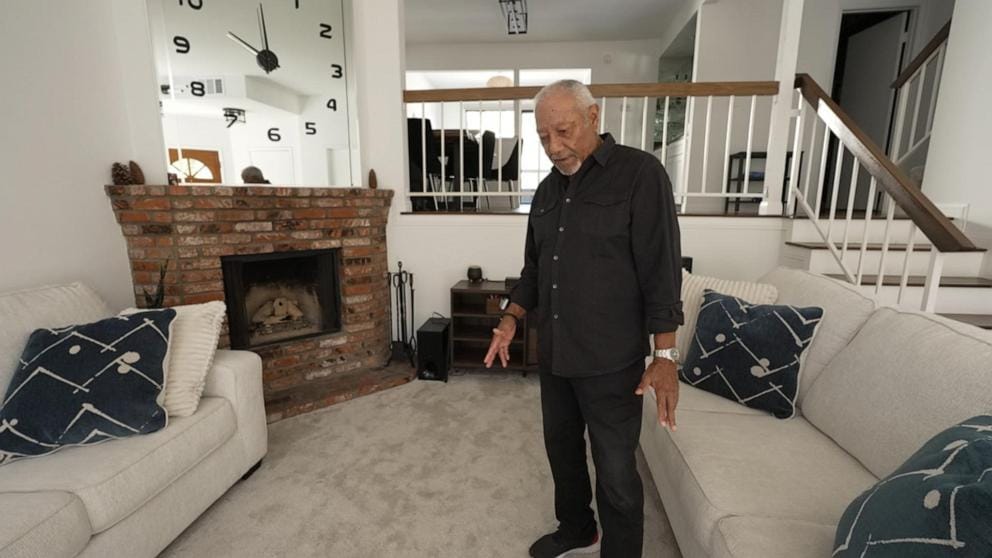
LAPD officer returns to the condo where Sherri Rasmussen was murdered in 1986.
Sherri had been beaten severely. Her face was battered and swollen. She had defensive wounds on her hands and arms showing she had fought desperately for her life. Most notably, she had a significant bite mark on her left inner forearm. She had been shot three times with a .38 caliber handgun, with shots to her chest, abdomen, and ultimately a fatal shot to her back as she tried to crawl away.
The condo had been ransacked. Drawers were pulled open, belongings scattered, and Sherri’s BMW was missing from the garage. Electronics and other valuables remained in the home, which was unusual for a burglary. Still, LAPD detectives Lyle Mayer and Steve Hooks, who caught the case, focused their investigation on the burglary angle. They theorized that gang members or burglars had broken in, Sherri had surprised them, and they had killed her during the struggle.
John Ruetten told detectives that Sherri had mentioned a strange encounter a few days before her death. She said a woman had come to their condo and confronted her about John. The woman had been aggressive and threatening. John knew exactly who that woman was: Stephanie Lazarus, a fellow LAPD officer he had dated on and off for several years before meeting Sherri.
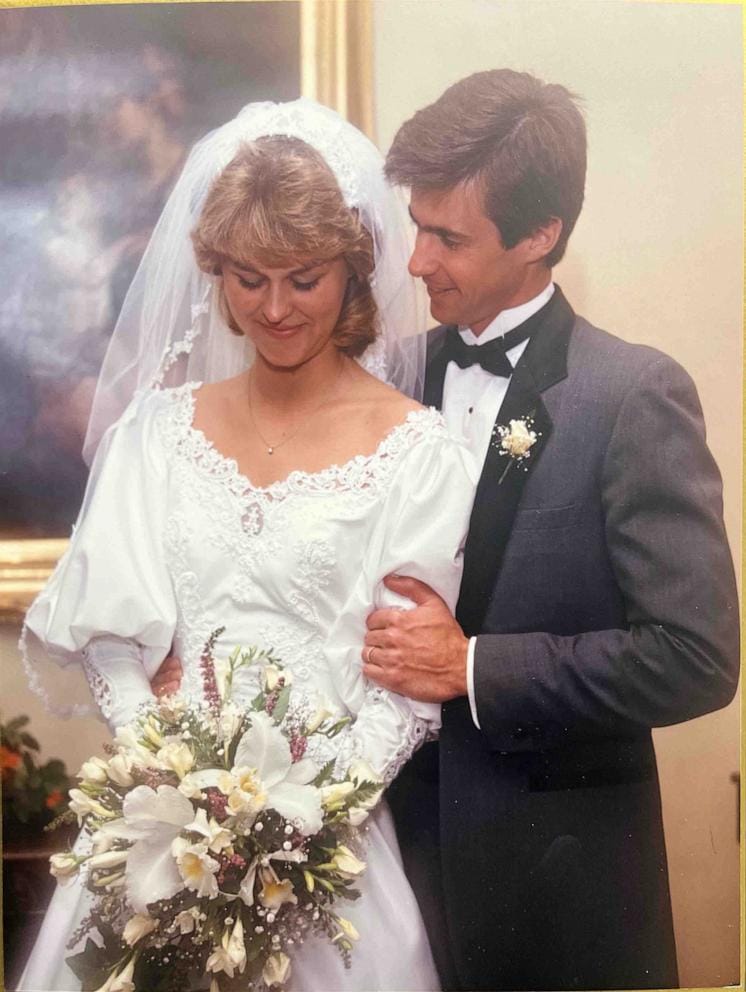
Sherri Rasmussen and John Ruetten on their wedding day, November 1985.
John reported this information to the investigating detectives. He told them about Stephanie, about her obsessive behavior after he started dating Sherri, about her unwillingness to accept that their relationship was over. He even gave them Stephanie’s name and told them she was an LAPD officer. But the detectives never seriously pursued this lead. They never interviewed Stephanie Lazarus. They never questioned her about her whereabouts on the day of the murder. They simply filed the information away and continued focusing on the burglary theory.
The case went cold. Sherri’s murder remained unsolved. Her family was devastated, and John was left without answers. Stephanie Lazarus, meanwhile, continued her career with the LAPD. She got married, had a daughter, and rose through the ranks to become a detective in the commercial crimes division. For 23 years, she got away with murder.
The Obsession
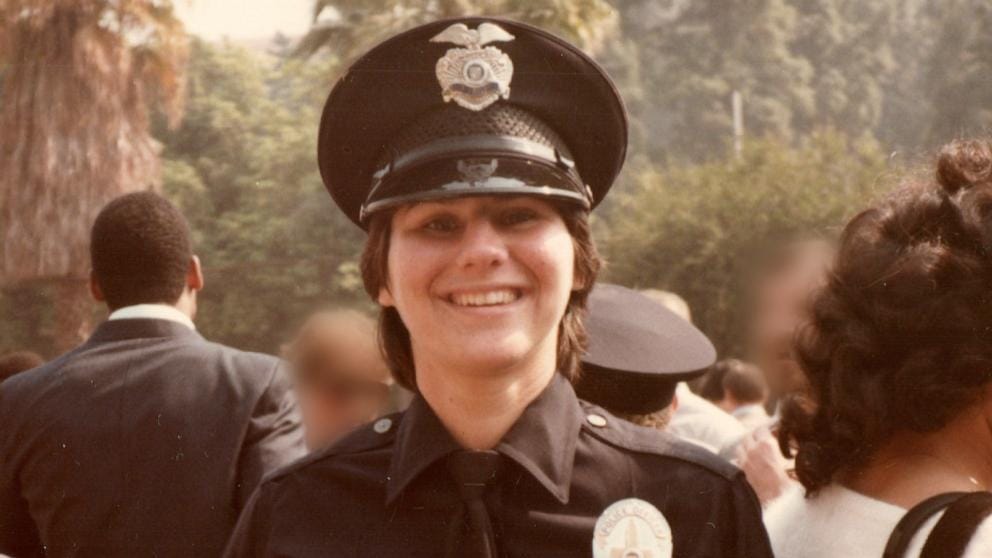
Stephanie Lazarus as an LAPD detective in 1986.
To understand why Stephanie Lazarus killed Sherri Rasmussen, you have to understand the twisted history between Stephanie and John Ruetten. They had met in college at UCLA in the late 1970s. They began an on-and-off sexual relationship that continued for years. John has described the relationship as casual from his perspective, but Stephanie apparently viewed it very differently. She was deeply attached to John and believed they would eventually marry.
In the mid-1980s, John met Sherri Rasmussen. Sherri was smart, accomplished, and beautiful. She was the director of critical care nursing at a major hospital, a position of significant responsibility for someone so young. John fell in love with her quickly. They began dating seriously, and John started pulling away from his relationship with Stephanie.
Stephanie did not take this well. Friends and family members would later testify that Stephanie became increasingly agitated and desperate as John’s relationship with Sherri progressed. When John proposed to Sherri in 1985, Stephanie’s behavior became even more alarming. She continued to pursue John sexually even after he was engaged. On at least two occasions, John had sex with Stephanie while engaged to Sherri, something he would later express deep regret about during the trial.
Stephanie showed up at John’s workplace unannounced. She called him repeatedly. She made it clear she didn’t accept that their relationship was over. She even showed up at the hospital where Sherri worked and confronted her. Sherri told friends and family that a woman who claimed to be John’s ex-girlfriend had harassed her and seemed unstable and threatening.
John and Sherri married in November 1985. Just three months later, Sherri was dead. The timing was not a coincidence.
The Cold Case Reopened
For over two decades, Sherri Rasmussen’s murder file sat in the LAPD’s cold case archives. Her family never stopped asking questions, never stopped pushing for answers, but the case remained officially unsolved. Then, in 2004, a new technology emerged that would change everything: DNA databases.
The LAPD, like many law enforcement agencies, began systematically reviewing old cases to see if biological evidence could be retested using modern DNA analysis. In 2005, a cold case detective named Jim Nuttall was assigned to review Sherri Rasmussen’s case file. When he examined the evidence, something jumped out at him. During the original autopsy, the medical examiner had swabbed the bite mark on Sherri’s arm. That swab had been preserved and was still in the coroner’s evidence freezer.
Detective Nuttall sent the swab to the LAPD crime lab for DNA testing. The results came back with a profile that was entered into CODIS, the FBI’s Combined DNA Index System, which contains DNA profiles from convicted offenders and crime scenes across the country. There was no hit. The DNA didn’t match anyone in the database.
But Detective Nuttall didn’t give up. He began re-examining the case file with fresh eyes. He read John Ruetten’s statements from 1986. He saw the references to Stephanie Lazarus, the LAPD officer who had been obsessed with John and had confronted Sherri shortly before her death. He saw that the original detectives had never followed up on this lead. And he began to wonder: could a police officer have committed this murder and gotten away with it because she was one of their own?
Nuttall faced a significant obstacle. To get Stephanie Lazarus’s DNA for comparison, he would need her cooperation or a court order. But if he approached her directly or sought a warrant, and she was indeed the killer, she would know she was under investigation and could flee or destroy evidence. Nuttall needed to get her DNA surreptitiously.
In 2009, Nuttall and his team set up surveillance on Stephanie Lazarus. They followed her to work, to lunch, to run errands. They waited for an opportunity to obtain a discarded item that might contain her DNA, what’s known as an “abandoned DNA” sample. On a day in May 2009, Stephanie went to a Costco store during her lunch break. She purchased a beverage and drank from it. When she threw the cup away in a trash can in the parking lot, detectives retrieved it.
The cup was sent to the lab. DNA was extracted from the saliva on the rim. And when it was compared to the DNA from the bite mark swab taken from Sherri Rasmussen’s arm in 1986, it was a match. After 23 years, detectives finally had their killer. And she was one of their own.
The Arrest and Interrogation
On June 5, 2009, Detective Nuttall and his team decided to arrest Stephanie Lazarus at LAPD headquarters. They couldn’t risk approaching her at home where she might have access to weapons or the opportunity to flee. Instead, they called her at work and asked her to come to an interview room, saying they needed her help with a case.
The interrogation that followed was remarkable. The entire interview was recorded on video and would later be played at trial. Stephanie arrived at the interview room thinking she was going to help with an investigation. She was calm and professional, sitting across from Detectives Nuttall and Greg Stearns in her business casual clothes with her LAPD badge visible.
The detectives started by making small talk, putting her at ease. Then they transitioned to asking her about her past, about where she had worked in 1986, about people she had known. Stephanie answered easily, seemingly unconcerned. Then they asked her about John Ruetten. Stephanie’s demeanor shifted slightly. She acknowledged knowing John, said they had dated briefly in college, claimed it wasn’t serious.
The detectives pressed further. They asked if she remembered John getting married. Stephanie said she thought she might have heard something about that. They asked if she remembered his wife’s name. Stephanie said she didn’t think she ever knew it. They asked if she remembered that John’s wife had been murdered. Stephanie said she might have heard something about that, but it was a long time ago.
Then the detectives told her why she was really there. They told her they had DNA evidence linking her to Sherri Rasmussen’s murder. Stephanie’s reaction was telling. She didn’t express shock or outrage at being falsely accused. She didn’t demand to know what evidence they could possibly have. Instead, she became evasive and defensive. She said she didn’t remember much about that time. She suggested maybe she had gone to John and Sherri’s condo for some innocent reason and maybe she had touched something. She questioned whether DNA could really last that long.
The detectives explained that the DNA came from a bite mark on Sherri’s arm. Stephanie had no explanation for that. She asked if she needed a lawyer. The detectives said that was up to her. The interview continued for a while longer, with Stephanie alternating between claiming she didn’t remember anything and suggesting vague alternative explanations. Finally, she was arrested and booked on suspicion of murder.
The Trial
Stephanie Lazarus’s trial began in February 2012 in Los Angeles Superior Court. The case presented unusual challenges for the prosecution. There were no eyewitnesses to the murder. There was no confession. The physical evidence was 26 years old. The defendant was a police officer with an otherwise clean record who had served the LAPD for decades. And perhaps most importantly, the defense was going to argue that the LAPD had targeted Stephanie because they needed a scapegoat for an embarrassing unsolved murder.
Deputy District Attorney Shannon Presby presented the prosecution’s case methodically. The centerpiece was the DNA evidence. Criminalist Jennifer Francis from the LAPD crime lab testified that she had analyzed DNA from the bite mark swab and from Stephanie Lazarus’s discarded cup. The DNA matched. The statistical probability that the DNA came from someone other than Stephanie Lazarus was approximately one in 1.7 sextillion for Caucasians. It was, for all practical purposes, a certain match.
The prosecution also presented testimony about Stephanie’s obsession with John Ruetten. John himself took the stand and testified about their relationship, about Stephanie’s inability to accept that it was over, about her showing up at his workplace and continuing to pursue him even after he was engaged to Sherri. Friends and family members testified that Sherri had told them about a frightening encounter with John’s ex-girlfriend shortly before her death.
The timeline was damning. Stephanie had been off duty on the day of the murder. She had no alibi for the time when Sherri was killed. Her weapon, a .38 caliber handgun that she carried as an LAPD officer, had never been recovered for comparison, but detectives testified that the gun used to kill Sherri was consistent with the type of weapon Stephanie would have had.
The prosecution’s theory was straightforward. Stephanie Lazarus had gone to John and Sherri’s condo on the morning of February 24, 1986, ostensibly to confront Sherri one more time. The confrontation had escalated into a physical fight. During the struggle, Stephanie had bitten Sherri’s arm. Sherri had fought back fiercely, but Stephanie was younger, stronger, and had police training. Eventually, Stephanie had pulled her gun and shot Sherri three times, killing her. Then Stephanie had staged the scene to look like a burglary, taking Sherri’s car and some other items to make it appear that robbery was the motive. As a police officer, Stephanie knew how to stage a crime scene. And as an LAPD officer, she may have believed she would never be seriously investigated as a suspect.
The defense, led by attorney Mark Overland, attacked the DNA evidence and argued that the LAPD had botched the original investigation and was now trying to pin the murder on a convenient scapegoat. Overland argued that the DNA evidence had been improperly stored and could have been contaminated over 23 years. He suggested that the bite mark swab might have been mislabeled or mixed up with other evidence. He pointed out that no fingerprints matching Stephanie had been found at the scene, and he argued that if Stephanie had really committed this violent murder, there would have been more physical evidence linking her to the crime.
The defense also presented an alternative theory. They argued that the murder was actually committed by two Hispanic male burglars, as the original detectives had believed. They pointed to evidence that the front door lock appeared to have been forced, suggesting a break-in. They noted that Sherri’s car and some other items had been stolen, consistent with burglary. They suggested the DNA evidence was a red herring and that the real killers had never been caught.
But the prosecution’s case was overwhelming. The DNA match was irrefutable. The motive was clear. The timeline fit. And Stephanie’s own behavior during the interrogation suggested consciousness of guilt. An innocent person falsely accused of murder would be outraged and adamant about their innocence. Stephanie had been evasive and had immediately started trying to construct explanations for why her DNA might be at the scene.
The Verdict
On June 5, 2012, after deliberating for just one day, the jury returned a guilty verdict. Stephanie Lazarus was convicted of first-degree murder. The jury found that she had killed Sherri Rasmussen with premeditation and malice. She showed no emotion as the verdict was read.
At her sentencing hearing, Judge Robert Perry sentenced Stephanie Lazarus to 27 years to life in prison. In his remarks, Judge Perry noted the particularly egregious nature of the crime, saying that Stephanie had used her position as a police officer to commit and cover up a murder, and that she had shown no remorse for taking Sherri Rasmussen’s life.
Stephanie Lazarus appealed her conviction, arguing that the DNA evidence should not have been admitted and that the delay in prosecuting her violated her constitutional rights. In 2015, a California appellate court rejected all of her arguments and upheld her conviction. She remains in prison at the California Institution for Women in Corona, California. She will not be eligible for parole until she has served at least 27 years of her sentence.
For John Ruetten and Sherri’s family, the conviction brought a measure of justice, but it could never undo the loss. Sherri’s father, Nels Rasmussen, had fought tirelessly for 23 years to keep his daughter’s case alive and to push the LAPD to investigate all leads, including the possibility that a police officer was involved. He lived to see Stephanie Lazarus convicted, but he passed away in 2010, two years before the trial concluded. Sherri’s mother, Loretta Rasmussen, attended every day of the trial and testified about her daughter’s life and the devastation her murder had caused. She said that finally seeing Stephanie held accountable brought some peace, but nothing could bring Sherri back.
The case also raised serious questions about the LAPD’s handling of the original investigation. Why had detectives in 1986 never seriously investigated Stephanie Lazarus despite being told she had threatened the victim shortly before the murder? Was it because she was a fellow police officer? Had there been a deliberate cover-up, or was it simply negligent detective work? An internal LAPD review of the case found that the original investigation had been inadequate, but stopped short of alleging deliberate misconduct. Critics, including Sherri’s family, believe the LAPD protected one of its own and allowed a killer to go free for more than two decades.

Myth vs. Fact
One common myth is that DNA evidence degrades over time and becomes unusable after many years. The fact is that DNA can remain stable for decades if properly stored. In the Rasmussen case, the bite mark swab had been frozen at the coroner’s office for 23 years. When it was finally tested in 2005, the DNA was still intact and produced a clear profile. Modern DNA technology can extract profiles from incredibly small or degraded samples. Cold cases decades old are routinely solved using DNA evidence that was collected long ago and stored properly.
Another myth is that police officers can’t be prosecuted for crimes because the system protects its own. While police officers may sometimes receive preferential treatment, the fact is that officers can and do get prosecuted and convicted when there is sufficient evidence. The Stephanie Lazarus case shows that even though her fellow officers may have initially ignored her as a suspect, once the DNA evidence was discovered, the LAPD pursued the case aggressively and brought her to justice. That said, the 23-year delay raises legitimate questions about whether she received special treatment that allowed her to avoid investigation for so long.
A third myth is that you can refuse to provide DNA to police and that’s the end of the investigation. The fact is that police can obtain your DNA without your cooperation through what’s called “abandoned DNA.” If you throw away a cup, a cigarette butt, a tissue, or any item that contains your saliva or other biological material, police can legally retrieve it from the trash and test it. You have no expectation of privacy in items you discard in public places. This is how detectives obtained Stephanie Lazarus’s DNA from the cup she threw away at Costco. She had no idea she was under surveillance or that detectives were collecting evidence that would prove she was a killer.
🕵 Detective’s Insight
The Stephanie Lazarus case demonstrates how DNA technology and persistent detective work can crack cold cases decades later. When Detective Jim Nuttall reopened the case in 2004, DNA testing had advanced dramatically since 1986. The bite mark swab preserved in a freezer for 23 years became the key evidence that identified the killer. Abandoned DNA collection was crucial. Detectives obtained Stephanie’s discarded cup from a Costco trash can, allowing them to get her DNA without revealing their investigation. This technique is now standard in cold case work where suspects have been identified but direct samples are needed. The case also highlights the importance of following all leads regardless of who they point to. The original 1986 detectives were told a police officer had threatened the victim, but they never investigated Stephanie Lazarus. This failure, whether from incompetence or bias, allowed a killer to remain free for over two decades. Modern cold case investigators must be willing to pursue evidence wherever it leads, even when it implicates fellow officers.

💡 Tip of the Week — Your DNA Is Everywhere: What the Lazarus Case Teaches About Abandoned DNA
Stephanie Lazarus thought she had gotten away with murder for 23 years. She had no idea that detectives were watching her throw away a cup at Costco, and that the saliva on that cup would match DNA from a bite mark she left on her victim in 1986.
You shed DNA constantly. Every item you touch, every surface you lean against, every cup you drink from contains your genetic material. Saliva, skin cells, hair follicles, sweat, all contain DNA that can be extracted and analyzed. When you discard items in public places, you abandon any expectation of privacy in that DNA. Police can legally collect it and test it without a warrant.
This is exactly how the Lazarus case was solved. Detectives followed Stephanie to Costco, watched her buy and drink a beverage, and retrieved the cup after she threw it away. The DNA from her saliva was compared to DNA from the 1986 bite mark swab. The match proved she was the killer.
Abandoned DNA collection has become a standard technique in cold case investigations. If detectives have identified a suspect but don’t have enough evidence for an arrest warrant or a court order for DNA, they surveil the suspect and wait for an opportunity to collect discarded items. Coffee cups, water bottles, cigarette butts, gum, eating utensils, tissues, napkins, even envelopes you’ve licked, all are fair game if you throw them away in a public place.
The legal principle is simple: you have no reasonable expectation of privacy in items you abandon. Once you throw something in a public trash can, it’s considered abandoned property that anyone, including police, can retrieve. Courts have consistently upheld this practice, ruling that abandoned DNA collection does not violate Fourth Amendment protections against unreasonable searches.
The takeaway: if you’re under investigation, assume that anything you discard in public could be collected and tested. Your DNA is a permanent identifier that can link you to crimes from decades ago, as Stephanie Lazarus learned too late.
Ethical Debate — What Would You Do?
The Stephanie Lazarus case raises a critical question: can police departments fairly investigate their own officers? In 1986, John Ruetten told LAPD detectives that Stephanie Lazarus, a fellow officer, had obsessed over him and threatened his wife before her murder. Despite this lead, detectives never interviewed Stephanie or investigated her involvement. For 23 years, she escaped justice while continuing her LAPD career. Some argue that independent external agencies should automatically handle cases where officers are suspects because departmental loyalty makes objective investigation impossible. Others counter that most officers can investigate colleagues fairly, and the LAPD’s own cold case unit ultimately brought Stephanie to justice, proving the system can self-correct. What would you do? Should there be mandatory external oversight when officers are suspects? Where do you draw the line between trusting police to police themselves and requiring independent review?
Case Crackers: The Lazarus DNA Cipher
Stephanie Lazarus’s DNA from a bite mark and a discarded cup solved a 23-year-old cold case. Can you decode the hidden message that reveals what convicted her?
How to Play: Solve these three clues to find numbers. Convert each number to a letter using the standard alphabet where 1 equals A, 2 equals B, and so on through 26 equals Z. Arrange the letters in clue order to reveal the secret word.
Clue 1: The Cold Case Duration. Sherri Rasmussen was murdered in 1986. Stephanie Lazarus was arrested in 2009. Take the number of years between these dates (23) and subtract the number of shots fired (3). Use this number as your first clue number.
Clue 2: The Statistical Match. The DNA match probability was one in 1.7 sextillion. A sextillion has 21 zeros. Divide 21 by the number of times Sherri was shot (3). Use this number as your second clue number.
Clue 3: The Deliberation Time. The jury deliberated for one day before convicting Stephanie. Multiply the number of days (1) by the number of decades Stephanie got away with murder. Round 23 years to the nearest decade (20 years = 2 decades). So 1 times 2 equals your third clue number.
Final Step: Convert the three numbers to letters using the standard alphabet where 1 equals A, 2 equals B, and so on through 26 equals Z, then arrange them in clue order to spell the secret word.
📊 Statistics of the Week: How DNA Evidence Solves Cold Cases
Did you know that over 500 cold cases have been solved in the United States since 2018 using advanced DNA technology and genealogical databases?
The revolution in cold case investigations began with the capture of the Golden State Killer in 2018 using genealogical DNA analysis. Since then, law enforcement agencies across the country have been systematically reviewing unsolved cases to identify biological evidence that can be retested with modern technology. The results have been remarkable. Murders that went unsolved for decades are finally being solved as DNA profiles are compared against databases containing millions of genetic profiles.
Cold cases are ideal candidates for DNA retesting because evidence has often been preserved even when the technology didn’t exist to analyze it properly at the time. In the Stephanie Lazarus case, the bite mark swab from 1986 was frozen and stored for 23 years before being tested. When modern DNA analysis was finally performed, it produced a profile strong enough to identify the killer with near certainty.
Abandoned DNA collection has become a crucial tool in these investigations. When a suspect is identified through database searches but police need a direct sample for comparison, they can legally obtain discarded items like cups, bottles, or cigarettes from public places. This technique allows investigators to confirm matches without alerting suspects that they’re under investigation.
The impact on conviction rates has been substantial. Cold cases solved with DNA evidence have conviction rates exceeding 85% because DNA is objective, scientific evidence that’s difficult to dispute. Unlike witness testimony that can fade or become unreliable over time, DNA evidence remains constant. A match is a match, regardless of how many years have passed.
The Stephanie Lazarus case exemplifies these statistics perfectly. DNA preserved from 1986 was retested in 2005, producing a profile that was later matched to a discarded cup in 2009. The DNA evidence was so overwhelming that the jury deliberated for only one day before convicting. After 23 years, DNA brought a killer to justice and showed that no matter how long someone thinks they’ve gotten away with murder, genetic evidence never forgets.

💬 Community Q&A — We Want Your Voice!
We love hearing from our Case Crackers community, and your insights shape how we build each edition. This week, we’re asking about conspiracy cases and how investigators prove them. Do you want more analysis of how cell phone data is used in investigations? Are you interested in learning about other types of digital evidence like GPS tracking, app data, and social media evidence? Should we cover more cases involving multiple defendants and complex conspiracies? Would you like expert Q&As with cell phone forensic analysts who testify in trials?
Your opinion matters, don’t hesitate to share your thoughts! Drop us a reply or fill out this quick feedback form HERE. Together, we’ll make Solved Files your go-to hub for true crime insights and interactive casework. Got another burning question or case request? Send it in, you might see it featured in next week’s Q&A spotlight!
🔦 This Week’s Must-Watch Moment The 911 Call That Didn’t Add Up — When a Son’s Story Unraveled in Real Time
What happens when a 22-year-old calls 911 claiming a masked intruder killed his mother, but every detail of his story points to one conclusion: he’s the killer?
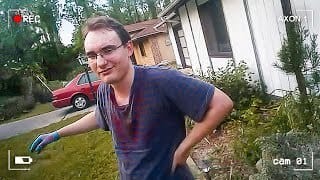
On the Solved Files channel, we dissect the interrogations, evidence, and confessions that reveal the truth behind brutal crimes. Our latest investigation, “Moments After Butchering His Mother,” takes you inside the case of Nathaniel Shiml, who murdered his 60-year-old mother Michelle after she demanded he get a job and stop playing video games all day.
What you’ll witness: The Suspicious 911 Call: Listen as Nathaniel tells dispatchers a masked intruder attacked his mother at their Palm Coast, Florida home. But his unnaturally calm demeanor and inconsistent details immediately raise red flags.
The Crime Scene That Told a Different Story: Police find Michelle face down on the front lawn with a knife lodged in her back. But there’s no forced entry, nothing stolen, and blood evidence that doesn’t match Nathaniel’s story of “fleeing immediately.”
The Blood Evidence That Cracked the Case: Forensic analysis reveals the knife in Michelle’s back wasn’t the fatal wound—repeated stabs to her throat killed her. And the blood on Nathaniel’s collar? It aligns perfectly with the height of those throat wounds, proving he was face-to-face with his mother when he killed her.
The Family Secret: Michelle’s brother reveals she was “at the end of her rope” with Nathaniel, who refused to work and spent all his time gaming and watching anime. On the day of the murder, she’d even moved his bed to the patio to force him to take action.
The Confession: Watch as detectives systematically dismantle Nathaniel’s story during interrogation. He finally admits the truth: when his mother yelled at him and grabbed his arm, he “panicked,” grabbed a kitchen knife, and stabbed her repeatedly in the throat. Then he staged the scene to look like an intruder attack.
This isn’t just another murder case. This is a chilling look at how parental pressure, entitlement, and rage can explode into deadly violence, and how forensic evidence and skilled interrogation expose even the most carefully constructed lies.
👁 Watch the full investigation now: Moments After Butchering His Mother
Subscribe to Solved Files and join us as we break down the evidence, the psychology, and the interrogation techniques that bring killers to justice.
📲 Follow Us Everywhere
Want daily updates and quick case clues? Find us here:
TikTok & Instagram: Crime polls, case clues, and behind-the-scenes breakdowns.
Solved Files Shorts: The biggest shocks in under a minute — moments that prove the smallest details can crack a case wide open.
💡 Thanks for following along this week. Every investigation is another puzzle piece, and together, we’re piecing the truth into focus. Stay sharp, stay curious, and remember: the next clue is always closer than you think.