- Solved Files Newsletter
- Posts
- When Google Searches Become Evidence: The Digital Trail to Murder
When Google Searches Become Evidence: The Digital Trail to Murder
A husband’s chilling internet searches, a dismembered body never found, and the conviction that shocked Massachusetts.

David Yupa
December 19, 2025

Welcome Back Case Crackers!
Another week, another case that will test your instincts and attention to detail. This isn’t just a crime story: it’s a web of deception, digital evidence, and a husband’s elaborate cover-up where every Google search mattered and every clue revealed a truth that changed everything.
From the shocking internet searches of Brian Walshe on New Year’s Day 2023: “how to dispose of a body” at 4:52 AM, to the bloody hacksaw and rug pieces found in dumpsters across Massachusetts, we’re digging deep into a case that made history: the first first-degree murder conviction in Norfolk County without a body. Pay close attention, you might spot a detail that everyone else misses. Whether you’re a veteran detective in our community or just beginning to hone your investigative skills, this edition offers twists, insights, and lessons that could reshape the way you see the story.
So grab your notebook, focus your attention, and get ready. The truth is often hidden in plain sight and this week, it’s waiting in Brian Walshe’s Google search history.

🔎 Full Case Story — The Google Searches That Convicted a Killer: When “How to Dispose of a Body” Becomes Your Digital Confession
In a groundbreaking verdict that made Massachusetts legal history, Brian Walshe, 50, was convicted of first-degree murder on December 15, 2024, for killing and dismembering his wife, Ana Walshe, 39, despite her body never being found. This is the first case to Norfolk District Attorney Michael Morrissey’s recollection where his office has gotten a first-degree murder conviction without having the victim’s body.
The case began on New Year’s Day 2023, when Ana Walshe, a successful real estate executive and mother of three, disappeared from the couple’s Cohasset, Massachusetts home. Both sides agree that the Walshes celebrated New Year’s Eve at home with a friend, who left around 1:30 a.m. on Jan. 1, 2023 . What happened next would become the subject of one of the most closely watched murder trials in recent Massachusetts history.
The Disappearance

Ana Walshe, reported missing on Jan. 1, 2023.
Ana Walshe wasn’t reported missing until January 4, 2023, when Brian Walshe called her employer in Washington, DC, where she worked and lived part time . Brian told investigators that Ana left the house around 6 or 7 that morning to catch a flight back to D.C. for a work emergency: wearing Hunter boots, a black jacket and a Hermes watch.
But prosecutors said this was a lie. “She wasn’t going to D.C. for a work emergency,” Assistant DA Anne Yas said. “There was no emergency.” Investigators found no data from rideshare apps showing she traveled to the airport, and confirmed that her phone was last active in the early morning hours of Jan. 1.
What investigators did find, however, was far more chilling.
The Internet Searches That Revealed Everything
Prosecutors said Brian, who allegedly killed his wife before disposing of her remains, made a series of incriminating internet searches on Jan. 1, 2023, which included “how long for someone to be missing to inherit,” “best way to dispose of a body” and “best way to dispose of body parts after a murder.”
“They began at 4:52 a.m. on January 1st of 2023, and the first one is, ‘how do you dispose of a body?’ It causes chills. It causes disgust,” defense attorney Larry Tipton admitted during closing arguments, even as he tried to argue his client’s innocence.
The searches didn’t stop there. Over the following days, Brian Walshe’s devices revealed queries about:
How to clean up blood
How long before someone is declared dead for inheritance purposes
Whether bleach destroys DNA
Divorce lawyers in Washington, D.C.
Best divorce strategies for men
The Shopping Spree
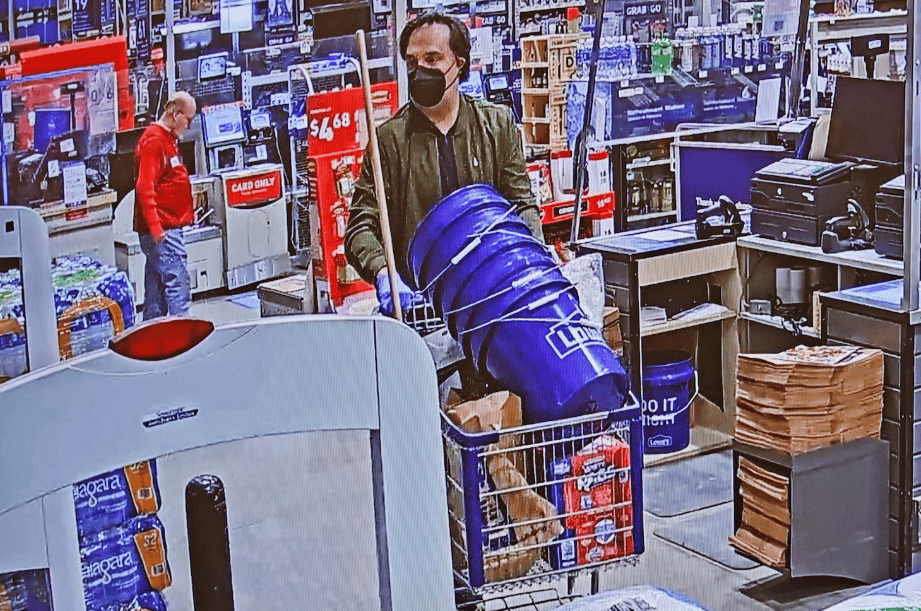
Brian Walshe shopping at Lowe’s – Jan 1, 2023
Surveillance footage from multiple stores painted a damning timeline. A surveillance camera image is presented as evidence of Brian Walshe shopping at Lowe’s in Danvers, Jan. 1, 2023 , where he purchased $463.26 worth of cleaning supplies, including industrial-strength chemicals.
Michael Roddy, a district loss prevention manager for TJX, the parent company of HomeGoods, presented surveillance video of Brian’s shopping trips. The footage showed Brian shopping at a Norwell HomeGoods on the mornings of Jan. 2 and Jan. 4. Receipts showed that Walshe purchased rugs, towels and bathmats, paying for the items using store value cards for $245.35 and for $155.91 .
The most damning detail? Roddy authenticated receipts that traced the store credits back to returns made by Ana in December 2022 from stores in Baltimore, Maryland, and Washington, D.C. Brian was using his dead wife’s gift cards to buy items to clean up her murder scene.
The DNA Evidence
While Ana’s body was never found, investigators recovered devastating forensic evidence from dumpsters across Massachusetts.
Saman Saleem, a DNA unit supervisor at the state police crime lab, testified Tuesday that multiple items recovered from a Peabody, Massachusetts, trash collection site contained Ana’s DNA. Those items included sections of a Tyvek suit, pieces of rug, unknown tissue, slippers, and both the blade and handle of a hacksaw, as well as the head and handle of a hatchet .
Several blood-stained items recovered from dumpsters by investigators, including a hacksaw, a piece of rug, a towel and hairs, and an unknown tissue were linked to Ana Walshe through DNA testing, a forensic scientist from the Massachusetts State Police Crime Laboratory testified during the trial.
The DNA statistics were overwhelming. Saleem said the DNA profile obtained from the hacksaw blade was “at least 39 million times more likely” if it originated from Ana than from an unknown, unrelated individual.
The Bloody Rug
Norfolk County Assistant District Attorney Anne Yas in her closing argument pointed to that rug as evidence of the murder: Investigators recovered pieces of a rug from a dumpster at the apartment complex where Brian Walshe’s mother lived. The rug was cut up and covered in Ana’s blood, prosecutors say, with a piece of necklace stuck in the fibers. The commonwealth asserts the bloody rug is the same rug in the photo of Ana before her death.
Prosecutors say Brian Walshe threw away that rug, which was covered in blood, and bought a new one at HomeGoods on January 2, 2023.
The Motive
Prosecutors argued that Brian had multiple reasons to want Ana dead.
Prosecutors argued Walshe stood to benefit financially from Ana’s death, pointing to a $2.7 million life insurance policy that listed him as the sole beneficiary.
Additionally, Prosecutors have suggested Walshe was motivated to kill his wife after learning of her monthslong affair with a man she met in DC . Brian’s attorney, Tipton, maintained he didn’t know about the affair at the time of Ana’s death. But prosecutors said digital forensic experts found divorce-related searches on his devices between Christmas and New Year’s, including: “best divorce strategies for men” and “Washington, D.C. divorce lawyers.”
Brian, now 50, is accused of killing his wife after learning she was having an affair. Prosecutors say he believed he would have a better chance of avoiding federal prison time for his art fraud conviction if he became the sole caretaker of the pair’s three children.
The Defense’s Story
Walshe’s defense team says he panicked after discovering her dead in their bed, thinking no one would believe he had nothing to do with her death.
During opening statements in the Dedham trial, defense attorneys said Brian Walshe did not kill his wife but found her dead in bed on New Year’s Day in 2023, calling her death sudden and unexplained – and then panicked and lied to police as they investigated her disappearance.
Despite Tipton’s opening-day promises of evidence proving Brian’s innocence, the defense rested its case without calling any witnesses.
The Verdict and Sentencing
A jury in Dedham, Massachusetts, convicted Brian Walshe of first-degree murder Monday morning in the 2023 killing of his wife, Ana Walshe, whose body was never found. The panel deliberated for around six hours before returning its decision .
Walshe is expected to be sentenced on Wednesday to life in prison without the possibility of parole, the mandatory punishment for first-degree murder in Massachusetts. Walshe had no visible reaction when the verdict was read.
Walshe now faces up to 20 years for misleading police, an enhancement triggered by the murder conviction, and can be sentenced to another three years for pleading guilty to the illegal conveyance of a body.
“Let’s not lose sight of the fact that Ana’s three young children will be without a mother,” Morrissey said. The three children have been placed in state custody.

Myth: “Without a body, you can’t prove someone was murdered.” | Fact: This is the first case to Norfolk District Attorney Michael Morrissey’s recollection where his office has gotten a first-degree murder conviction without having the victim’s body . DNA evidence from dismembered remains, combined with digital evidence and circumstantial proof, can be enough for a murder conviction. |
“Deleting your search history erases the evidence.” | Digital forensics can recover search history even after deletion. Internet service providers, device backups, and cloud storage often retain records that investigators can access with warrants. Brian Walshe’s searches were recovered and became the prosecution’s most damning evidence. |
🕵 Detective’s Insight
Brian Walshe’s case is a chilling reminder that in the digital age, your devices are witnesses. Every Google search, every Amazon purchase, every surveillance camera, they all create a permanent timeline that investigators can reconstruct.
By examining this case, we see how digital evidence has revolutionized homicide investigations. Even without a body, prosecutors built an overwhelming case using:
Internet search history showing premeditation
Store surveillance showing cleanup purchases
DNA evidence from disposed remains
Cell phone data showing no rideshare activity
Financial records showing motive (life insurance, fraud conviction)

Tip of the Week — Your Digital Footprint Is (Permanent): Understanding the Evidence Trail You Leave Behind
Brian Walshe thought he could cover his tracks. He dismembered his wife’s body, threw the remains in dumpsters across multiple towns, bought new rugs to replace the bloody ones, and cleaned obsessively with industrial chemicals. But what he couldn’t erase was his digital footprint, and that’s what convicted him.
At 4:52 AM on January 1, 2023, just hours after allegedly killing Ana, Brian Walshe typed into Google: “how to dispose of a body.” Over the next several days, his search history revealed a chilling roadmap of murder and cover-up: “how long before someone is declared dead for inheritance,” “can you be charged with murder without a body,” “how to clean up blood,” and “does bleach destroy DNA.”
These searches became the prosecution’s smoking gun. Even though Ana’s body was never found, the digital evidence told the complete story of premeditation, execution, and cover-up.
Here’s what the Walshe case teaches us about digital evidence:
1. Internet searches are records, not private thoughts.
When you type a query into Google, Bing, or any search engine, that search is logged by:
Your internet service provider (ISP)
The search engine company
Your device’s browser history
Cloud backups (if enabled)
Your operating system’s activity logs
Simply clearing your browser history doesn’t delete these records. Law enforcement can obtain warrants to access ISP logs, Google’s data retention systems, and forensic images of your devices, recovering searches made months or even years earlier.
2. Surveillance footage is everywhere, and it’s permanent.
Brian’s trips to Lowe’s, HomeGoods, and other stores were all captured on surveillance cameras. Investigators traced his purchases of:
$463 in cleaning supplies (Lowe’s, January 1)
Rugs, towels, and bathmats (HomeGoods, January 2 and 4)
Payment using Ana’s gift cards from returns she’d made in December
Every transaction, every store visit, every movement through public spaces creates a digital or video record that investigators can reconstruct into a complete timeline.
3. Your purchases tell a story—especially when they’re out of character.
Why would a man whose wife just “left for a work emergency” immediately buy hundreds of dollars in cleaning supplies, multiple rugs, and bathmats? Why would he use gift cards his wife had gotten from returns made weeks earlier?
Prosecutors argued these purchases revealed consciousness of guilt—Brian was buying items to clean up a murder scene and replace evidence. When your purchasing patterns suddenly shift after a crime, investigators notice.
4. DNA evidence from “disposed” items can still convict you.
Brian threw dismembered remains into dumpsters across Massachusetts, likely assuming they’d be compacted in a landfill and lost forever. But investigators systematically searched trash collection sites and recovered:
Pieces of a bloody rug (Ana’s DNA at 39 million to 1 probability)
A hacksaw blade with Ana’s DNA
A hatchet with Ana’s DNA
Sections of a Tyvek suit
Unknown tissue samples
Hair and slippers
Modern DNA analysis requires only tiny samples: a single hair, a speck of blood, microscopic tissue. Even if you think you’ve “disposed” of evidence, forensic teams can find it and link it to the victim with overwhelming statistical certainty.
5. The “I panicked” defense rarely works when paired with Google searches.
Brian’s defense claimed he found Ana dead in bed and panicked, disposing of her body because he thought no one would believe him. But the prosecution countered: if you panicked after finding your wife dead, why did you Google “how to dispose of a body” at 4:52 AM? Why search for inheritance timelines and divorce strategies?
Premeditated searches before or immediately after a crime demolish “panic” defenses. They show planning, intent, and consciousness of guilt.
What this means for case analysis:
When examining any modern crime, always ask:
What digital devices did the suspect have access to? Phones, computers, tablets, smartwatches, smart home devices?
What were they searching for in the days/hours before and after the crime? Murder-related queries, disposal methods, legal consequences, alibi strategies?
What surveillance cameras exist in the area? Stores, traffic lights, doorbell cameras, ATMs, parking lots?
What purchases did they make? Cleaning supplies, tools, new items to replace evidence?
What digital communications exist? Texts, emails, social media messages, dating app conversations?
What location data is available? Cell tower pings, GPS data, fitness tracker logs, car computer records?
In Brian Walshe’s case, investigators answered all of these questions, and the digital evidence built an unshakeable timeline of murder, even without a body.
Practical application:
If you’re analyzing a case where someone claims innocence but their digital footprint suggests otherwise, look for:
Timing discrepancies: Did they search “how to fake an alibi” before the crime occurred?
Knowledge they shouldn’t have: Did they search for details about the crime scene before it was publicly known?
Purchases that don’t match their story: Buying cleaning supplies after claiming someone “just left”?
Deleted data recovery: What did they try to hide, and why?
Because in the digital age, deletion is not erasure. Your devices remember everything, and so do investigators.
⚖ Case Q&A — Breaking Down the Walshe Trial
Q1: Q1: How can prosecutors get a murder conviction without a body?
👉 Answer: While challenging, it’s possible with overwhelming circumstantial and forensic evidence. In this case, prosecutors presented:
(1) DNA evidence from dismembered remains in dumpsters,
(2) Internet searches showing premeditation,
(3) Surveillance footage of cleanup purchases,
(4) Financial motive ($2.7M life insurance),
(5) Proof Ana never left the house (no rideshare data, phone inactive).
Combined, this evidence proved beyond reasonable doubt that Ana was dead and Brian killed her.
Q2: Why did Brian Walshe plead guilty to “improperly disposing of a body” but not murder?
👉 Answer: Unbeknownst to the jury, Walshe pleaded guilty on the first day of jury selection to the improper conveyance of a body and misleading police: a decision that allowed his attorneys to admit those factors to the panel during the trial. By admitting he disposed of Ana’s body, he couldn’t argue she was still alive, but he could still claim he found her dead and panicked, rather than admitting he killed her.
Q3: Can deleted internet searches be recovered?
👉 Answer: Yes. Digital forensic experts can recover search history from multiple sources: internet service provider logs, device backups, cloud storage, browser cache files, and even from the device’s hard drive using specialized software. Simply deleting your browser history doesn’t erase the digital trail.
Q4: What made the DNA evidence so powerful in this case?
👉 Answer: The DNA profile obtained from the hacksaw blade was “at least 39 million times more likely” if it originated from Ana than from an unknown, unrelated individual . This overwhelming statistical probability, combined with DNA found on multiple items (rug, Tyvek suit, hatchet, hacksaw, unknown tissue), proved that Ana’s body had been dismembered using tools Brian had purchased.
Case Crackers: The Walshe Digital Trail Cipher
Brian Walshe’s internet searches and purchases created a digital timeline of murder. Can you decode the hidden message that reveals what convicted him?
How to Play:
Solve these three clues to find numbers. Convert each number to a letter (1 = A, 2 = B … 26 = Z). Arrange the letters in clue order to reveal the secret word.
Clue 1: The First Search Time
Brian’s first Google search on January 1, 2023 was at 4:52 AM: “how to dispose of a body.” Add the hour and minutes together (4 + 52 =?), then use the last digit as your first clue number.
Clue 2: The Life Insurance
Ana had a life insurance policy worth $2.7 million. Count the number of digits in “27” (the number without decimals). Use this count as your second clue number.
Clue 3: Days Until Reported Missing
Ana disappeared January 1st but wasn’t reported missing until January 4th. Count the number of days between these dates (not including the 1st). Use this as your third clue number.
Final Step:
Convert the three numbers to letters (1 = A, 2 = B … 26 = Z) and arrange them in clue order to get the secret word.
Statistics of the Week: The Digital Evidence Revolution in Murder Cases
Did you know that cases involving digital evidence (internet searches, cell phone data, surveillance footage) have conviction rates nearly 30% higher than cases relying solely on traditional evidence?
Key Insights:
• Digital Footprints Are Permanent: Even deleted data can be recovered from ISP logs, cloud backups, and device forensics. In the Walshe case, Google searches made at 4:52 AM on New Year’s Day became the prosecution’s smoking gun.
• “No Body” Cases Are Increasingly Successful: Historically, prosecutors struggled to convict without a body. But with modern forensics: DNA analysis, digital evidence, surveillance networks, conviction rates in “nobody” cases have risen from approximately 15% in the 1990s to over 70% today.
• Circumstantial Evidence + Digital Data = Conviction: The Walshe case demonstrates how prosecutors can build overwhelming cases by combining traditional evidence (DNA, surveillance) with digital trails (internet searches, phone data, credit card records).
Example:
This is the first case to Norfolk District Attorney Michael Morrissey’s recollection where his office has gotten a first-degree murder conviction without having the victim’s body . The case relied heavily on Brian Walshe’s digital footprint—from his 4:52 AM Google search “how to dispose of a body” to surveillance footage of him buying cleaning supplies and new rugs to replace the bloody ones.
This statistic and case serve as a reminder: In the digital age, your devices are witnesses. Every search, every purchase, every location ping creates permanent evidence that investigators can reconstruct, even years later.

💬 Community Q&A — We Want Your Voice!
We love hearing from our Case Crackers community, and your insights shape how we build each edition. This week, we’re asking:
What do you find most gripping in Solved Files?
• Do you prefer deep-dive case breakdowns like the Schur story, or more quick-hit crime stats and myths vs facts?
• Are exclusive sneak peeks and behind-the-scenes materials something you’d want more of each week?
• Should we introduce guest expert Q&As (lawyers, detectives, forensic analysts) to add fresh voices?
💬 Your opinion matters, don’t hesitate to share your thoughts! Drop us a reply or fill out this quick feedback form HERE . Together, we’ll make Solved Files your go-to hub for true crime insights and interactive casework.
Got another burning question or case request? Send it in — you might see it featured in next week’s Q&A spotlight!
Ethical Debate — What Would You Do?
The case of Brian Walshe raises difficult questions about privacy, digital surveillance, and the balance between security and civil liberties.
Brian Walshe’s Google searches at 4:52 AM on New Year’s Day, “how to dispose of a body”, became the centerpiece of the prosecution’s case. But this raises profound questions: Should law enforcement have unfettered access to our internet search history? Where do we draw the line between solving crimes and mass surveillance?
Consider:
Walshe’s searches were clearly incriminating, but what about innocent searches that could be misinterpreted? (researching true crime, writing a novel, academic research)
Should internet service providers be required to retain search history data indefinitely for potential criminal investigations?
If you knew that every Google search was being monitored and could be used against you in court, would that change your online behavior?
Some argue that if you have nothing to hide, digital surveillance is a reasonable price for public safety. Others insist that privacy is a fundamental right, and mass monitoring creates a chilling effect on free speech and inquiry.
The Walshe case demonstrates how digital evidence can catch killer, but at what cost to our privacy?
Where would you draw the line between investigative access and personal privacy? Should certain searches automatically trigger law enforcement alerts? And what safeguards should exist to prevent abuse of this power?

🔦 This Week’s Must-Watch Moment
Lights, Camera, Tragedy — When the Silver Screen Becomes a Crime Scene What happens when the "prop" in an actor’s hand turns out to be a loaded weapon?

On the Solved Files channel, we peel back the layers of the cases that stop the world in its tracks. Our latest deep dive, “A-List Actor Realizes He Murdered Director On Set,” takes you inside the chaotic and heartbreaking investigation of the Rust movie set shooting, the day a Hollywood production transformed into a fatal crime scene.
What you’ll witness:
The Fatal Rehearsal: A minute-by-minute breakdown of the moment Alec Baldwin’s .45 Colt revolver discharged a live round, killing Halyna Hutchins.
Interrogation Room Breakthroughs: Watch as investigators confront the film's armorer, Hannah Gutierrez-Reed, about how live ammunition, strictly forbidden on set, ended up in a box of dummy rounds.
A-List Accountability: The raw footage of Alec Baldwin’s initial police interview, where the shock of a "cold gun" firing a live bullet begins to set in.
The "Cutting Corners" Scandal: Testimony from crew members alleging a culture of negligence, skipped safety checks, and the pressure of a low-budget production.
This isn’t a scripted thriller. This is the harrowing reality of a workplace accident that ended a life and changed the film industry forever. From the first 911 call to the final courtroom sentencing, we explore the question that haunted the investigation: How did a live bullet get onto that set?
👁 Watch the full investigation now: A-List Actor Realizes He Murdered Director On Set
Subscribe to Solved Files and join us as we dissect the evidence, the depositions, and the systemic failures that lead to the unthinkable.
Thanks for being part of this week’s case review. Every read, every thought, every question you bring keeps this community sharp and searching for truth. Until next time, stay curious and stay safe.