- Solved Files Newsletter
- Posts
- They Had the Evidence in 1975. The FBI Report Said Otherwise.
They Had the Evidence in 1975. The FBI Report Said Otherwise.
Everything pointed to Ernest Gable—except one flawed forensic analysis.

David Yupa
November 28, 2025

👋 Welcome back, Case Crackers.
This week’s story takes us back to May 20, 1975, when 22-year-old Judith “Judy” Lord was found strangled to death in her Concord, New Hampshire apartment. Her 20-month-old son was discovered alive in his crib in the next room, crying for a mother who would never answer.
From day one, investigators knew who did it. Ernest Theodore Gable: Judy’s 24-year-old next-door neighbor, had his fingerprints on her window. Witnesses said Judy feared him. He made unwanted sexual advances. He couldn’t provide an alibi. He refused to voluntarily give hair and blood samples, leading to a landmark New Hampshire Supreme Court case that established law enforcement’s right to obtain DNA with a search warrant.
Prosecutors were ready to charge him. But then the FBI’s forensic lab issued a report using microscopic hair analysis: the “gold standard” of 1975 forensics. Their conclusion: the hairs found at the scene were “microscopically different” from Gable’s and “did not originate” from him.
The case went cold. Gable moved across the country, changed his name to Ernie Stanberry, and continued a life of crime until he was stabbed to death in Los Angeles in 1987.
But on November 25, 2025, 50 years after Judy’s murder—New Hampshire authorities announced they’d finally closed the case. Modern DNA testing proved what detectives suspected in 1975: Ernest Gable killed Judy Lord. The FBI’s hair analysis was wrong. And a flawed forensic technique let a killer escape justice for half a century.
This is a story about a mother who never got to watch her son grow up, an investigation sabotaged by bad science, and why the FBI now acknowledges that nearly every examiner in their microscopic hair comparison unit provided flawed testimony. Grab your notes, because every detail in this 50-year journey to justice matters.

Full Case Story — What We Know So Far
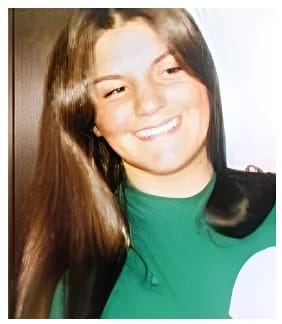
Judith Lord, whose murder remained unsolved for 50 years.
The Discovery
On the afternoon of May 20, 1975, 22-year-old Judith Lord was found dead in her apartment at the Concord Garden Apartments in Concord, New Hampshire. A staff member entered the unit to collect overdue rent and heard a baby crying inside.
The building’s operations manager discovered Lord lying unresponsive in an upstairs bedroom with a blue plastic sauna suit covering her face. Lord’s 20-month-old son was found safe in his crib in an adjacent room.

Concord Garden Apartments in 1975, where Judith Lord was murdered.
Investigators determined that there had been a violent struggle, and that Lord had been sexually assaulted and strangled to death. An autopsy confirmed the cause of death was “homicidal strangulation.”
The Crime Scene
Lord was found in her upstairs bedroom nude and wet, authorities believing she had come out of the shower shortly before she was attacked. Two towels found on the floor had semen stains. A broken clock found on the floor had stopped at 1:47 a.m.
Neighbors reported someone they thought to be Lord screaming, “Leave me alone,” early that morning.
Investigators recovered forensic evidence, including hair and seminal fluid, from the crime scene.
The Prime Suspect
Investigators focused on three suspects: Lord’s estranged husband and two neighbors. Her husband had an alibi and no evidence tied him to the crime scene.
Ernest Theodore Gable, then 24, was Lord’s next-door neighbor. Soon after the murder, Concord Police confirmed that fingerprints found on the window outside Lord’s unit matched Gable’s.

Booking photographs of Ernest Gable, Judith Lord’s neighbor and killer.
Family members and neighbors told police at the time that Gable made many unwanted sexual advances and that Lord feared him.
Multiple witnesses, including Lord’s own sister, told police that Judy was genuinely afraid of Gable.
Witnesses said Gable had a “predatory interest” in her.
The Landmark Court Case
Investigators had difficulty getting Gable to provide voluntary hair and blood samples to compare with those at the scene, leading to a landmark New Hampshire Supreme Court Case, State v. John Doe (who was Ernest Gable).
Gable challenged a search warrant for his DNA samples, which was novel at the time. That case was appealed and made its way all the way up to the New Hampshire Supreme Court. On December 3, 1975, the court ruled in the state’s favor, and precedent was created—a legal landmark was set.
“Something that investigators do routinely every day in investigations, collect a sample, was made possible as part of the legacy of Judith Lord,” said Senior Assistant Attorney General Christopher Knowles.
The Flawed FBI Analysis
Physical evidence was collected from Gable, and hairs were submitted to the FBI’s Forensic Laboratory for microscopic comparison. Back in 1975, the FBI’s hair analysis was considered the “gold standard” of pre-DNA forensics.
In a report dated December 16, 1975, the FBI Forensic Laboratory, using the technique of microscopic hair comparison, concluded that the hairs from the scene were “microscopically different” from Ernest Gable’s and “did not originate from [Gable].”
That incorrect conclusion contradicted other significant evidence, including the suspect’s fingerprints on the exterior of Ms. Lord’s window and witness accounts indicating that she feared him. The erroneous exclusion caused the case to stall for decades.
Prosecutors didn’t pursue the case against Gable back then out of concern a jury would consider the FBI test results and conclude Gable wasn’t guilty beyond a reasonable doubt. “Despite all the compelling circumstantial evidence against him, the case went cold,” Knowles said.
Gable’s Criminal History
Gable was found stabbed to death in Los Angeles in February 1987 at age 36. He had a long criminal record that included arrests for armed robbery, theft, forgery and breaking and entering in four states. At that time he was living under the alias of Ernie Stanberry.
🔔 Breaking News — Latest Developments
The Case Reopened
The case was reopened in 2003, leading to a new analysis of the evidence from the case. State investigator Todd Flanagan was credited with pushing to reopen the case after FBI hair analysis had wrongly concluded Gable could not have been the killer.
Modern DNA Proves the Truth
DNA testing found that the seminal fluids found on towels were a match for Gable.
Modern DNA testing confirmed that the semen on both towels found in the bedroom was a “statistical match” to Gable’s DNA: 1 in 6.5 million within the population of African Americans.
New DNA testing conducted on biological material collected from the scene correctly identified Ernest Theodore Gable as the source. A comprehensive re-examination of the case file by the New Hampshire Cold Case Unit and the Concord Police Department confirmed his responsibility for the murder.
The FBI’s Admission
In 2015, the U.S. Department of Justice and the FBI formally acknowledged that nearly every examiner in the FBI’s microscopic hair comparison unit had provided flawed testimony or reports that overstated forensic matches.
Microscopic hair analysis involved a physical comparison of hair under a microscope. “It usually involves the identification of the erroneous identification of an individual, but in this case, it involves the erroneous exclusion of the murderer,” Knowles said.
Official Announcement
On November 25, 2025, New Hampshire Attorney General John Formella announced that the investigation has now conclusively identified Ernest Theodore Gable as the person responsible for Ms. Lord’s murder, and the case will be formally closed and classified as solved.
“It is my hope that this long-awaited conclusion will finally bring peace and closure to Judy Lord’s family and the entire Concord community after nearly five decades of delayed justice,” said Attorney General Formella. “This resolution proves that no cold case is ever truly closed until the truth is found.”
“The convergence of irrefutable DNA evidence, fingerprint analysis, compelling witness testimony, and Mr. Gable’s own incriminating behavior and violent history establishes beyond any reasonable doubt that he was the perpetrator,” the report on the case explains.
Were Gable still alive, he would be charged with first-degree murder in connection with a sexual assault.
The Family’s Response
Several of Lord’s family members were at Monday’s press conference watching the announcement. Her son, Gregory Lord Jr., was watching virtually and sent a statement.
“I don’t remember my mother,” Gregory Lord Jr. wrote in a statement. “I was young. I always keep her memory inside my heart. She will always be with me. I’m told I look just like my mom, and I’m proud of that. I’ve been through a lot in my life, and in the dark times, I’ve always thought of my mom.”

Myth: The case went cold because investigators didn’t have enough evidence. | Fact: Investigators had Gable’s fingerprints on Lord’s window, witness testimony that Lord feared him, towels with semen stains, and no alibi from Gable. Prosecutors were ready to pursue charges but felt the FBI’s flawed hair analysis created “a significant evidentiary hurdle that prosecutors felt they could not overcome.” |
Microscopic hair analysis was reliable in 1975. | In 2015, the U.S. Department of Justice and the FBI formally acknowledged that nearly every examiner in the FBI’s microscopic hair comparison unit had provided flawed testimony or reports. The technique has since been debunked and likely led to the prosecution and conviction of offenders wrongly accused for crimes. |
The case was solved with new evidence discovered in 2025. | All the physical evidence including the semen-stained towels, was collected in 1975. The case was reopened in 2003, and modern DNA testing was conducted on the original biological material. The evidence was always there; technology just finally caught up. |
Gable was never a suspect until DNA testing identified him. | Gable was the prime suspect from the start. His fingerprints were on Lord’s window, and he was Lord’s next-door neighbor whom she feared. The only thing preventing prosecution was the FBI’s incorrect hair analysis. |

Tip of the Week - Understanding Forensic Science Limitation
The Judith Lord case teaches a crucial lesson: forensic science evolves, and techniques once considered the “gold standard” can later be proven unreliable.
What This Means for Cold Cases:
Physical evidence should never be destroyed. The towels with semen stains were preserved from 1975 and ultimately solved the case 50 years later. Evidence that can’t be properly analyzed today might be testable tomorrow.
Flawed forensics can free the guilty, and convict the innocent. Microscopic hair analysis usually led to “the erroneous identification of an individual, but in this case, it involves the erroneous exclusion of the murderer.” Both outcomes represent justice delayed or denied.
Old convictions deserve scrutiny. The FBI acknowledged in 2015 that nearly every examiner in their microscopic hair comparison unit provided flawed testimony. How many wrongful convictions resulted from this technique?
Cold cases are never truly closed. Attorney General Formella emphasized: “This resolution proves that no cold case is ever truly closed until the truth is found.”
Advocacy matters. State investigator Todd Flanagan was credited with pushing to reopen this case in 2003. Without his persistence, Judy’s family might never have gotten answers.
For Families of Victims:
In August 2025, families of New Hampshire cold case victims gathered outside the State House in Concord, demanding progress on the more than 130 unsolved homicides and long-term missing persons cases across the state. Your advocacy can push for the resources and attention these cases deserve.
🧩 Case Crackers — The Forensic Failure Cipher
How closely were you paying attention to the details of this week’s case? Solve this cipher to reveal a hidden word connected to this investigation.
How to Play:
Convert each number into a letter (1 = A, 2 = B, 3 = C … 26 = Z).
Convert each of these numbers:
• 6 → ?
• 2 → ?
• 9 → ?
What three-letter abbreviation might this represent that was central to the flawed forensic analysis?
(Hint: Think about which federal agency’s lab provided the incorrect hair analysis that stalled the case for decades.)
📊 Crime Statistics of the Week — Trends & Truths
Flawed Forensics & The Cold Case Crisis
• Microscopic hair analysis was deeply flawed. In 2015, the U.S. Department of Justice and the FBI formally acknowledged that nearly every examiner in the FBI’s microscopic hair comparison unit had provided flawed testimony or reports that overstated forensic matches. This technique was used in thousands of cases.
• New Hampshire has over 130 unsolved cases. Families of New Hampshire cold case victims noted in August 2025 that there are more than 130 unsolved homicides and long-term missing persons cases across the state.
• Cold case units are expanding. Chris Knowles, senior assistant attorney general and head of the cold case unit, said the Cold Case Unit recently added two full-time investigators. This expansion reflects growing recognition that old cases deserve fresh attention.
• DNA exonerations continue to rise. According to the National Registry of Exonerations, over 3,400 people have been exonerated in the United States since 1989, with many cases involving flawed forensic science like hair analysis.
• Evidence preservation is critical. The semen-stained towels from 1975 were subjected to modern DNA analysis with the New Hampshire State Police Forensic Laboratory, ultimately confirming that DNA from the semen matched Gable. Without proper evidence storage, this case would never have been solved.
• Sexual assault murder cases remain challenging to solve. According to FBI data, murders involving sexual assault have historically lower clearance rates than other homicides, often because victims cannot provide testimony and physical evidence may be degraded.
🔍 How These Stats Reflect the Judith Lord Case
Judy’s case represents a perfect storm of forensic failure and investigative persistence. Investigators in 1975 had everything they needed: fingerprints, witness testimony, motive, and DNA evidence (before DNA testing even existed). But one flawed FBI report stopped justice for 50 years.
The FBI’s hair analysis was considered the “gold standard” of forensics in 1975. Courts and juries trusted it implicitly. Prosecutors felt they couldn’t overcome the FBI’s conclusion even with all the other evidence pointing to Gable.
The FBI’s 2015 admission that nearly every examiner in their microscopic hair comparison unit provided flawed testimony raises a haunting question: how many other killers walked free? How many innocent people were convicted?
The case was reopened in 2003: 28 years after the murder, thanks to investigator Todd Flanagan’s advocacy. It took another 22 years for the official announcement confirming what everyone suspected. That’s half a century of a family waiting for justice.
Gregory Lord Jr. was 20 months old when his mother was murdered. He’s now 50 years old and has no memory of her. But thanks to preserved evidence and evolving science, he finally has answers.

💬 We Want to Hear From You!
We love hearing from our Case Crackers community, and your feedback helps us make each edition better than the last! This week, we want to ask you:
What content would you like to see more of in the newsletter?
• Are you interested in cases involving flawed forensics and wrongful convictions or exclusions?
• Would you like more deep dives into how forensic science has evolved over the decades?
• Should we feature more cases where the killer was identified but never prosecuted?
• Do you want information on how families can advocate for cold case reviews?
Your input is invaluable, so don’t hesitate to share your thoughts! Drop us a reply or fill out this quick feedback form HERE. Together, we can make Solved Files your ultimate true crime resource.

🔦 Watch Full Cases Breakdowns on Solved Files
Want to go deeper into the investigations behind solved cases? Our Solved Files - True Crime channel takes you from the initial 911 call to the courtroom verdict.
🎥 LATEST VIDEO: “Police Discover Decomposing Body In Landfill”

Inside the investigation:
When ASU professor Jinsuk Chae vanished after giving a lecture on March 25, 2020, his wife’s 911 call set off a missing persons case that would span multiple states.
How detectives tracked his cell phone pings to a remote desert area near I-17 and Northern Avenue in the early morning hours.
The shocking discovery of Chae’s vehicle in Shreveport, Louisiana—thousands of miles away, occupied by two 18-year-olds, Gabrielle Austin and Javian Ael.
The suspects’ chilling confession: they lured Chae to a location near Seventh Street and Carefree Highway, attacked him with a hammer, wrapped his body in a tent, and dumped him in a Phoenix dumpster.
Blood evidence found on desert rocks and the desperate search through dumpsters across Phoenix.
The grueling 67-day excavation at Northwest Regional Landfill that finally recovered Chae’s remains, and how DNA testing confirmed his identity.
The first-degree murder charges that followed once the body was found.
👉 Watch now on Solved Files
Subscribe for:
Complete case timelines from disappearance to arrest
Real investigative techniques and forensic breakthroughs
How detectives piece together evidence to solve cases
Follow Solved Files on TikTok and Instagram → Daily crime polls, case updates, and breaking investigations.
YouTube → Full documentary-style breakdowns of solved cases
💡 Thanks for following along this week.
Cynthia Gonzalez waited 34 years for justice, and her 6-year-old daughter grew up without answers, until a group of college students asked the right questions. This case proves that fresh perspectives, dedication, and the willingness to dig through hundreds of files can finally unlock the truth. Sometimes the key to solving a cold case isn’t waiting for new technology; it’s giving brilliant young minds the chance to see what everyone else missed. Each investigation is another puzzle piece, and together we’re piecing the story into focus. Keep your eyes sharp, your curiosity alive, and don’t forget, the next lead is always around the corner.
Until next week, Case Crackers. 🔍