- Solved Files Newsletter
- Posts
- The Prophet Who Buried Children: Chad Daybell’s Death Sentence
The Prophet Who Buried Children: Chad Daybell’s Death Sentence
Religious extremism, buried bodies, and the digital evidence that convicted a killer.

David Yupa
January 16, 2026

Welcome Back Case Crackers!
Another week, another case that will challenge everything you think you know about religious belief, manipulation, and the deadly consequences of extremist ideology. This isn’t just a murder story: it’s a tale of apocalyptic prophecies, “zombie” possession claims, and a backyard that became a burial ground for two innocent children and a devoted wife.
From the chilling text messages Chad Daybell sent describing people as “dark spirits” and “zombies,” to the moment investigators found the remains of seven-year-old JJ Vallow and sixteen-year-old Tylee Ryan buried on his Idaho property, we’re diving deep into one of the most disturbing cases in recent American history. Pay close attention; you might spot the moment when religious devotion crossed the line into deadly delusion. Whether you’re a veteran detective in our community or just beginning to hone your investigative skills, this edition offers insights into how digital evidence, from text messages to cell phone records, helped convict a man who believed he was preparing for the end of the world.
So grab your notebook, focus your attention, and get ready. This week, we’re uncovering how a self-proclaimed prophet’s apocalyptic visions led to three murders and a death sentence.

🔎 Full Case Story — The Prophet Who Buried Bodies: When Doomsday Beliefs Became a Death Sentence
On May 30, 2024, Chad Daybell, 55, was convicted of first-degree murder in the deaths of his wife Tammy Daybell, 49, and two children, seven-year-old Joshua “JJ” Vallow and sixteen-year-old Tylee Ryan. On June 1, 2024, he was sentenced to death by lethal injection. This marked the culmination of a case that had captivated and horrified the nation since the children were first reported missing in November 2019.
Chad Daybell was a self-published author of apocalyptic fiction who claimed to have visions of the end times, past lives, and the ability to determine whether people were possessed by dark spirits. His beliefs would attract Lori Vallow, a devoted follower who would become his wife, his co-conspirator, and eventually his co-defendant in one of the most shocking family annihilation cases in modern American history.
The case began not with bodies or evidence of foul play, but with a welfare check that went terribly wrong.
The Disappearance
In November 2019, extended family members of JJ Vallow contacted police in Rexburg, Idaho, concerned they hadn’t seen or heard from the seven-year-old boy in months. JJ, who had autism and required special care, had been living with his mother Lori Vallow and her new husband Chad Daybell. When police arrived at the couple’s home on November 26, 2019, to conduct a welfare check, Lori told them JJ was staying with a family friend in Arizona named Melanie Gibb.
Officers contacted Melanie Gibb, who told them she hadn’t seen JJ since September. When police returned the next day to question Lori further, they found the townhouse completely empty. Lori and Chad had fled Idaho overnight.
It wasn’t just JJ who was missing. Lori’s sixteen-year-old daughter Tylee Ryan, last seen in September 2019 during a family trip to Yellowstone National Park, was also nowhere to be found. When asked about Tylee, Lori and Chad provided vague, contradictory answers. Family members grew increasingly alarmed.
Then investigators made another disturbing discovery. Chad Daybell’s previous wife, Tammy Daybell, had died unexpectedly on October 19, 2019, just weeks before Chad and Lori married. Her death had initially been attributed to natural causes, with family members told she died peacefully in her sleep. But the timing was suspicious. Chad had married Lori on November 5, 2019, less than three weeks after Tammy’s death, and the newlyweds had immediately traveled to Hawaii for their honeymoon.
As the investigation intensified and media attention exploded, one question consumed everyone: where were JJ and Tylee?
The Grim Discovery
On June 9, 2020, investigators executed a search warrant at Chad Daybell’s property in Salem, Idaho. Using cadaver dogs, ground-penetrating radar, and methodical excavation, they began searching the five-acre property. What they found in Chad’s backyard would shock the world.
FBI Special Agent Steve Daniels testified that in a shallow grave near a fire pit, investigators discovered the remains of JJ Vallow. The seven-year-old’s body was wrapped in plastic and duct tape. Nearby, in a pet cemetery area of the property, investigators found burned human remains that were later identified through DNA testing as sixteen-year-old Tylee Ryan. Her body had been burned and dismembered.
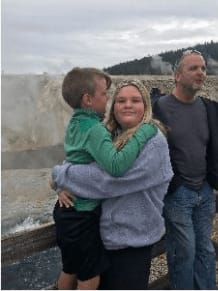
JJ Vallow, Tylee Ryan, and Alex Cox.
The children had been dead for months, buried on the property while Chad and Lori honeymooned in Hawaii, posted photos on social media, and ignored increasingly frantic inquiries from family members about the children’s whereabouts.
Chad Daybell was arrested immediately at the scene. Lori Vallow, who was already in custody in Hawaii on charges related to deserting and failing to produce the children, now faced murder charges as well.
But prosecutors believed there was a third victim. Tammy Daybell’s body was exhumed from the Springville, Utah cemetery where she had been buried. An autopsy revealed she had not died of natural causes. Medical examiners determined her death was a homicide, though the exact mechanism was not definitively established. The timing of her death, just weeks before Chad married Lori, was no coincidence.
The Doomsday Beliefs
To understand why these murders happened, investigators had to dive deep into Chad Daybell’s bizarre religious ideology and his relationship with Lori Vallow. Chad was a member of the Church of Jesus Christ of Latter-day Saints, but his beliefs had veered far from mainstream LDS doctrine into extremist territory. He claimed to have visions of past lives, future apocalyptic events, and the ability to perceive whether individuals were “light” or “dark” spirits.
Chad had authored over two dozen books, most of them apocalyptic fiction centered on the end times, natural disasters, and the gathering of the faithful before Christ’s return. He gave lectures and podcasts where he described his visions in detail. He claimed he had lived multiple past lives and said he could sense auras and determine people’s spiritual status.
Most disturbingly, Chad taught that some people became “zombies,” meaning their bodies had been taken over by dark spirits and their original souls had departed. According to Chad’s teachings, these individuals were no longer the people they appeared to be.
Lori Vallow was a devoted believer. She had been married four times before meeting Chad. When she attended a religious conference where Chad was speaking in 2018, she was immediately drawn to his teachings. The two began a relationship while Chad was still married to Tammy and Lori was still married to her fourth husband, Charles Vallow.
Text messages and emails between Chad and Lori, recovered by investigators, revealed the depth of their belief system. They referred to each other by names from supposed past lives. They discussed rating systems for people’s spiritual status. And prosecutors argued that they communicated about JJ, Tylee, and Tammy in ways that indicated they viewed them as obstacles or as being possessed by dark spirits.
The Conspiracy to Murder
Prosecutors presented evidence that Chad and Lori had planned the murders of Tammy, JJ, and Tylee. The timeline of events painted a damning picture.
In July 2019, Charles Vallow was shot and killed by Lori’s brother, Alex Cox, in what was initially ruled self-defense. Charles had been trying to get Lori psychiatric help, telling family members she believed she was a god sent to usher in the end times. His death removed someone who was questioning Lori’s fitness as a mother and her increasingly extreme beliefs.
In September 2019, Tylee Ryan was last seen alive on September 8 during a family trip to Yellowstone National Park. Cell phone records presented at trial showed that Alex Cox’s phone was near Chad Daybell’s property on September 9, 2019. Prosecutors argued this was when Tylee was killed and buried on Chad’s property.
Later in September 2019, JJ Vallow was still alive but Lori had begun telling people he was becoming difficult to manage. On September 22, 2019, Lori’s friend Melanie Gibb testified that she received a call from Lori asking her to lie to police if they inquired about JJ, telling them he was with her in Arizona. The next day, September 23, 2019, Alex Cox’s phone records again placed him near Chad’s property. That was the last day anyone outside the conspiracy saw JJ alive.
In October 2019, Chad increased Tammy’s life insurance policy. On October 9, 2019, someone shot at Tammy Daybell while she was in the driveway of her home. The shot missed her. Chad was home at the time. Ten days later, on October 19, 2019, Tammy Daybell was found dead in her bed. Her death was initially attributed to natural causes and she was buried quickly without an autopsy.
Less than three weeks after Tammy’s death, on November 5, 2019, Chad and Lori married in Hawaii. By November 2019, family members were asking questions about the children. By December 2019, police had issued a press release asking for the public’s help in locating JJ and Tylee. And by June 2020, their bodies were found buried on Chad’s property.
Alex Cox, Lori’s brother who was present at Charles Vallow’s shooting and whose phone placed him at Chad’s property when the children disappeared, died suddenly on December 12, 2019. The medical examiner ruled his death was from natural causes, specifically a blood clot in his lung.
The Trial
Chad Daybell’s trial began in April 2024 in Boise, Idaho. The case had been moved from Fremont County due to extensive pretrial publicity. Prosecutors Lindsey Blake and Rob Wood presented a methodical case built on circumstantial evidence, digital records, cell phone data, witness testimony, and forensic analysis.
Cell phone location data was crucial to the prosecution’s case. FBI analysts testified that Alex Cox’s phone repeatedly pinged off cell towers near Chad’s property on September 9, 2019, the day after Tylee was last seen alive, and again on September 23, 2019, the day JJ was last seen alive. This data placed Alex at Chad’s property at the times prosecutors believed the children were being buried.
Witnesses testified about the belief system Chad and Lori shared. Melanie Gibb, Lori’s former friend, testified that she had heard Chad and Lori discuss people being “dark” or having “dark spirits.” She said Lori had told her that JJ had become “dark” in the weeks before he disappeared. Gibb also testified that Lori asked her to lie to police about JJ’s whereabouts in September 2019.
FBI agents testified about the excavation of the burial sites on Chad’s property. Special Agent Steve Daniels described finding JJ’s body wrapped in plastic bags and duct tape in a shallow grave. He testified that Tylee’s remains were found burned and scattered in a different area of the property near a pet cemetery.
The prosecution presented evidence about the life insurance policies. Chad had increased Tammy’s life insurance from about 130,000 dollars to 430,000 dollars months before her death. After Tammy died, Chad received the insurance payout. Prosecutors argued this showed financial motive alongside the couple’s desire to be together.
Medical testimony about Tammy Daybell’s death was presented. After her body was exhumed, forensic pathologists conducted an autopsy. Dr. Garth Warren testified that Tammy’s death was a homicide caused by asphyxia, though he could not determine the exact mechanism of how the asphyxia occurred. The key finding was that her death was not natural as originally believed.
The defense team, led by attorney John Prior, argued that prosecutors had not proven Chad killed anyone. They suggested that Lori’s brother Alex Cox was responsible for the deaths and that Chad was unaware of what Alex had done until after the fact. They argued the evidence was circumstantial and did not prove beyond reasonable doubt that Chad committed murder.
The defense pointed out that no witness testified to seeing Chad kill anyone. They argued that Alex Cox’s presence at Chad’s property, as shown by cell phone data, proved Alex was the one who buried the bodies. They suggested Chad may have helped cover up crimes after the fact but did not plan or commit the murders himself.
However, the prosecution countered that the murders occurred on Chad’s property, the children were buried in Chad’s yard, Chad never reported finding bodies on his property, Chad fled when police started asking questions, Chad married Lori immediately after his wife died, and Chad benefited financially from Tammy’s death through life insurance. They argued this pattern of evidence proved Chad was not an innocent bystander but an active participant in a conspiracy to murder.
Chad Daybell chose not to testify in his own defense. The jury never heard him explain his beliefs or his actions directly.
The Verdict and Sentencing
On May 30, 2024, after deliberating for approximately seven hours over two days, the jury returned guilty verdicts on all counts. Chad Daybell was convicted of three counts of first-degree murder for the deaths of Tammy Daybell, JJ Vallow, and Tylee Ryan. He was also convicted of conspiracy to commit murder and insurance fraud related to Tammy’s life insurance policy. He showed no visible emotion as the verdicts were read.

Chad Daybell after his guilty verdict
The trial then moved to the penalty phase where the jury had to decide whether Chad should be sentenced to death or life in prison. Prosecutors argued the murders were especially heinous and cruel, particularly the killing of two children. They emphasized the premeditation involved, the desecration of the victims’ bodies, and Chad’s complete lack of remorse.
The defense argued for life in prison, presenting mitigating evidence about Chad’s background, his lack of prior criminal history, and his role as a father to his adult children from his marriage to Tammy. Defense witnesses described Chad as a devoted father and a religious man who had been manipulated by Lori Vallow.
On June 1, 2024, the jury unanimously recommended the death penalty for all three murder convictions. Judge Steven Boyce accepted the jury’s recommendation and formally sentenced Chad Daybell to death. Judge Boyce told Chad, “You have devastated multiple families. You have shown no remorse.”
Chad Daybell remains on death row in Idaho awaiting execution. His defense team is pursuing automatic appeals, a process that typically takes many years.
Lori Vallow Daybell, Chad’s wife and co-defendant, was tried separately in 2023. She was convicted of the same three murders and conspiracy charges. She was sentenced to life in prison without the possibility of parole. Idaho prosecutors decided not to seek the death penalty in her case.
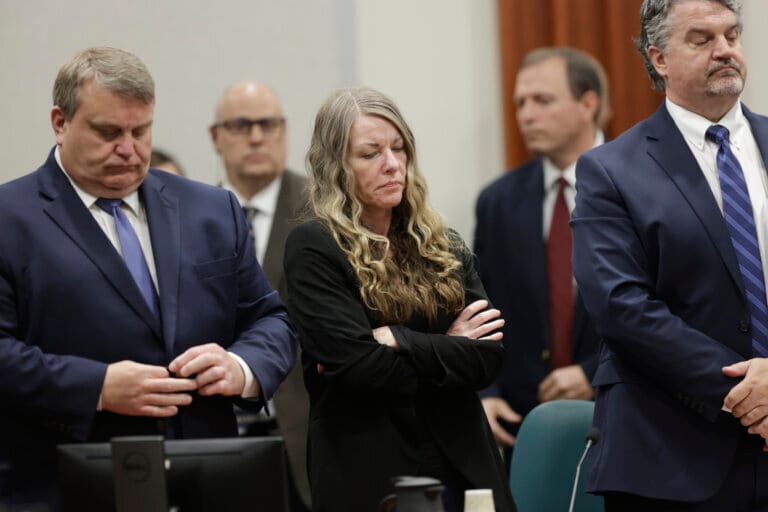
Lori Vallow Daybell at her 2023 murder trial.
The case left deep scars on multiple families. Tammy Daybell’s children lost their mother and watched their father get convicted of her murder. JJ and Tylee’s extended family members, including JJ’s grandparents Larry and Kay Woodcock, continue to grieve the children. The community of Rexburg, Idaho struggled to comprehend how such horror could occur in their quiet town.

Myth: “Deeply held religious beliefs can serve as a defense for murder.” | Fact: Believing something does not make it legal or excuse criminal conduct. Chad Daybell appeared to genuinely believe his victims were possessed by dark spirits, but the law does not recognize extreme religious beliefs as legal justification for killing. To use an insanity defense, a defendant must prove they couldn’t distinguish right from wrong at the time of the crime. Chad’s efforts to hide bodies, flee from police, and cover up the crimes proved he knew his actions were wrong. |
“Text messages and digital communications can’t be used as evidence if you delete them from your phone.” | Digital forensic experts can recover deleted messages from phone backups, cloud storage, carrier records, and even from recipients’ phones. In the Daybell case, recovered text messages and emails between Chad and Lori about their belief system became important evidence at trial. Even messages you think you’ve erased can often be retrieved and used in court. |
“You can’t be convicted of murder if you weren’t physically present when someone died.” | Conspiracy to commit murder carries the same penalty as actually committing murder. Even if someone else physically killed the victims, if you planned it, facilitated it, encouraged it, or helped cover it up, you can be convicted of murder. The law recognizes that all participants in a murder conspiracy share criminal responsibility. |
🕵 Detective’s Insight
The Chad Daybell case demonstrates how modern investigations rely heavily on digital evidence and circumstantial proof to establish conspiracy and prove murder even without eyewitnesses to the killings.
First, cell phone location data has become one of the most powerful tools in criminal investigations. Prosecutors used cell tower records to place Alex Cox at Chad Daybell’s property on the exact days JJ and Tylee disappeared. Every time a cell phone connects to a tower, that connection creates a record that can be subpoenaed. These records create a timeline of movements that is difficult to dispute or explain away. In the Daybell case, there was no innocent explanation for why Alex Cox’s phone repeatedly pinged near Chad’s rural property at the times the children vanished.
Second, financial records often reveal motive that defendants try to hide. Chad increased Tammy’s life insurance policy substantially in the months before her death. He collected that payout after she died. Prosecutors argued this showed financial motive alongside the couple’s desire to eliminate obstacles to their relationship. Financial analysis can show who benefits from a death, whether through insurance, inheritance, continued government benefits, or relief from financial obligations.
Third, witness testimony about a defendant’s beliefs and statements can establish motive and intent. Melanie Gibb’s testimony about hearing Chad and Lori describe people as “dark” or possessed provided crucial context for understanding why the victims were targeted. While beliefs alone don’t prove murder, they can help explain why someone would commit seemingly inexplicable crimes.
Fourth, forensic analysis of burial sites and remains provides physical evidence of murder. The condition of the bodies told investigators important details. JJ was found wrapped in plastic and duct tape, suggesting intentional suffocation. Tylee’s body had been burned and dismembered, suggesting efforts to conceal identity and destroy evidence. These forensic details helped prove the deaths were not accidental.
Fifth, the absence of reasonable explanations can be as powerful as direct evidence. Chad never reported finding bodies on his property. He never called police when children he knew went missing. He fled when questioned. He lied repeatedly to investigators. While these behaviors don’t directly prove murder, they show consciousness of guilt. An innocent person doesn’t bury bodies in their backyard and say nothing.
By examining this case, we see how modern prosecutors build circumstantial cases by combining cell phone data, financial records, witness testimony, forensic evidence, and proof of consciousness of guilt. No single piece of evidence may be conclusive, but together they create an overwhelming case.

💡 Tip of the Week — Digital Footprints Are Permanent: What the Daybell Case Teaches About Cell Phone Evidence
Chad Daybell never imagined Alex Cox’s cell phone would convict him of murder. But cell phone location data placed Alex at Chad’s property exactly when prosecutors believed JJ and Tylee were being killed and buried.
Every time your phone connects to a cell tower, your carrier logs that connection. Investigators can track your movements and place you at specific locations at specific times. Deleted data can be recovered through forensic imaging, cloud backups, and carrier records. Modern smartphones also create GPS data through apps, fitness trackers, and photo metadata.
The takeaway: your cell phone creates a permanent record of your movements and communications. Alex’s phone told investigators exactly where he was when the crimes occurred, and that evidence sent Chad to death row.
Ethical Debate — What Would You Do?
The Chad Daybell case raises difficult questions about when extreme religious beliefs cross the line into dangerous delusion and what responsibility society has to intervene.
Chad Daybell spent years developing and promoting his apocalyptic belief system. He wrote books, gave lectures, and attracted followers who believed his teachings about visions, past lives, and the end times. His beliefs were unusual and extreme, but they were not illegal. He had the constitutional right to believe what he wanted and to share those beliefs with others. But at some point, Chad’s beliefs about “zombies” and dark spirits provided the rationalization for murdering three people including two children.
Should society monitor or restrict extreme religious teachings that could potentially lead to violence? If someone starts preaching that certain people are possessed by demons and need to be eliminated, is that a warning sign that should trigger intervention?
Some argue that religious freedom is absolute and that monitoring beliefs is dangerous thought control. People have the right to believe anything they want, and society can only intervene when those beliefs lead to illegal actions. Others argue that certain belief systems are so inherently dangerous that society has a responsibility to monitor them and intervene before violence occurs.
There’s also the question of mental illness. Were Chad and Lori mentally ill, or were they simply evil people who used religion to justify their desires? Should extreme ideological beliefs be treated as symptoms of mental illness requiring intervention, or as freely chosen ideas that people are responsible for?
What would you do? If you knew someone who was teaching that certain people were possessed and needed to be eliminated, would you report them to authorities even though they hadn’t committed any crime? Should there be legal mechanisms to intervene with people who hold beliefs that seem likely to lead to violence? Or is the price of religious freedom accepting that some people will have dangerous beliefs and we can only act after violence occurs?
Where would you draw the line between protected religious belief and dangerous delusion? This is not a simple question, and your perspective matters.
Case Crackers: The Daybell Timeline Cipher
Chad Daybell’s cell phone records and the discovery of the children’s bodies created a timeline that convicted him. Can you decode the hidden message that reveals what proved his guilt?
How to Play: Solve these three clues to find numbers. Convert each number to a letter using the standard alphabet where 1 equals A, 2 equals B, and so on through 26 equals Z. Arrange the letters in clue order to reveal the secret word.
Clue 1: The Discovery Date. Investigators found JJ and Tylee’s bodies on Chad’s property on June 9, 2020. Add the month number (June is the 6th month) to the day (9). Use this sum as your first clue number.
Clue 2: The Victims. Chad was convicted of murdering three people: Tammy Daybell, JJ Vallow, and Tylee Ryan. Take the number of victims (3) and multiply it by itself. Use this product as your second clue number.
Clue 3: The Quick Marriage. Tammy died on October 19, 2019. Chad married Lori on November 5, 2019, which was 17 days later. Divide 17 by the number of children who were murdered (2), then round up to the nearest whole number. Use this number as your third clue number.
Final Step: Convert the three numbers to letters using the standard alphabet where 1 equals A, 2 equals B, and so on through 26 equals Z, then arrange them in clue order to spell the secret word is number as your third clue number.
📊 Statistics of the Week: How Cell Phone Data Solves Murder Cases
Did you know that criminal cases involving cell phone location data have conviction rates exceeding 80% when that data places defendants at crime scenes?
Cell phone location evidence has revolutionized homicide investigations. Before widespread cell phone use, investigators relied on witness testimony to place suspects at crime scenes. Witnesses could be mistaken, could lie, or could have their credibility attacked. But cell phone tower records are objective data that show where a phone was located at specific times. This data is difficult to dispute and provides a clear timeline.
Cell tower records show which tower a phone connected to for calls, texts, and data usage. By mapping tower locations and analyzing signal strength, experts can determine the approximate location of a phone within a certain radius, typically a few hundred meters to a few miles depending on tower density. In urban areas with many towers, location can be pinpointed quite precisely. In rural areas, the radius is larger but still useful for placing someone in a general area.
Modern smartphones also create GPS location data through apps, which is even more precise than tower data. Apps like Google Maps maintain location histories showing exactly where you’ve been. Fitness apps track your routes. Even photos taken with smartphones contain metadata showing the GPS coordinates where the photo was taken.
In the Daybell case, Alex Cox’s cell phone records were crucial evidence. His phone repeatedly connected to towers near Chad’s rural Idaho property on the exact days prosecutors believed the children were killed and buried. There was no innocent explanation for these visits. The phone data corroborated other circumstantial evidence and helped prove the conspiracy.
The high conviction rate for cases with cell phone location evidence reflects the reliability and persuasiveness of this data. Juries understand that phones don’t lie. If your phone shows you were at a murder scene, claiming you weren’t there becomes nearly impossible. This is why cell phone data has become one of the first things investigators seek in serious criminal cases.
The Chad Daybell case demonstrates this principle perfectly. Without Alex Cox’s cell phone records placing him at Chad’s property when the children vanished, prosecutors would have had a much harder time proving when and where the murders occurred. The phone data provided an objective timeline that supported the prosecution’s theory and helped secure a conviction and death sentence.

💬 Community Q&A — We Want Your Voice!
We love hearing from our Case Crackers community, and your insights shape how we build each edition. This week, we’re asking about conspiracy cases and how investigators prove them. Do you want more analysis of how cell phone data is used in investigations? Are you interested in learning about other types of digital evidence like GPS tracking, app data, and social media evidence? Should we cover more cases involving multiple defendants and complex conspiracies? Would you like expert Q&As with cell phone forensic analysts who testify in trials?
Your opinion matters, don’t hesitate to share your thoughts! Drop us a reply or fill out this quick feedback form HERE. Together, we’ll make Solved Files your go-to hub for true crime insights and interactive casework. Got another burning question or case request? Send it in, you might see it featured in next week’s Q&A spotlight!
🔦🔒 Step Inside the Evidence Vault
Every week in this newsletter, you get the key facts of each case. But there’s a side of true crime we can’t show here — raw photos, full reports, and uncensored evidence too sensitive for public release.
That’s why we built a private space for our most dedicated Case Crackers — on Patreon.
When you join, you’ll unlock:
📂 Exclusive crime scene and evidence photos — the same images investigators analyzed, including rare suspect and victim visuals.
🎥 Uncensored interrogation and footage access — the clips too intense or restricted to post publicly.
🕵 Behind-the-scenes breakdowns — discover how real detectives piece together motive, timeline, and truth.
💬 Community discussions — join other true crime enthusiasts to debate theories, spot clues, and share insights.
Here’s a small preview of what’s waiting inside:
 Exclusive suspect image — full case file available only on Patreon |  Exclusive evidence photo — complete collection inside the vault |
And that’s just the beginning. Patreon members get full access to complete photo sets, classified-level case notes, and uncut footage that brings every investigation to life.
👉 Join Solved Files on Patreon today and step inside the vault of unfiltered true crime.
📲 Follow Us Everywhere
Want daily updates and quick case clues? Find us here:
TikTok & Instagram: Crime polls, case clues, and behind-the-scenes breakdowns.
Solved Files Shorts: The biggest shocks in under a minute — moments that prove the smallest details can crack a case wide open.
💡 Thanks for following along this week. Every investigation is another puzzle piece, and together, we’re piecing the truth into focus. Stay sharp, stay curious, and remember: the next clue is always closer than you think.