- Solved Files Newsletter
- Posts
- The Gilgo Beach Killer Confesses
The Gilgo Beach Killer Confesses
8 murders. 30 years. One guilty plea.

David Yupa
April 10, 2026
In partnership with

Master Claude AI (Free Guide)

The professionals pulling ahead aren't working more. They're using Claude.
Our free guide will show you how to:
Configure Claude to be the perfect assistant
Master AI-powered content creation
Transform complex data into actionable strategies
Harness Claude’s full potential
Transform your workflow with AI and stay ahead of the curve with this comprehensive guide to using Claude at work.

👋 Welcome Back, Case Crackers
When a case lingers for decades, hope can feel like a cruel trick. But this week, justice landed loudly and without warning. Yesterday, April 8, 2026, a Long Island architect stood in a packed Suffolk County courtroom and admitted to being one of America’s most prolific hidden serial killers. He strangled women over 17 years, dumped their bodies along a remote beach highway, and went home to his family. The world only found out in 2010 when police searching for a missing woman stumbled across remains that would unravel everything. Today, we walk you through how this case broke open, what it means for the victims’ families, and what finally made the architect confess.
🔎 Full Case Story — What We Know
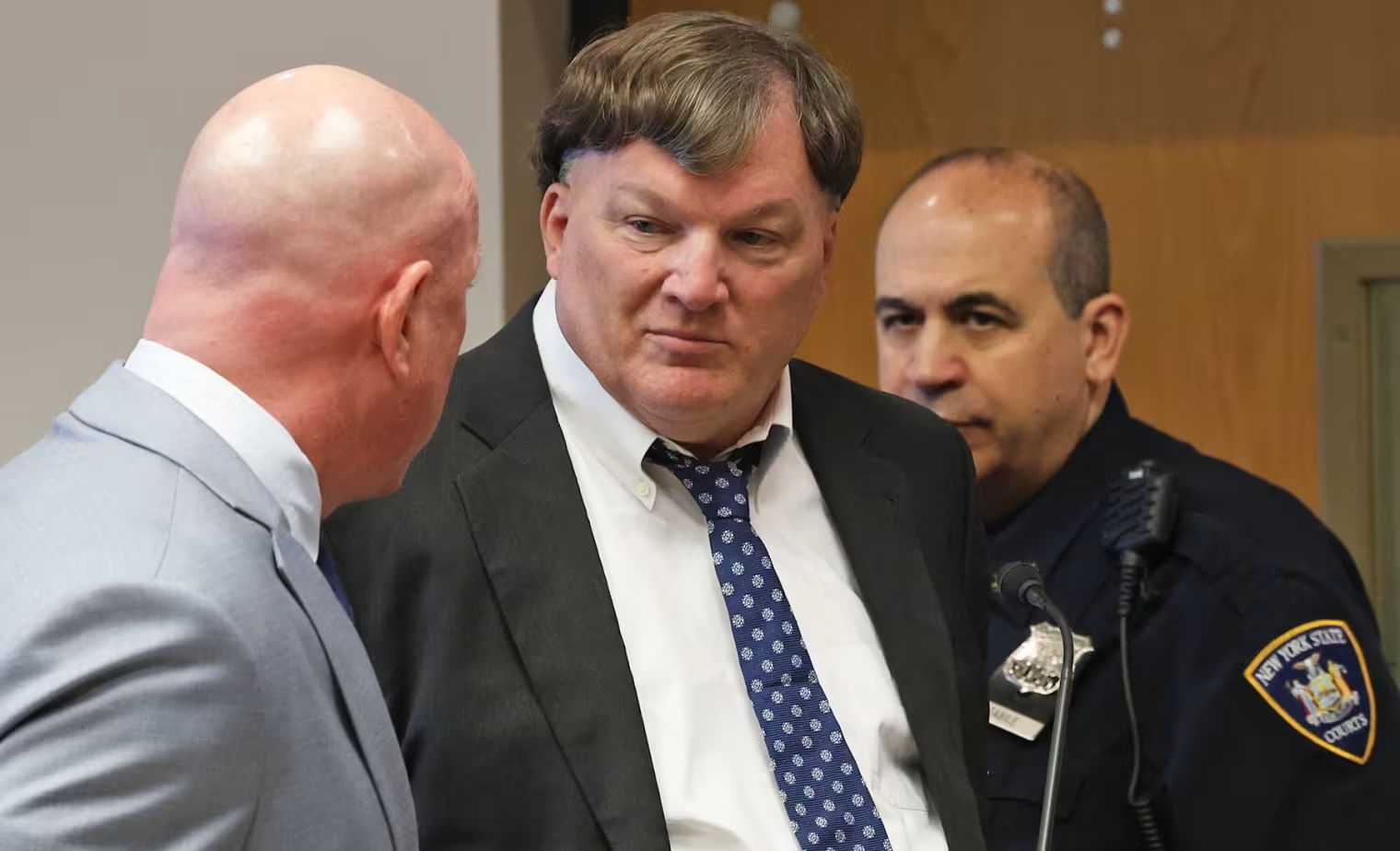
Heuermann in court:
Rex Heuermann in Suffolk County Court
In November 2010, Suffolk County police were searching for Shannan Gilbert, a sex worker who had disappeared after fleeing from a client’s home near Oak Beach, Long Island. What they found instead stopped them cold. Hidden in the brush along Ocean Parkway near Gilgo Beach were the skeletal remains of four women: bound in burlap, discarded like refuse along a desolate stretch of highway. More searches followed. More remains surfaced. By the time the search expanded in 2011, investigators had discovered the remains of ten people in total, including a toddler. The case attracted global attention and the haunting label: the Gilgo Beach killings.
Heuermann strangled the women, many of them sex workers, over a 17-year span and buried their remains in remote locations, including along an isolated beach highway across the bay from where he lived.
For over a decade, the case went cold. Investigators had DNA evidence and physical remains, but nothing to connect them to a specific suspect. Then came the break. Detectives identified Heuermann as a suspect in 2022 using a vehicle registration database to connect him to a pickup truck that a witness had reported seeing when one of the victims disappeared in 2010. Police pulled cellphone data that showed Heuermann was in contact with some victims just before they disappeared. The case was also cracked in part by DNA lifted from a discarded pizza crust.
Rex Heuermann, 62, a Long Island architect who led a secret life as a serial killer, was arrested in July 2023 and entered guilty pleas on Wednesday, April 8, 2026, in a courtroom packed with reporters, police, and victims’ relatives, some of whom wept as he detailed his murders.
In court Wednesday, Heuermann admitted strangling all seven women to death and dumping their bodies along Gilgo Beach, and having used burner phones to contact them. As for three of the victims, he said that he bound them all the same way: by wrapping them in burlap, and that he agreed to offer them money before they met up.
Heuermann pleaded guilty to murdering seven women and admitted to intentionally causing the death of Karen Vergata. As part of the plea deal, he will not be charged with Vergata’s currently uncharged murder.
As part of his guilty plea, Heuermann also agreed to cooperate fully with the FBI’s behavioral analysis unit to help catch other serial killers. Sentencing is scheduled for June 17, 2026.
The victims: Melissa Barthelemy, Maureen Brainard-Barnes, Amber Lynn Costello, Sandra Costilla, Valerie Mack, Jessica Taylor, Megan Waterman, and Karen Vergata, were women with lives, families, and futures. Their remains were found scattered across Long Island, some as far as 60 miles from Gilgo Beach itself. The youngest was 20 years old.
Taylor’s mother, Elizabeth Baczkiel, was among family members present in court. “I am glad that this is over as far as him pleading guilty,” she said. “It took a big chunk of stress off of me and my family.”
🔔 Breaking News — Latest Developments
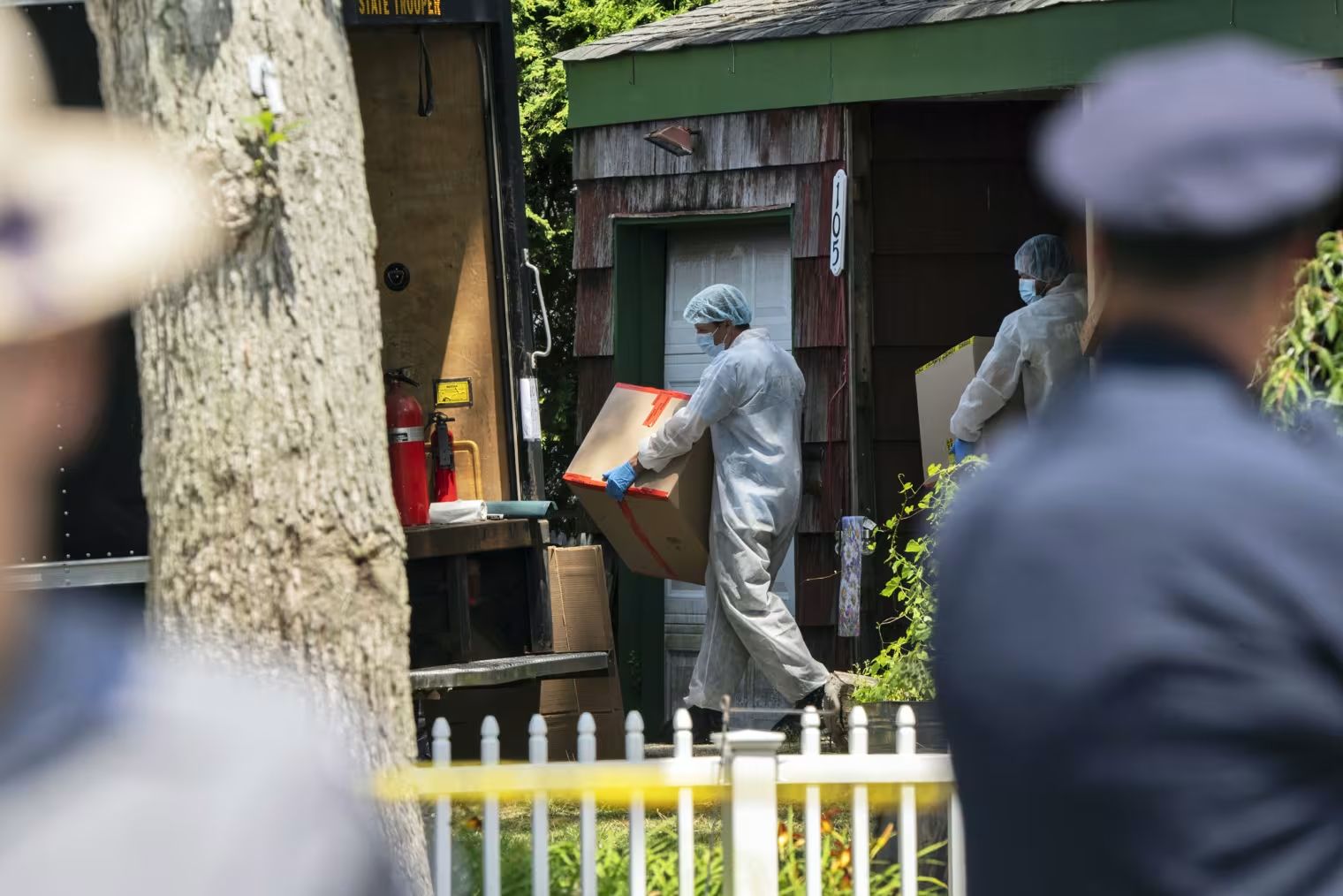
Crime lab officers remove evidence from Rex Heuermann’s home in Massapequa Park, N.Y.
Heuermann’s defense attorney, Michael Brown, told reporters outside court that his client’s decision to plead guilty was a “sense of relief for him,” describing the admission as “cathartic to some extent.”
Heuermann’s ex-wife, Asa Ellerup, and their daughter were also in court as he entered the guilty pleas. Their lawyer stated that Ellerup and her daughter had no knowledge of or involvement in the killings, and both asked for privacy for the family.
The Suffolk County District Attorney stated that Heuermann “thought that by killing them he could silence them forever and get away with murder, but he was wrong.”
The case is considered largely resolved, though investigators say they continue to review whether Heuermann may be connected to additional unsolved crimes.
🕊 Victim Voices — Remembering Their Lives
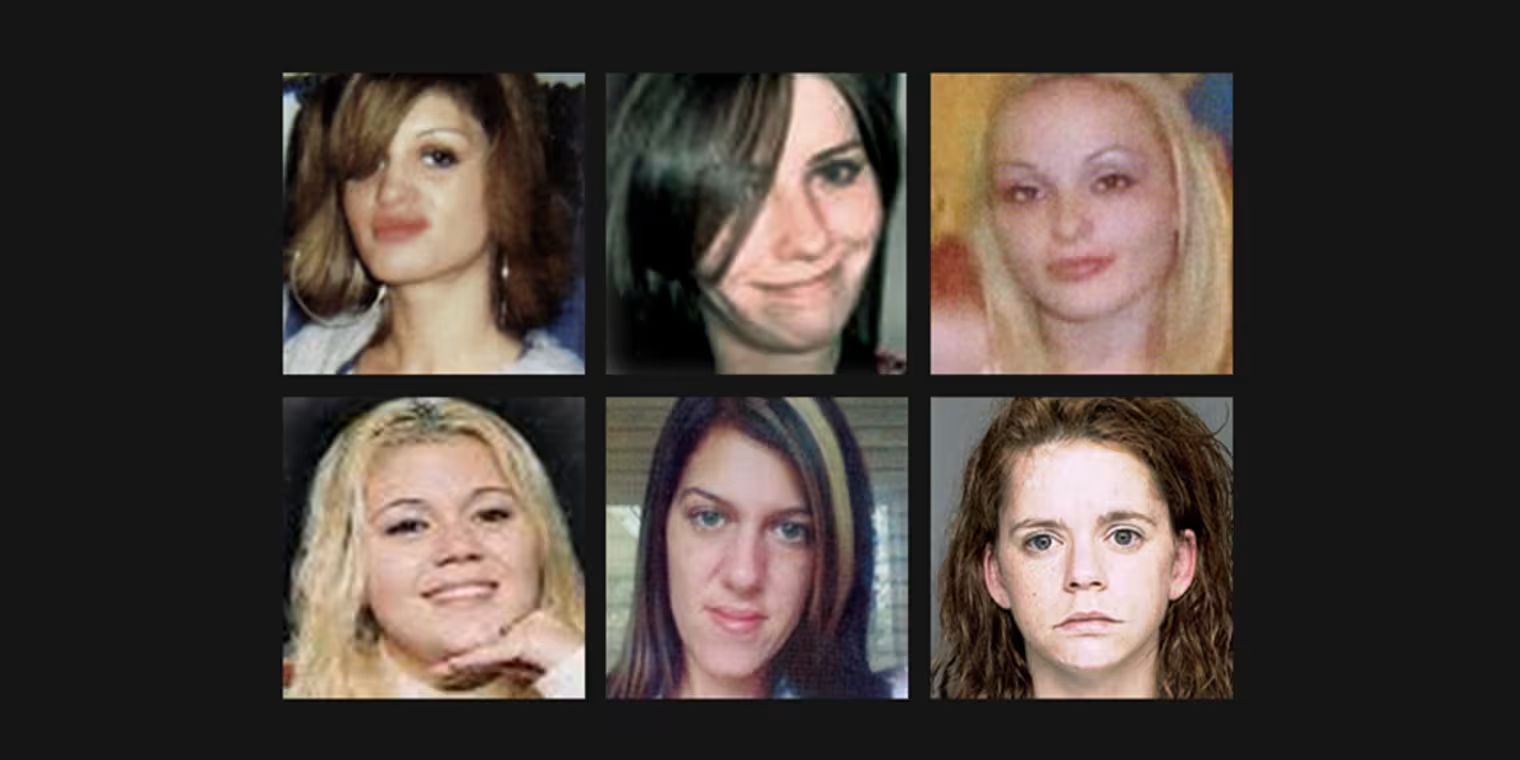
Victims of the Gilgo Beach killings.
Melissa Barthelemy — A young woman from upstate New York who moved to the city searching for a better future. Her family never stopped fighting for answers.
Maureen Brainard-Barnes — A mother who disappeared in 2007. Her family launched their own search when official efforts seemed to stall.
Amber Lynn Costello — Known to friends as warm and generous. She was 27 when she vanished in 2010, the last known victim before police found the remains.
Megan Waterman — A 22-year-old from Maine and a mother. Her disappearance in 2010 preceded the discovery of remains along Ocean Parkway by just months.
Jessica Taylor — Her remains were found in two locations, 45 miles apart. She was 20 years old.
Valerie Mack — Identified only in 2020 after years as a Jane Doe. Her family waited years just to know her fate.
Sandra Costilla — Found in 1993, more than 60 miles from Gilgo Beach. Her connection to the case took nearly three decades to confirm.
Karen Vergata — Disappeared in 1996. Her partial remains were discovered on Fire Island. Heuermann admitted to killing her in court, but was not formally charged in her death as part of the plea deal.
Each of these women deserved more than a numbered case file. They deserve to be remembered fully.

🩺 Tip of the Week
The Gilgo Beach case carried some lessons that matter far beyond Long Island.
Take missing persons reports seriously, especially for vulnerable populations. Several of these victims were sex workers, a group historically underserved by law enforcement. Delayed responses in such cases cost investigators critical early evidence.
DNA preservation saves cases. Evidence collected in the 1990s and early 2000s sat waiting for technology to catch up. Never underestimate the value of preserving physical evidence even when no match exists yet.
Digital trails don’t lie. Burner phones, vehicle registration databases, and cell tower data built this case after physical evidence ran cold. If you witness suspicious activity, document what you can: license plates, times, locations.
Stay engaged with cold cases. Public interest, investigative journalism, and true crime attention kept the Gilgo Beach case alive in the public consciousness. Sustained attention matters.
Believe families. The Gilgo Beach victims’ families kept pushing for years. When families insist something is wrong, investigators should listen earlier and harder.
🧩 Case Crackers — The Gilgo Cipher.
Test how sharp your attention was with these clues:
Clue 1: How many women did Heuermann plead guilty to murdering?
Clue 2: How many total victims did he admit to killing, including his in-court admission?
Clue 3: How many years passed between the first known killing and his arrest?
Convert each number to its corresponding letter (1=A, 2=B… 26=Z), then arrange them in clue order to form your code.
🔎 Detective’s Extras
“The Gilgo Beach case was cracked by a confession.” True or False?
Which investigative detail cracked open a cold case that had gone silent for over a decade?
a) A witness coming forward with new testimony
b) DNA from a discarded pizza crust and cell phone data linking Heuermann to victims
c) A tip submitted through a true crime podcast
Reflective Question: Heuermann lived as a suburban family man: an architect, a neighbor, a father, while carrying out murders spanning 17 years. What does this case reveal about the limits of community trust and the danger of assuming safety based on appearances?
🛑 Warning Signs & Prevention
The Gilgo Beach case was decades in the making, but the warning signs were there in hindsight.
Targeting of vulnerable victims: Serial killers often choose victims they believe will not be quickly reported or vigorously investigated. Awareness and equal urgency in missing persons cases saves lives.
Double lives are not detectable by appearance alone: Heuermann was a respected professional with no visible red flags. Behavioral patterns, digital footprints, and forensic evidence are far more reliable than reputation.
Burner phones signal intent: The deliberate use of untraceable communication is a hallmark of premeditated serial crime. It signals planning, not impulse.
Technology closes cold cases: What investigators could not match in 2010 became solvable in 2022 with advances in DNA analysis and digital forensics. Evidence that goes nowhere today may crack a case tomorrow.
Perpetrators often live near their crimes: Heuermann lived across the bay from the stretch of highway where he dumped remains. Geographic profiling has become a powerful tool in serial crime investigation precisely because of patterns like this.
From The Archives
Want to revisit a case with similar themes of hidden identities and long-delayed justice?
She Wrote a Grief Book After Killing Her Husband
Kouri Richins poisoned her husband with fentanyl, then published a children’s book about losing a parent, starring her own sons. A Utah jury convicted her in three hours.
Read More
Bizarre Crimes You Can’t Miss
From a bizarre inheritance scam to a chilling family secret, this collection of strange crimes challenges everything you thought you knew about motive and opportunity.
Read More

🗣 Have Your Say – Help Shape the Next Solved Files
We love hearing from our Case Crackers community, your ideas and feedback keep our investigations sharp and our stories gripping.
This week, we’re asking:
Which cases or true crime topics do you want us to tackle next?
Do you like the mix of features we include, or is something missing?
Would you enjoy more behind-the-scenes looks, expert interviews, or interactive challenges?
💡 Your thoughts matter — fill out our quick feedback form HERE and you might just see your suggestion featured in an upcoming edition.
Together, we’ll uncover the stories that matter most.

🔦 This Week’s Must-Watch Moment
You’ve just read about Rex Heuermann, the architect who hid a 17-year killing spree behind a respectable suburban life, and who finally confessed in open court. But the Solved Files experience doesn’t stop here.
This week on our Solved Files Footage Channel: a K9 unit and aerial support track a suspect who fled into the woods after causing a deadly car crash in Lake County, Illinois, leaving a female passenger behind.
Watch the pursuit unfold in real time, the moment police corner him in the trees, and the interrogation where he claims he has no idea what they’re talking about.
Raw. Tense. Unfiltered.
👉 Watch “K9 Hunts Suspect Down After Fleeing Deadly Car Crash” now on the Solved Files Footage Channel.
While you wait for the next newsletter, keep your detective instincts sharp with our daily updates. On TikTok & Instagram, you’ll find crime polls that test your gut instincts, behind-the-scenes clues from our investigations, and bite-sized true crime drops you can watch anywhere.
And if you want to dig deeper, join us on Patreon for full trial timelines, extended case files, and uncut interviews you won’t see anywhere else.
Thanks for joining us on this week’s investigation. Eight women waited decades for the world to say their names and mean it. We’re glad you’re on the case with us.
Until next time, keep your eyes sharp, your instincts sharper, and your notepad ready. The next mystery is already waiting.