- Solved Files Newsletter
- Posts
- Life Without Parole for Killing a Man Who Urinated on His Property
Life Without Parole for Killing a Man Who Urinated on His Property
This Week’s Most Bizarre Crimes You Can’t Miss

David Yupa
March 06, 2026

👋 Hello Case Crackers! 🕵️♀️
Welcome back to another edition of Solved Files, your weekly deep dive into the world’s most shocking, puzzling, and mind-boggling true crime stories. This week, we’re bringing you justice served in a case that proves how trivial disputes can escalate into senseless tragedy when pride, anger, and firearms collide.
On February 13, 2023, 21-year-old Garrett Hughes left a bar in Key West, Florida, after watching the Super Bowl with friends. Moments later, he was dead, shot in the abdomen by 57-year-old Lloyd Preston Brewer III, a businessman who owned the shopping center where the bar was located.
Brewer’s reason? Hughes had urinated on the side of a building.
This week, a Florida judge sentenced Brewer to life in prison without the possibility of parole after a jury convicted him of first-degree murder. Prosecutors presented surveillance footage and eyewitness testimony showing that Brewer walked away from the confrontation, then turned back, closed the distance, drew his weapon, and fired, all while Hughes was unarmed and in flip-flops.
As always, we’ll break down the facts, examine the evidence that convicted him, and show you how investigators used surveillance footage and witness testimony to prove that this wasn’t self-defense, it was murder. Plus, this week’s bizarre crimes, statistics, and more.
🔔 Breaking News — Life Without Parole for Killing a Man Who Urinated on His Property
Lloyd Preston Brewer III, 60, was sentenced to life in prison without the possibility of parole on February 27, 2026, after a Monroe County jury convicted him of first-degree murder in the shooting death of 21-year-old Garrett Hughes.
The shooting occurred just after midnight on February 13, 2023, outside Conch Town Liquor & Lounge in Key West. Brewer confronted Hughes for urinating on the side of his building, then fatally shot him in front of witnesses, including Hughes’ own brother.
Prosecutors rejected Brewer’s claim of self-defense, presenting surveillance footage showing Brewer initially walking away before turning back to confront Hughes a second time. “This was not self-defense, it was a deliberate decision to reengage and escalate the confrontation with deadly force,” said Chief Assistant State Attorney Joseph Mansfield.
FULL CASE STORY
Super Bowl Sunday Turns Deadly
On February 12, 2023, millions of Americans gathered to watch Super Bowl LVII between the Kansas City Chiefs and the Philadelphia Eagles. In Key West, Florida, locals packed into Conch Town Liquor & Lounge at 3340 N. Roosevelt Boulevard to watch the game, eat, drink, and celebrate.
Among the crowd were two men whose paths would intersect in the most tragic way possible: Garrett Hughes, a 21-year-old former Key West High School football star, and Lloyd Preston Brewer III, a 57-year-old businessman who owned the small shopping center where the bar was located.
Both men watched the game inside the bar. Both had been drinking. And when the game ended just after midnight on February 13, both walked outside into the rear parking lot.
What happened next would leave one man dead and the other facing the rest of his life in prison.
The Confrontation
As people left the bar, a group gathered in the parking lot to discuss the game. Garrett Hughes, wearing only flip-flops and a t-shirt, walked to a nearby wall to urinate.
Lloyd Brewer, who owned the shopping center but not the bar itself, saw Hughes relieving himself and confronted him. Witnesses would later testify that Brewer was angry about Hughes urinating on “his property.”
The confrontation began verbally. Brewer told Hughes he shouldn’t be urinating there. Hughes, still relieving himself, responded. The exchange grew heated.
Then, critically, Brewer walked away.
Surveillance cameras captured what happened next, and it would become the prosecution’s most damning evidence.
The Moment That Proved Murder
After initially walking away from Hughes, Brewer stopped, turned around, and walked back toward Hughes a second time.
Prosecutors would emphasize this point relentlessly during trial: Brewer had disengaged. He had walked away. The confrontation was over. But instead of continuing to leave, he chose to reengage.
As Brewer closed the distance, surveillance video and eyewitness testimony showed him placing his hand on the butt of a firearm he carried in his waistband. He drew the weapon, extended his arms into a two-handed shooting stance, and fired twice.
One bullet struck Hughes in the abdomen.
Hughes’ friends and his brother, who were standing nearby, watched in horror as Hughes collapsed. They rushed to help him, applying pressure to the wound while screaming for someone to call 911.
Hughes was transported to Lower Keys Medical Center, where doctors prepared to airlift him to a trauma hospital in Miami. But before the helicopter could take off, Garrett Hughes died.
He was 21 years old. He had been unarmed. He was wearing flip-flops.
The 911 Call and Interrogation
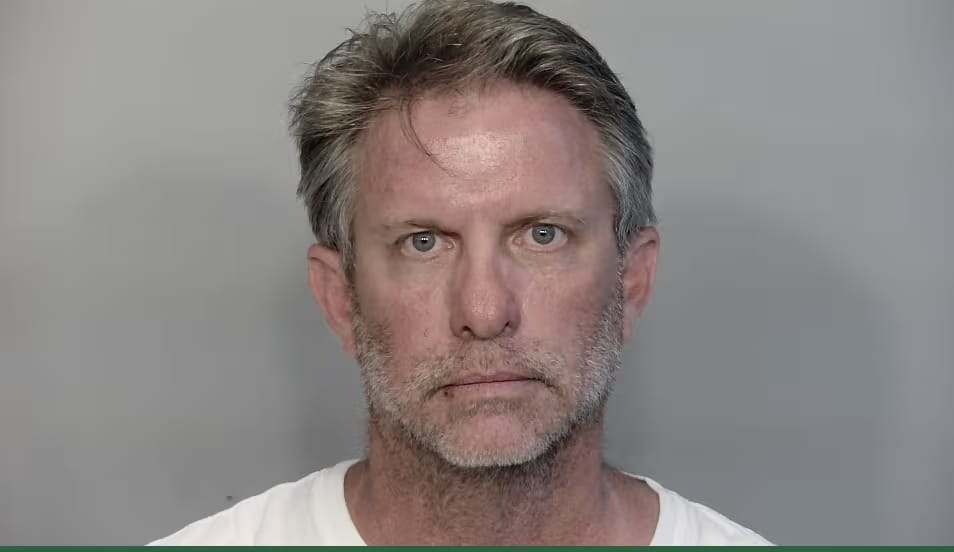
Lloyd Preston Brewer III
Lloyd Brewer called 911 himself. “I just shot someone,” he told the dispatcher.
When Key West police arrived, Brewer was cooperative. He told officers that Hughes had “come at him in a threatening manner” and that he “feared for his life.” He claimed Hughes appeared to be reaching for something on his side, prompting Brewer to draw his weapon and fire in self-defense.
“I stood my ground,” Brewer told detectives during his interrogation, referencing Florida’s Stand Your Ground law, which allows individuals to use deadly force if they reasonably believe they are in imminent danger of death or great bodily harm.
But investigators weren’t convinced. The surveillance footage told a very different story.
The Evidence That Destroyed His Defense
The prosecution’s case rested on three pillars: surveillance footage, eyewitness testimony, and the physical evidence at the scene.
1. Surveillance Footage
The video from Conch Town Liquor & Lounge’s security cameras was devastating to Brewer’s defense. It showed:
Brewer walking away from Hughes after the initial confrontation
Brewer stopping, turning around, and walking back toward Hughes
Brewer’s hand moving to his waistband as he approached
Brewer drawing his firearm and extending it in a two-handed shooting stance
Hughes standing still, unarmed, in flip-flops
The footage directly contradicted Brewer’s claim that Hughes was coming at him aggressively or reaching for a weapon.
2. Eyewitness Testimony
Multiple witnesses, including Hughes’ friends and brother, testified that they saw the entire incident. One witness, Melissa Roberts, told the jury: “That kid didn’t stand a chance.”
Witnesses described Hughes as unarmed, non-threatening, and standing still when Brewer approached him the second time. None of them saw Hughes make any aggressive moves toward Brewer.
3. The Physical Evidence
Hughes was shot in the abdomen. The trajectory of the bullet, combined with the positions of both men, indicated that Brewer was facing Hughes and fired deliberately at center mass.
Hughes was found with no weapons on his person. He was wearing flip-flops, hardly the footwear of someone preparing for a physical confrontation.
The evidence painted a clear picture: this was not self-defense. This was an execution.
The Trial
Brewer’s trial began in January 2026. His defense attorney, Jerome Ballarotto, argued that Brewer had legitimately feared for his life and had acted within his rights under Florida’s Stand Your Ground law.
The defense pointed out that Hughes was younger, larger, and had been drinking. They suggested that Brewer, a 60-year-old man, could reasonably have felt threatened by a confrontation with a 21-year-old.
But prosecutors Colleen Dunne and Joseph Mansfield systematically dismantled this argument.
“Lloyd Brewer initially walked away, but instead of continuing to disengage, he turned around and chose to confront the victim again,” Mansfield told the jury. “He closed the distance, drew his weapon, and fired.”
Dunne emphasized the disproportionate response: “Garrett Hughes lost his life due to a grossly disproportionate and deadly response to a minor act. Urinating on a wall does not warrant a death sentence.”
The defense called no witnesses.
After four and a half hours of deliberation on January 21, 2026, the jury returned a verdict: Guilty of first-degree murder with a firearm.
The conviction meant the jury found that Brewer had acted with premeditation and intent to kill. Under Florida law, the sentence is mandatory: life in prison without the possibility of parole.
The Sentencing
On February 27, 2026, Lloyd Preston Brewer III appeared in Monroe County Circuit Court for sentencing. He wore a prison jumpsuit and handcuffs. His wife, who had supported him throughout the trial, was not present.
The courtroom gallery on the victim’s side was a sea of red, Conch Pride, the colors of Key West High School, where Garrett Hughes had played football and where his father, John Hughes, still coaches.
Family members, friends, and supporters filled the benches, wearing red shirts in Garrett’s honor. But when given the opportunity to deliver victim impact statements, they declined.
“They chose not to give Brewer their time or emotion,” prosecutor Colleen Dunne explained.
Brewer himself also declined to speak when invited by Circuit Judge Mark Jones.
Before imposing sentence, Judge Jones addressed the tragedy:
“You have been found guilty by a jury of your peers and adjudicated guilty of murder in the first degree. This was a tragedy that happened in the blink of an eye, and nothing I can say can change the situation today. But maybe something I say may change the way someone behaves in the future.”
Jones then pronounced the mandatory sentence: Life in prison without the possibility of parole.
Brewer showed no visible emotion.
The Appeal
Defense attorney Jerome Ballarotto filed a motion for a new trial, arguing that jury instructions and evidentiary rulings had undercut Brewer’s defense. Specifically, the defense wanted instructions that included Brewer’s right to use non-deadly force and argued against the court’s finding that Brewer had an obligation to retreat before using deadly force.
Judge Jones denied the motion on the day of sentencing.
Ballarotto has announced that an appeal will be filed. “We feel very strongly it will be reversed,” he told reporters outside the courthouse.
Legal experts say the appeal is unlikely to succeed given the strength of the evidence and the clarity of the surveillance footage.
Impact on the Community
Garrett Hughes’ death sent shockwaves through the tight-knit Key West community. Hughes had been a beloved football player at Key West High School, where his father John Hughes coaches the Conchs. Friends described him as outgoing, kind, and full of life.
“Garrett Hughes was shot in front of lifelong friends and his own brother, a moment that will forever live with those who witnessed it,” prosecutor Colleen Dunne said after the verdict. “No sentence will ever bring him back, and they will forever carry the weight of this needless and senseless act.”
The case also raised questions about Florida’s Stand Your Ground law and whether it emboldens people to escalate confrontations into deadly violence. Critics argue that the law creates a dangerous environment where minor disputes can turn fatal because individuals believe they have legal protection to use deadly force.
Prosecutors noted that the case showed “a whole new level of senselessness,” a young man killed over a public urination incident that should have resulted in, at most, a citation or a verbal warning.
The Hughes Family’s Civil Lawsuit
The Hughes family has filed a wrongful death lawsuit against Brewer and related entities. Those civil claims remain active even as Brewer begins his life sentence and pursues his appeal.
The lawsuit seeks damages for the family’s loss and aims to hold Brewer financially accountable for taking Garrett’s life.
As of now, Lloyd Preston Brewer III, once a successful businessman and property owner in Key West, sits in a Florida state prison. He is 60 years old. Barring a successful appeal, he will spend the rest of his life behind bars.
Garrett Hughes, who should have been celebrating his 24th birthday this year, is gone forever.

🧠 FACTS vs MYTHS
Myth: Stand Your Ground laws give you the right to shoot anyone who threatens you.
Fact: Stand Your Ground laws allow the use of deadly force only when you reasonably believe you are in imminent danger of death or great bodily harm. You cannot provoke a confrontation, disengage, then reengage and claim self-defense. Brewer’s case proves that walking away then coming back to shoot someone is murder, not self-defense.
Myth: Stand Your Ground means you can shoot anyone who threatens you.Fact: Not if you walk away, then come back. That’s murder, not self-defense.
Myth: Larger or younger people automatically justify deadly force.Fact: An unarmed man in flip-flops standing still isn’t an imminent threat.
Myth: Calling 911 after a shooting proves you were acting in self-defense.
Fact: Many killers call 911 themselves to control the narrative and appear cooperative. Investigators evaluate the physical evidence, witness statements, and surveillance footage to determine what actually happened, not just the shooter’s version of events.
👉 Bottom Line: Ego and firearms are a deadly combination. Walking away is always the right choice. Turning back to confront someone, especially when armed, can turn you from victim to murderer in seconds.

🩺 Tip of the Week
Walk away from confrontations, especially when armed. Brewer had disengaged and was walking away. Turning back to confront Hughes was the decision that turned this from a verbal dispute into first-degree murder. If you’re carrying a firearm, you have an even greater responsibility to de-escalate and avoid conflict.
Surveillance cameras are everywhere, and they don’t lie. Brewer’s self-defense claim collapsed because video footage showed exactly what happened. If you’re ever involved in an incident, assume it’s being recorded. Your words to police will be compared against the footage.
Stand Your Ground doesn’t mean “stand your ego.” These laws are designed to protect people who are genuinely in danger, not people who want to “teach someone a lesson” or defend their property with deadly force. A reasonable person would have walked away and called the police, not returned with a gun.
Witnesses matter, especially multiple independent witnesses. Brewer’s claim fell apart not just because of video, but because multiple witnesses gave consistent accounts that contradicted his story. If you witness a crime, your testimony could be the difference between justice and a killer walking free.
Disproportionate force is not self-defense. Shooting an unarmed man in flip-flops for urinating on a wall is not a reasonable response to a threat. Prosecutors will ask: “What would a reasonable person have done in this situation?” If the answer isn’t “shoot them,” you’ll be convicted.
👉 Weekly Reminder: Your pride is not worth someone’s life, or your freedom. Walk away.
🧩 Case Crackers
Think you’ve got sharp detective instincts? Let’s test them.
Lloyd Brewer claimed he shot Garrett Hughes in self-defense because Hughes was “coming at him in a threatening manner.” But surveillance footage showed Brewer walking away, then turning back to confront Hughes before shooting him.
Here’s the question:
👉 Why was Brewer’s act of “walking away then coming back” so legally significant?
Was it:
A. It proved Brewer had disengaged and was no longer in imminent danger
B. It showed Brewer made a conscious choice to reengage the confrontation
C. It demonstrated premeditation and intent, not a split-second reaction
D. All of the above
Take your pick, in self-defense cases, your actions before and after the threat matter just as much as the moment you pull the trigger.Think you’ve got sharp detective instincts? Let’s test them.
Lloyd Brewer claimed he shot Garrett Hughes in self-defense because Hughes was “coming at him in a threatening manner.” But surveillance footage showed Brewer walking away, then turning back to confront Hughes before shooting him.
Here’s the question:
👉 Why was Brewer’s act of “walking away then coming back” so legally significant?
Was it:
A. It proved Brewer had disengaged and was no longer in imminent danger
B. It showed Brewer made a conscious choice to reengage the confrontation
C. It demonstrated premeditation and intent, not a split-second reaction
D. All of the above
Take your pick, in self-defense cases, your actions before and after the threat matter just as much as the moment you pull the trigger.
🔎 Detective’s Extras
Why “Walking Away Then Coming Back” Destroys a Self-Defense Claim
In self-defense law, the key question is whether you were in imminent danger. Imminent means immediate, right now, about to happen. If you have time to walk away, you are not in imminent danger.
When Brewer walked away from Hughes, he communicated to the world, and to a future jury, that he did not feel threatened enough to stay and defend himself. He felt safe enough to leave.
But then he turned around and came back. This decision transformed the encounter from self-defense into premeditated murder because:
It proved there was no imminent threat. If Brewer truly feared for his life, he would have kept walking.
It showed intent. Coming back meant Brewer had time to think, decide, and act, classic premeditation.
It established him as the aggressor. By reengaging, Brewer became the person creating danger, not responding to it.
Stand Your Ground vs. Duty to Retreat
Florida is a Stand Your Ground state, meaning you have no duty to retreat before using deadly force if you reasonably believe you’re in imminent danger. However, Stand Your Ground does NOT apply if:
You provoke the confrontation
You are the initial aggressor
You disengage and then reengage
Brewer’s defense tried to argue Stand Your Ground, but the jury rejected it because Brewer had walked away (disengaged) and then turned back (reengaged). At that point, he became the aggressor.
The Power of Surveillance Footage
Without the surveillance video, this case might have come down to Brewer’s word against the witnesses. But the footage was irrefutable. It showed:
The exact timeline of events
Who moved toward whom
When Brewer drew his weapon
Hughes’ position (standing still, unarmed)
Modern juries trust video evidence more than witness testimony because video doesn’t have bias, memory lapses, or ulterior motives. If the video contradicts your story, you’re almost certainly going to be convicted.
First-Degree vs. Second-Degree Murder
The jury convicted Brewer of first-degree murder, which requires proof of premeditation and intent. This is the most serious murder charge and carries the harshest penalties.
How did prosecutors prove premeditation when the shooting happened in seconds?
Premeditation doesn’t require days or hours of planning. It can happen in moments. The fact that Brewer:
Walked away (had time to think)
Turned around (made a decision)
Drew his weapon (prepared to kill)
Took a shooting stance (aimed deliberately)
Fired (followed through)
…all demonstrated a conscious, deliberate decision to kill, not a panicked reaction.
Quick Think: If you’re armed and someone insults you or disrespects your property, what’s the right response? Walk away and let it go. Your freedom is worth more than your pride.
📊 By The Numbers: Senseless Killings in America
The Lloyd Brewer case represents a disturbing category of crime: murders over trivial disputes. Here are the statistics:
Approximately 20% of all homicides in the U.S. stem from arguments over trivial matters
These include disputes over parking spaces, loud music, perceived disrespect, property boundaries, and yes, public urination.
“Stand Your Ground” states see 8-11% more homicides than states without such laws
Research from the American Journal of Public Health suggests that Stand Your Ground laws correlate with increased homicide rates, particularly in confrontations that escalate unnecessarily.
Males aged 18-30 are the most common victims of argument-based homicides
Young men are disproportionately likely to be killed in disputes that escalate from verbal to deadly, often involving alcohol and firearms.
Firearms are present in 70% of argument-based homicides
When guns are available during heated disputes, the likelihood of a fatal outcome increases dramatically. Arguments that might have ended in fistfights instead end in death.
90% of argument-based killings happen between people who know each other
Strangers rarely kill each other over trivial matters. Most victims and killers had some prior relationship or interaction.
Alcohol is a factor in 40-50% of these cases
Intoxication impairs judgment, increases aggression, and makes de-escalation less likely. Both Brewer and Hughes had been drinking before the confrontation.
Surveillance footage solves 60% of these cases
Security cameras capture the truth of what happened, making it nearly impossible for killers to claim self-defense when video shows otherwise.
💡 What This Means:
Garrett Hughes died because Lloyd Brewer chose pride and anger over walking away. Understanding these statistics helps us recognize warning signs and make better choices when confronted with disrespect or minor slights. Your ego is never worth someone’s life.

🗣 Have Your Say – Help Shape the Next Solved Files
We love hearing from our Case Crackers community, your ideas and feedback keep our investigations sharp and our stories gripping.
This week, we’re asking:
Do you want more cases involving Stand Your Ground defenses and self-defense claims?
Should we cover more surveillance footage analysis and how video evidence wins cases?
Would you like expert legal analysis on Florida’s controversial self-defense laws?
💡 Your thoughts matter, fill out our quick feedback form HERE and you might just see your suggestion featured in an upcoming edition.
Together, we’ll uncover the stories that matter most.

🔦 When Street Racing Turns Fatal — When a Predator’s Lies Collapse
What happens when a registered sex offender sits across from detectives… and his every lie is dismantled by evidence he didn’t know they had?
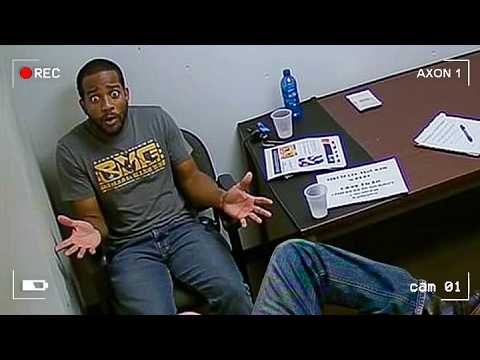
On our Interrogation Channel, we bring you real, unfiltered interrogations that expose the darkest criminals and the moment they realize there’s no escape. Our latest upload, “The Moment Pedophile Realizes He’s Going To Prison Forever”, takes you inside the chilling interrogation of Robert Howard, a 42-year-old registered sex offender convicted of murdering 12-year-old Naomi Janelle Jones in Pensacola, Florida.
What you’ll witness:
✅ Hours of lies unraveling in real time — Howard claims he barely knew Naomi and wasn’t even near the apartment complex when she disappeared. Then detectives show him the phone records.
✅ The evidence that destroyed his story — surveillance footage of his car near where the body was found, human blood detected on his vehicle, and cell tower data placing him at the scene during the exact window Naomi went missing.
✅ The confession that reveals a monster — after hours of denial, Howard finally admits to choking 12-year-old Naomi to death inside his apartment, but immediately tries to blame the child, claiming “she pushed him” and “didn’t mean for it to happen.”
✅ Victim blaming at its most depraved — Howard attempts to deflect responsibility onto a 12-year-old girl, claiming she followed him and made “gestures” toward him. Detectives don’t buy it for a second.
✅ Justice served — On August 12, 2021, a jury found Robert Howard guilty of first-degree murder. He was sentenced to life in prison without the possibility of parole. He will die behind bars.
This isn’t just an interrogation. This is a masterclass in how detectives use evidence, patience, and strategic pressure to break down a killer’s carefully constructed lies. Watch as phone records, surveillance footage, and forensic evidence corner Howard until he has nowhere left to run.
Naomi Janelle Jones was 12 years old. She deserved a full life. Instead, she was murdered by a predator who lived in her apartment complex. Her family got justice. Howard got life without parole.
👁 Watch the full interrogation now: The Moment Pedophile Realizes He’s Going To Prison Forever
Subscribe to the Interrogation Channel and witness the moments where lies, evidence, and reality collide: unfiltered, unscripted, unforgettable.
📲 Follow Us Everywhere
Want daily updates and quick case clues? Find us here:
TikTok & Instagram: Crime polls, case clues, and behind-the-scenes breakdowns.
Solved Files Shorts: The biggest shocks in under a minute, moments that prove the smallest details can crack a case wide open.
💡 Thanks for following along this week. Every investigation is another puzzle piece, and together, we’re piecing the truth into focus. Stay sharp, stay curious, and remember: the next clue is always closer than you think.