- Solved Files Newsletter
- Posts
- Family Annihilator Gets Four Life Sentences: The “Mansion Murders” Trial
Family Annihilator Gets Four Life Sentences: The “Mansion Murders” Trial
This Week’s Most Gripping True Crime Stories You Can’t Miss

David Yupa
February 27, 2026

👋 Hello Case Crackers! 🕵️♀️
Welcome back to another edition of Solved Files, your weekly deep dive into the world’s most shocking, puzzling, and mind-boggling true crime stories. This week, we’re bringing you justice served, a case that took over seven years to prosecute, but ended with a verdict that brought closure to a devastated family and a shocked community.
On November 20, 2018, Keith Caneiro, 50, was found shot to death outside his burning mansion in Colts Neck, New Jersey. Inside, investigators discovered the bodies of his wife Jennifer, 45, and their two young children: Sophia, 8, and Jesse, 11, all stabbed to death. The horror didn’t end there: earlier that same morning, another house had been set ablaze just miles away.
The suspect? Keith’s own brother, Paul Caneiro.
This week, a New Jersey jury delivered its verdict after a months-long trial that exposed greed, betrayal, and one of the most calculated family annihilations in recent memory. Paul Caneiro now faces life in prison for murdering his brother’s entire family over a business dispute involving missing money.
As always, we’ll break down the facts, examine the evidence that convicted him, and show you how investigators built an airtight case against a killer who thought he could literally burn the evidence. Plus, this week’s bizarre crimes, statistics, and more.
🔔 Breaking News — Family Annihilator Gets Four Life Sentences: The “Mansion Murders” Trial
Paul Caneiro, 56, was found guilty on February 13, 2026, of multiple charges including four counts of first-degree murder in the deaths of his brother’s family.

Paul Caneiro in court during opening statements in his murder trial
Prosecutors argued Paul fatally shot Keith and Jennifer Caneiro and stabbed his 8-year-old niece Sophia and 11-year-old nephew Jesse to death before setting their Colts Neck mansion on fire.
An investigation revealed that Paul and Keith were business partners, and the day before the murders, Keith had emailed Paul about missing money from their company accounts. Paul faces life in prison at his sentencing hearing scheduled for May 12, 2026.
FULL CASE STORY
The Morning Everything Burned
In the early morning hours of November 20, 2018, firefighters were called to a house fire at 19 Tilton Drive in Ocean Township, New Jersey. The home belonged to Paul Caneiro, his wife Susan, and their two daughters. Investigators quickly determined the fire had been intentionally set—gasoline had been poured throughout the basement and ignited.
The family escaped unharmed. Paul told authorities he had no idea who would want to burn down his house.
But just a few miles away in the upscale Colts Neck community, a far more horrific scene was about to unfold.
The Mansion on Willow Brook Road
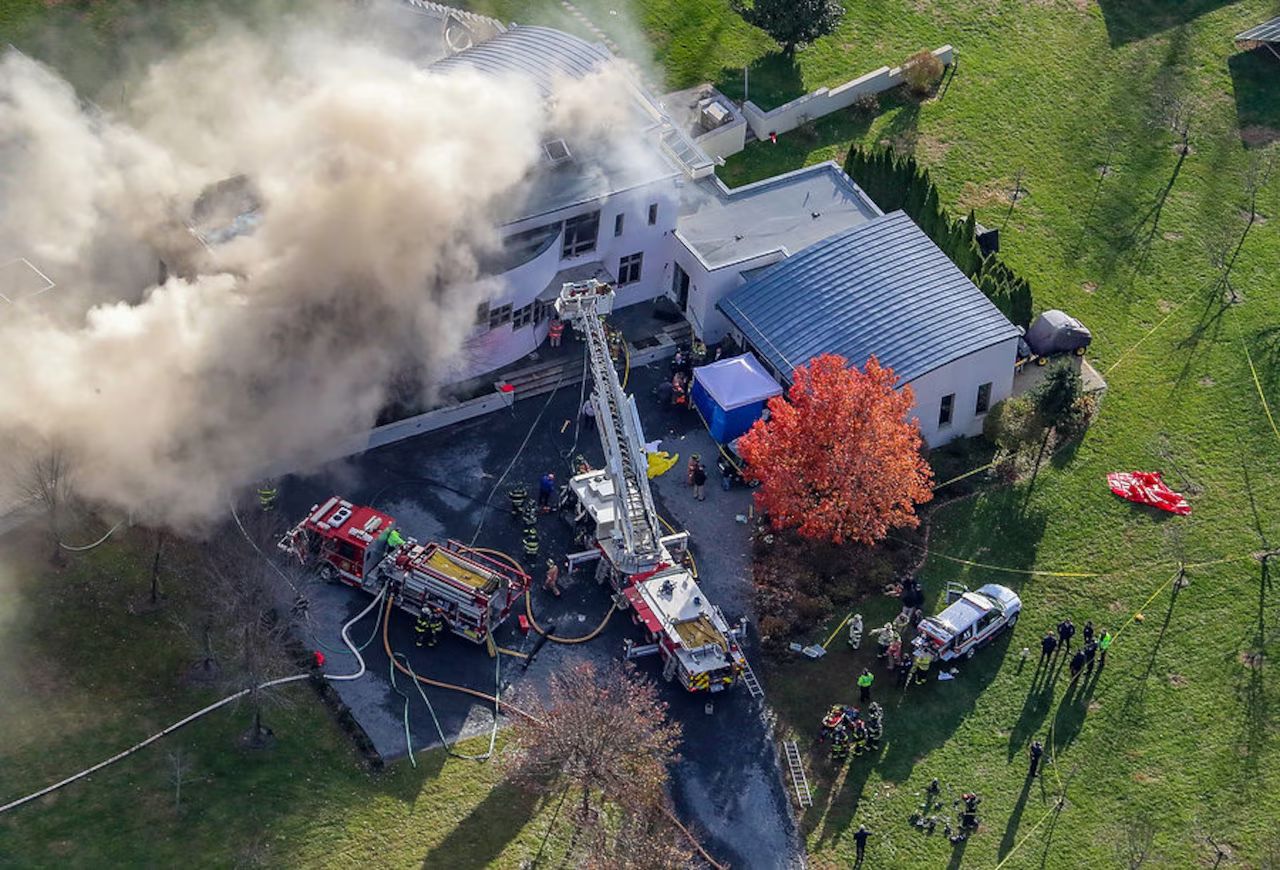
Firefighters at the Caneiro home
Around 12:30 p.m. that same day, emergency responders were called to 15 Willow Brook Road— sprawling mansion owned by Keith Caneiro, Paul’s younger brother. Keith’s body was found on the front lawn. He had been shot multiple times with a .45 caliber handgun.
When firefighters entered the burning home, they made a devastating discovery. Inside were the bodies of Keith’s wife, Jennifer, and their two children, Sophia (8) and Jesse (11). All three had been stabbed to death. The house had been deliberately set on fire in an apparent attempt to destroy evidence.
The Monmouth County Prosecutor’s Office immediately launched a homicide investigation. And almost immediately, suspicion fell on Keith’s older brother, Paul.
Brothers in Business—and in Conflict
Paul and Keith Caneiro had been business partners for years, co-owning two companies: EcoStar Pest Management and Jay-Martin Consulting, a tech consulting firm. On paper, they were successful. But behind the scenes, serious financial problems were brewing.
Prosecutors would later reveal that on November 19, 2018—the day before the murders—Keith Caneiro sent Paul an email questioning discrepancies in their company accounts. Keith had discovered that money was missing, and he wanted answers.
Paul never responded to that email. Instead, prosecutors argued, he made a different decision: eliminate the problem entirely.
The Evidence That Convicted Him
The trial, which began in January 2026, lasted over a month. Prosecutors presented a mountain of forensic and circumstantial evidence linking Paul Caneiro to all four murders and both arsons.
1. The .45 Caliber Handgun
Ballistics experts testified that Keith Caneiro was shot with a .45 caliber handgun. Paul Caneiro owned a .45 caliber Colt pistol, which he claimed had been stolen from his home weeks before the murders. However, investigators found no police report of the alleged theft, and Paul never reported the gun missing until after the murders.
Prosecutors argued Paul used his own gun to kill Keith, then disposed of it to avoid ballistics testing.
2. The Gasoline
Forensic investigators found gasoline residue throughout both crime scenes—Paul’s house in Ocean Township and Keith’s mansion in Colts Neck. Chemical analysis showed the gasoline from both fires had the same chemical signature, suggesting it came from the same source.
Surveillance footage from a nearby gas station showed Paul Caneiro purchasing gasoline in multiple containers on the morning of November 19, the day before the murders.
3. The Stab Wounds
Dr. Lauren Thoma, Deputy Chief Medical Examiner for Middlesex County, testified to the autopsies of Jennifer and Jesse Caneiro.
Jennifer’s cause of death was a gunshot wound to the head and stab wounds to the torso. Dr. Thoma testified that the stab wounds showed Jennifer was alive and breathing when she was stabbed. She also confirmed Jennifer was not breathing when the body was burned, meaning the fire damage destroyed the skin that would have shown the gunshot entrance wound.
Jesse Caneiro’s cause of death was stab wounds of the torso and upper left body, with smoke inhalation listed as a contributing cause. This suggested Jesse may have still been alive, though gravely wounded, when the fire was set.
Sophia Caneiro, the 8-year-old daughter, also died from multiple stab wounds.
The brutality of the children’s deaths was one of the most harrowing aspects of the trial.
4. The Timeline
Cell phone records and surveillance footage placed Paul Caneiro in the vicinity of his brother’s home on the morning of the murders. His vehicle was captured on multiple security cameras traveling between Ocean Township and Colts Neck during the critical time window.
Paul claimed he had been home with his family all morning, but cell tower data contradicted his alibi.
5. The Motive
Prosecutors presented financial records showing that Paul Caneiro had been embezzling money from their joint business accounts for years. Keith had finally discovered the discrepancies and confronted Paul via email the day before the murders.
“Paul Caneiro was facing financial ruin, potential criminal charges, and the loss of his relationship with his brother,” prosecutor Laura Pierro told the jury in her closing argument. “So he made a choice. He decided that if Keith was dead, the problem would disappear.”
The Defense’s Argument
Paul Caneiro’s defense attorney, Robert Honecker Jr., argued that the prosecution’s case was based entirely on circumstantial evidence. He pointed out that:
No murder weapon was ever recovered
No eyewitnesses placed Paul at the scene
No DNA evidence directly linked Paul to the stabbings
The gasoline evidence could be explained by Paul’s pest control business, which used gas-powered equipment
Honecker also suggested that the real killer could have been someone else with a motive to harm Keith, possibly a disgruntled business associate or a client.
But the jury didn’t buy it.
The Verdict
After several days of deliberation, the jury returned guilty verdicts on all counts:
Four counts of first-degree murder
Two counts of aggravated arson
Possession of a weapon for unlawful purpose
Additional charges related to the fires
Paul Caneiro showed no emotion as the verdicts were read. His wife Susan, who had supported him throughout the trial, wept quietly in the courtroom.
Impact Statements
During the sentencing phase, family members of the victims delivered emotional impact statements.
Keith’s mother spoke about losing her son and two grandchildren in a single day. “Paul took everything from us,” she said. “He destroyed our family. And for what? Money?”
Friends described Keith as a devoted father and successful businessman who had worked hard to provide for his family. Jennifer was remembered as a loving mother who volunteered at her children’s school. Sophia and Jesse were described as bright, energetic children who had their entire lives ahead of them.
Sentencing
Paul Caneiro faces a mandatory sentence of life in prison without the possibility of parole on each of the four murder counts. His formal sentencing is scheduled for May 12, 2026.
Prosecutors have indicated they will seek consecutive life sentences, meaning Paul would serve four life terms back-to-back—ensuring he will never be released from prison.

🧠 FACTS vs MYTHS
Myth: Setting a house on fire destroys all forensic evidence.
Fact: Modern forensic science can recover DNA, ballistics, and other evidence even from severely burned crime scenes. Arson investigators use specialized techniques to identify accelerants like gasoline, and medical examiners can often determine cause of death even when bodies are charred. Paul Caneiro’s attempt to burn the evidence didn’t work.
Myth: Without a murder weapon, prosecutors can’t get a conviction.
Fact: Many murder convictions are secured without ever recovering the weapon. Prosecutors rely on circumstantial evidence, witness testimony, motive, and opportunity. The Paul Caneiro case proves that ballistics evidence from the victim, combined with proof of weapon ownership, can be enough.
Myth: Family members are always cleared as suspects first.
Fact: Actually, family members and close associates are often the first people investigated in homicides because statistically, most murders are committed by someone the victim knew. The phrase “follow the money” applies here—Keith’s discovery of missing funds pointed directly to Paul.
Myth: You need an eyewitness to prove premeditated murder.
Fact: Premeditation can be proven through planning evidence: purchasing materials (like gasoline), establishing motive (financial crimes), and the methodical nature of the crime itself. The email Keith sent about missing money the day before his death established Paul’s motive and timeline.
👉 Bottom Line: Circumstantial evidence, when overwhelming and consistent, can be just as powerful as direct evidence. Paul Caneiro learned this the hard way.

🩺 Tip of the Week
Financial disputes within families can escalate dangerously. If you discover financial impropriety by a business partner, even a family member, document everything and consult legal counsel before confronting them directly. Keith Caneiro’s email may have triggered his own murder.
Arson doesn’t destroy evidence like criminals think it does. Forensic investigators are trained to recover evidence from fire scenes. Gasoline accelerants leave chemical signatures that are easily detected. Don’t assume fire equals erasure.
Cell phone data is nearly impossible to fake. Your phone constantly pings cell towers, creating a detailed map of your movements. Paul Caneiro’s phone records contradicted his alibi and placed him at the scene.
Family annihilators often have financial or control motives. Research shows that family annihilators—people who kill multiple family members—are often motivated by financial ruin, fear of exposure, or loss of control. Warning signs include severe financial stress, recent confrontations, and a desire to “solve problems” permanently.
Trust your instincts about family safety. If a family member is behaving erratically, making threats, or showing signs of extreme stress over money, take it seriously. Reach out to authorities or mental health professionals before situations escalate.
👉 Weekly Reminder: The most dangerous person in your life is statistically someone you know and trust. Stay vigilant.

🧩 Case Crackers
Think you’ve got sharp detective instincts? Let’s test them.
Paul Caneiro claimed his .45 caliber handgun—the same caliber used to kill Keith—had been stolen weeks before the murders, but he never filed a police report about the theft.
Here’s the question:
👉 Why is the lack of a police report for a stolen gun so significant in a murder trial?
Was it:
A. It suggests the gun was never actually stolen and Paul is lying
B. It shows Paul had access to the murder weapon when the crime occurred
C. It demonstrates consciousness of guilt—Paul knew he’d need an excuse for the missing gun
D. All of the above
Take your pick—when suspects create convenient explanations for missing evidence, investigators know exactly what that means.
🔎 Detective’s Extras
Why Arson Doesn’t Destroy Evidence
Paul Caneiro set fires at both crime scenes hoping to destroy forensic evidence, but modern fire investigation techniques made that impossible. Here’s what investigators can recover even from severely burned scenes:
Gasoline signatures: Chemical analysis can identify the type and brand of accelerant used, and compare samples from multiple scenes.
Ballistics: Bullets and shell casings survive fires and retain enough detail for comparison.
DNA: While extreme heat can degrade DNA, medical examiners can often extract viable samples from bones, teeth, and protected body cavities.
Blood spatter: Even when surfaces are charred, luminol and other chemicals can reveal blood patterns underneath.
The Email That Sealed Paul’s Fate
Keith’s email to Paul on November 19, 2018, about missing money was the prosecution’s smoking gun. It established:
Motive: Paul was about to be exposed as an embezzler
Timeline: The confrontation occurred one day before the murders
Premeditation: Paul had time to plan his response
Consciousness of guilt: Paul never replied to the email
Why Cell Phone Data is Devastating
Paul’s defense claimed he was home all morning. His cell phone told a different story. Every time your phone connects to a cell tower, it creates a record. Investigators mapped Paul’s phone pinging towers between Ocean Township and Colts Neck during the exact window when the murders occurred.
The Brutality Factor
The children’s stab wounds were particularly damaging to Paul’s defense. Stabbing an 8-year-old and 11-year-old to death requires sustained, deliberate violence. It’s nearly impossible to claim such an act was accidental or in self-defense. The jury saw this brutality as proof of Paul’s calculated ruthlessness.
👉 Quick Think: If you were a juror, what single piece of evidence would have convinced you of Paul’s guilt? The missing gun? The email? The cell data? Or the children’s stab wounds?
📊 By The Numbers: Family Annihilators in America
The Paul Caneiro case falls into a disturbing category of crime: family annihilation. Here are the statistics that help us understand these horrific acts:
Family annihilations occur approximately 20-30 times per year in the U.S.
These are cases where one family member kills multiple other family members, often including children.
95% of family annihilators are male
Research shows that fathers, husbands, or male relatives commit the vast majority of these crimes.
Financial stress is the #1 trigger
Studies indicate that 60-70% of family annihilators were facing financial ruin, job loss, or exposure of financial crimes before the murders.
Children are victims in 75% of cases
Family annihilators often kill their own children, either to “spare them” from future hardship or to punish a spouse.
Arson is used in 40% of family annihilation cases
Killers frequently attempt to destroy evidence by setting fires, though modern forensics usually recover sufficient evidence for prosecution.
Most family annihilators either commit suicide or are arrested
Only about 15% successfully evade capture for extended periods. Paul Caneiro was arrested within days.
Warning signs are often visible in retrospect
Family members frequently report that the perpetrator showed signs of severe stress, made concerning statements, or exhibited controlling behavior before the murders.
💡 What This Means:
Paul Caneiro fits the profile perfectly: male, facing financial exposure, willing to kill children to eliminate witnesses, and using arson to cover his tracks. Understanding these patterns helps law enforcement identify high-risk situations before they escalate to violence.

🗣 Have Your Say – Help Shape the Next Solved Files
We love hearing from our Case Crackers community; your ideas and feedback keep our investigations sharp and our stories gripping.
This week, we’re asking:
Which cases or true crime topics do you want us to tackle next?
Do you like the mix of features we include, or is something missing?
Would you enjoy more behind-the-scenes looks at investigative techniques or expert interviews?
💡 Your thoughts matter, fill out our quick feedback form HERE —and you might just see your suggestion featured in an upcoming edition.
Together, we’ll uncover the stories that matters most.

🔦 When Street Racing Turns Fatal — A Father’s Worst Nightmare
What happens when a 13-year-old boy crosses the street at an illegal street racing event… and never comes home?
On our True Crime Channel, we bring you the heartbreaking stories that expose the deadly consequences of reckless decisions. Our latest investigation, “Dad Finds Son Crushed At Illegal Street Race”, takes you inside the tragic death of Ethan Martin, a 13-year-old St. Petersburg, Florida boy struck and killed by a motorcycle traveling over 100 mph during an illegal street racing gathering on January 29, 2023.
What you’ll witness:
✅ A father’s unimaginable grief — body camera footage captures Johnny Martin and his older son William arriving at the scene to discover Ethan’s lifeless body
✅ The investigation that pieced together chaos — detectives arrived to a scene where teenagers refused to cooperate, witnesses lied about what happened, and crucial evidence seemed to disappear into the night
✅ The cell phone video that cracked the case — one brave witness provided footage that captured the motorcycle speeding by at over 100 mph, the sound of impact, and the moment that changed everything
✅ The rider who had no business being on that bike — Carlos Fernandez, 20, was riding his uncle’s motorcycle without a motorcycle endorsement, traveling at deadly speeds through a crowd of spectators
✅ Justice with limits — Fernandez was sentenced to just 7 years in prison followed by 13 years of probation for taking a child’s life. His uncle was charged for allowing an unauthorized rider on his bike. The father’s charges were eventually dropped.
This isn’t just another street racing story. This is the devastating reality of what happens when illegal gatherings turn deadly, when teenagers think they’re invincible, and when one split-second decision destroys multiple families forever.
Ethan Martin was 13 years old. He was trying to cross a street. And a motorcycle traveling over 100 mph ended his life in an instant.
Watch the full investigation now: Dad Finds Son Crushed At Illegal Street Race
Subscribe to Solved Files - True Crime and witness the stories that remind us why laws exist, why speed kills, and why some decisions can never be undone: unfiltered, unscripted, unforgettable.
📲 Follow Us Everywhere
Want daily updates and quick case clues? Find us here:
TikTok & Instagram: Crime polls, case clues, and behind-the-scenes breakdowns.
Solved Files Shorts: The biggest shocks in under a minute, moments that prove the smallest details can crack a case wide open.
💡 Thanks for following along this week. Every investigation is another puzzle piece, and together, we’re piecing the truth into focus. Stay sharp, stay curious, and remember: the next clue is always closer than you think.